
Reviewed · PERANAKAN HERITAGE TOURS
Peranakan Cooking Class in Singapore, near Lavender MRT Station
Peranakan cooking brings Chinese and Malay food traditions together in one colorful, deeply personal cuisine. In this private class near Lavender MRT, you work with Colin, or with his colleague Denise when he is away, to prepare two or three dishes from family-style recipes. I like the hands-on format and the chance to talk about how food connects to Singapore’s culture and past.
I also like the flexible menu. You may cook ngoh hiang, Hainanese chicken rice, Hokkien noodles, Nyonya laksa, or pandan kueh dadar, and you can request a particular dish when you book. The main thing to watch is the host and menu: Colin is not guaranteed, and seasonal ingredients may change what you cook.
In This Review
- Key points at a glance
- Why Peranakan food makes a good Singapore class
- Finding the studio on Crawford Lane
- Meeting Colin, Denise, or another local host
- Choosing two or three Singaporean dishes
- What the hands-on cooking actually feels like
- Eating the meal you prepared
- Price and what the private format is worth
- Dietary needs and special requests
- Who will enjoy this class most
- Should you book the Peranakan cooking class?
- FAQ
- Where does the cooking class begin?
- What time does the class start?
- How long does the experience last?
- Who teaches the class?
- What dishes might I prepare?
- Can I request Nyonya laksa or another dish?
- Are vegetarian and gluten-free options available?
- Is transportation included?
- Is this a private activity?
- Can I cancel or change my booking?
Key points at a glance
- Private studio inside a bicycle shop: You pass through the bicycle store before reaching a bright cooking room decorated with pastel pots and a mural.
- Colin or Denise may host: Colin is the main host, but a colleague leads the lesson when he is unavailable.
- Two or three dishes: The menu may include ngoh hiang, Hainanese chicken rice, Nyonya laksa, Hokkien noodles, or kueh dadar.
- A practical, hands-on lesson: Your host demonstrates steps, then gives you a chance to prepare the food yourself.
- Lunch with your host: You eat the dishes you prepare at the end of the class.
- Requests matter: Ask for a favorite dish, such as Nyonya laksa, in the booking form, and mention vegetarian or gluten-free needs in advance.
Why Peranakan food makes a good Singapore class
Peranakan cuisine is one of the clearest examples of Singapore’s mixed cultural identity. It combines Chinese cooking traditions with Malay flavors and techniques, producing food that can be fragrant, spicy, sweet, herbal, and texturally varied in one meal.
That makes this more than a basic lesson in following recipes. As you cook, you can ask about the people and customs behind the food. Colin is described as an engaging host who talks about local culture and the background of the dishes, while also offering useful cooking tips.
The class works especially well if you want context with your lunch. A restaurant gives you the finished dish. Here, you get to see how the ingredients come together and why a dish belongs to Singapore’s culinary story.
You should also keep expectations realistic. This is not presented as a formal culinary-school course, and the menu is not fixed. You receive a personal introduction to two or three local dishes, not a complete survey of Peranakan cooking.
More Peranakan heritage to see:
- Singapore Food & Bike Tour – Katong
★ 5.0 · 289 reviews - Eat Snap Katong Walking Food Tour
★ 5.0 · 174 reviews - The Peranakan Mansion – Experience Singapore’s Unique Culture
★ 5.0 · 117 reviews
Finding the studio on Crawford Lane
The meeting point is on Crawford Lane, near Lavender MRT Station. The cooking studio is located inside a bicycle tour shop, so do not expect a separate street-front cooking school with a large food sign.
You first pass through the bicycles and then enter the studio. The room is described as well lit and carefully arranged, with pastel-colored pots and a mural. That setting gives the class a relaxed, home-style feel, though the entrance may be easy to miss if you arrive looking only for a restaurant or cooking school.
The class begins at 10:00 a.m. Hotel pickup and drop-off are not included, so you make your own way to Crawford Lane. The central location near an MRT station helps, but you should still allow enough time to find the bicycle shop and arrive ready for the lesson.
The activity lasts about three hours overall. The hands-on cooking portion is described as about 1.5 hours, followed by time to eat and talk with your host. Since the published timing uses both an approximate three-hour duration and a 1.5-hour lesson description, ask for clarification if your schedule is tight.
Meeting Colin, Denise, or another local host
Colin is the main chef associated with the experience. He has worked in airlines, restaurants, and hotels, and he brings that background into a class that remains personal rather than formal.
When Colin is unavailable, his colleague Denise or another equally food-focused colleague conducts the lesson. This is the most important detail to understand before booking. If meeting Colin is central to your plans, you should confirm his availability rather than assume it.
The host begins by explaining the dishes and demonstrating some of the key steps. You then take over and try the preparation yourself. That pattern matters because you are not simply watching someone cook while standing behind a counter. You get a chance to handle the food and learn through the process.
The private format is another advantage. Only your group participates, so the host can adjust the pace and answer your questions without a large class competing for attention. It also makes the experience a better fit for couples, families, or small groups who want a more personal meal.
Choosing two or three Singaporean dishes
The exact menu changes with the host and the ingredients available. Possible dishes include ngoh hiang, Hainanese chicken rice, Hokkien noodles, Nyonya laksa, and kueh dadar.
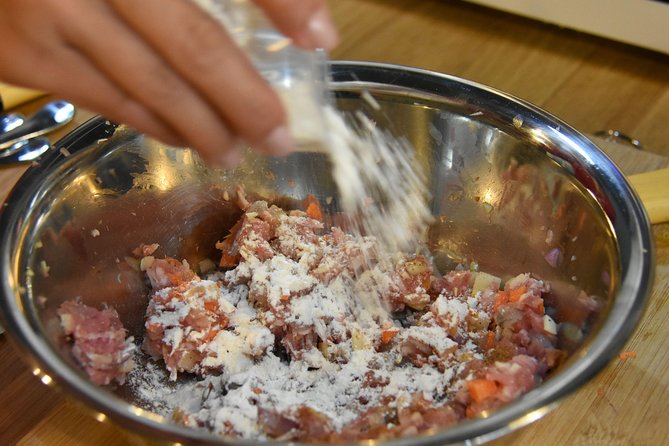
Ngoh hiang is a useful introduction to Peranakan cooking. It combines minced meat and vegetables, wrapped in bean curd skin before cooking. The dish shows how texture and seasoning work together, and the wrapping process gives you a clear task to practice.
Hainanese chicken rice offers a different lesson. It is a famous Singaporean dish, with the chicken and seasoned rice working as a pair. If this appears on your menu, you get a taste of one of the island’s best-known comfort foods rather than only a spicy Peranakan specialty.
Nyonya laksa brings the Peranakan side of the class into sharper focus. It is a dish many people specifically hope to prepare, but it is not guaranteed. If laksa is important to you, put that request in the booking form rather than waiting until the day of the class.
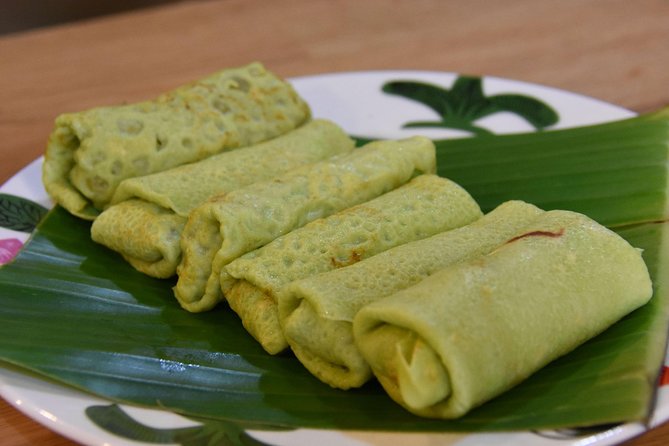
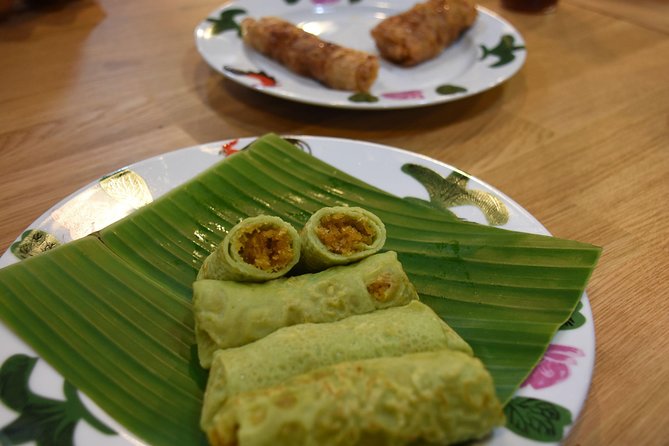
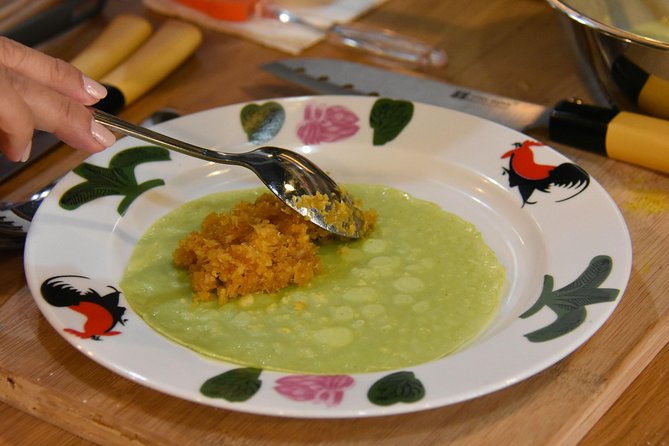
Hokkien noodles may also appear, giving you another familiar Singaporean dish with a different style from laksa. For dessert, kueh dadar uses a pandan-flavored crepe filled with freshly grated coconut. Its green color and sweet coconut center make it a pleasant contrast to the savory dishes.
Because the menu is seasonal, you should see the examples as possibilities, not promises. That flexibility allows the host to use available ingredients, but it also creates the main planning tradeoff. You may get a dish you had not expected, which can be fun, but you may not receive your first choice.
More cooking classes to join:
- Experience Singapore: Cultural Cooking Class
★ 5.0 · 1,514 reviews - Singapore: Hands-on Cooking Class with Cultural Immersion
★ 4.9 · 107 reviews - Singapore: Market-to-Table Experience and Cooking Class
★ 5.0 · 17 reviews - Private Market Visit and Cooking Class With A Professional Chef
★ 4.5 · 10 reviews
What the hands-on cooking actually feels like
The lesson is built around demonstration and practice. Your host shows you part of the process, explains what to do, and then lets you try. That setup is useful for cooks at different levels because you can follow the host closely without being left to guess at every step.
I like this format for visitors who want practical knowledge they can take home. You are not just hearing a description of Peranakan food. You are seeing the ingredients handled, learning the sequence of preparation, and receiving tips from someone who cooks the dishes regularly.
The class also leaves room for conversation. Colin is described as friendly and willing to discuss Singapore’s local culture and food traditions while you work. That informal talk may be one of the best parts of the experience because it connects the recipes to everyday life.
Still, the class will not suit everyone. If you prefer a strictly timed demonstration, a fixed recipe list, or a polished restaurant-style presentation, the flexible home-cooking approach may feel less predictable. The appeal is participation and conversation, not a highly staged show.
Eating the meal you prepared
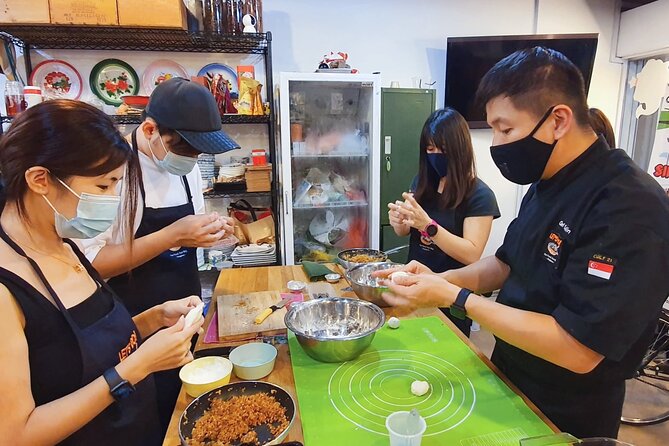
After the cooking, you eat the dishes with your host for lunch. This gives the experience a clear finish and lets you taste the results while the preparation is still fresh in your mind.
There is practical value in eating your own work. You can ask why a dish tastes a certain way, compare textures, and discuss what you might change when making it at home. The meal also turns the class into a social experience rather than a lesson that ends as soon as the stove is turned off.
The food is described as traditional and satisfying, with familiar Singaporean dishes alongside Peranakan specialties. The precise meal depends on the menu selected for your date, so do not book this expecting one guaranteed lunch.
Gratuities are included in the price. That simplifies the end of the meal and means you do not need to calculate an additional tip for the host.
Price and what the private format is worth
The price is $128 per person. That is not a bargain cooking demonstration, but it includes a private lesson, a local host, two or three dishes, the meal, and gratuities.
The value depends on how you use the class. If you want a quick meal, Singapore offers cheaper and easier choices. If you want a personal introduction to local food, a chance to cook rather than just eat, and time to ask questions, the private format makes the price easier to justify.
The group size is especially important. Your booking is private, so you are paying for an experience reserved for your own party rather than joining a large public class. For a couple or small group that values privacy, this can be worthwhile. For a solo visitor focused mainly on food cost, it may feel expensive.
The price does not include transportation to Crawford Lane. Since there is no hotel pickup or drop-off, include the cost and time of reaching the meeting point when comparing this with classes elsewhere in Singapore.
Dietary needs and special requests
Vegetarian and gluten-free options are available on request. You should state your needs when booking so the host can plan the menu properly.
You can also request a particular dish. Nyonya laksa is the clearest example, but the same advice applies to any food you especially want to try. A request is not the same as a guarantee, since the menu may depend on seasonal ingredients and the available host.
The best approach is to give clear information early. Mention dietary restrictions, allergies, and the dish you hope to cook in the booking form. Then confirm the plan if the specific menu is important to you.
Who will enjoy this class most
I would choose this experience if you want to meet a local host, learn through doing, and connect food with Singaporean culture. It is a good fit for couples, families, and small groups who appreciate a private setting.
It also suits curious eaters who already know a little about laksa, chicken rice, or other local dishes and want to understand how they are prepared. The opportunity to make two or three recipes gives you more to take away than a single-dish demonstration.
The class is less suitable if you need a guaranteed Colin-led session or a guaranteed laksa menu. It is also not ideal if you have a very tight schedule, since the activity takes about three hours and the cooking portion is described separately as about 1.5 hours.
Confirmation is sent within 48 hours of booking, subject to availability. Service animals are allowed. The experience is non-refundable and cannot be changed after booking, so make sure your date, group size, food requests, and host expectations are clear before paying.
Should you book the Peranakan cooking class?
Book it if you want an intimate food lesson with local conversation, practical cooking, and lunch in a private studio. The friendly teaching style, hands-on work, and cultural background make it more personal than simply ordering Peranakan dishes at a restaurant.
Before you commit, decide how much flexibility you can accept. Colin may not be available, and the menu can change. If you are happy to cook whatever suits the host and season, this is a strong choice for a food-focused morning in Singapore. If you need one particular dish or chef, send a written request before booking and treat the answer as essential to your decision.
FAQ
Where does the cooking class begin?
The class begins on Crawford Lane in Singapore, near Lavender MRT Station. The studio is inside a bicycle tour shop.
What time does the class start?
The scheduled start time is 10:00 a.m.
How long does the experience last?
The overall experience lasts approximately three hours. The hands-on cooking lesson is described as about 1.5 hours, with additional time for the meal and conversation.
Who teaches the class?
Colin is the main host. When he is unavailable, Denise or another colleague conducts the cooking lesson.
What dishes might I prepare?
Possible dishes include ngoh hiang, Hainanese chicken rice, Hokkien noodles, Nyonya laksa, and Nyonya kueh dadar. The menu is seasonal and may vary.
Can I request Nyonya laksa or another dish?
Yes. Add your request to the booking form. The host will consider it, but the final menu may depend on seasonal ingredients and availability.
Are vegetarian and gluten-free options available?
Yes, vegetarian and gluten-free options are available on request. Tell the host about your needs when booking.
Is transportation included?
No. Hotel pickup and drop-off are not included. You are responsible for reaching the meeting point on Crawford Lane.
Is this a private activity?
Yes. Only your group participates in the activity.
Can I cancel or change my booking?
No. The experience is non-refundable and cannot be changed for any reason after booking.
More Workshops in Singapore
- Singapore Night Photography Workshop
★ 5.0 · 20 reviews - Singapore Photography Masterclass – Private Photography Lesson
★ 5.0 · 17 reviews - Singapore: Scent Crafting Workshop with Rainforest Orchids
★ 4.4 · 11 reviews - Pau Making Workshop With Dim Sum Tasting and Factory Tour
★ 5.0 · 6 reviews
Just added around Singapore
- Skyline Luge and Sky Ride Ticket Sentosa Singapore★ 3.5 · 3 reviews
- Marina Bay Sands SkyPark Observation Deck ticket in Singapore★ 4.0 · 3 reviews
- Singapore Private Full-Day Sightseeing Tour★ 5.0 · 3 reviews
- Singapore: Food and Bike Tour – Downtown★ 4.6 · 3 reviews
- Singapore: Chinatown Street Food Tour★ 5.0 · 3 reviews
- Learn to cook authentic Peranakan food with local market tour★ 3.5 · 3 reviews
- Singapore Brompton Bike Tour from Rail Corridor, with food!★ 5.0 · 3 reviews
- Guided Walking Tour to the Historical Attractions in Farrer Park★ 5.0 · 3 reviews
Peranakan Heritage Tours, compared.
The Peranakan Mansion – Experience Singapore’s Unique Culture
Read our review →
Best Ever Katong Food Tour with Local Foodie – PRIVATE TOUR
Read our review →Browse the lists this tour appears in