
Reviewed · COOKING CLASSES
Experience Singapore: Cultural Cooking Class
Singapore’s food culture makes the most sense when you are holding a pestle, smelling spices, and learning why a dish belongs on the local table. At Food Playground, you prepare three Singaporean dishes with local instructors, then sit down to eat what you made.
I like the small class size, which gives you room to ask questions and get help at the stove. I also like the cultural layer: instructors explain how Chinese, Malay, Indian, and British influences shaped dishes such as laksa, curry chicken, and Hainanese chicken rice. The main drawback is that the opening talk can run long, leaving less time for cooking and transitions.
In This Review
- Key points to know before you book
- Why a cooking class fits Singapore so well
- Arriving at Food Playground on Sago Street
- The opening food quiz and cultural introduction
- Demonstrating three recipes, then putting you to work
- The dishes you may prepare
- Sitting down to eat what you made
- What makes the practical follow-up useful
- Price, timing, and group size
- Who will enjoy this class most
- Booking and cancellation details
- Should you book Food Playground?
- FAQ
- How much does the Singapore Cultural Cooking Class cost?
- How long does the cooking class last?
- Where does the class begin?
- What time does the class start?
- What food will I prepare?
- Are ingredients and cooking equipment included?
- Is hotel pickup included?
- Can children join the class?
- Can I cancel for a refund?
Key points to know before you book
- Three dishes in about three hours: You learn, cook, and eat a full meal rather than watching a short demonstration.
- A Chinatown heritage setting: The class meets at Food Playground, 24A Sago Street, in a historic shophouse near the Sri Mariamman Temple area.
- Hands-on, but not always individual: Instructors demonstrate each recipe, then you usually cook in pairs at shared stations.
- Menus can change: Possible dishes include laksa, chicken satay, curry chicken, Hainanese chicken rice, and ondeh ondeh.
- Recipes and class photos are provided afterward: You leave with practical reminders for trying the dishes at home.
- Easy morning timing: The class starts at 9:30 a.m., includes lunch, and ends back at the meeting point.
Why a cooking class fits Singapore so well
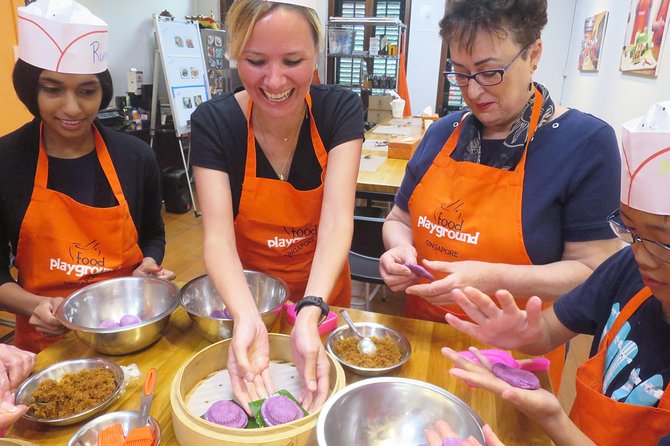
Singapore is often presented through hawker centers and polished restaurants. Those are essential stops, but eating a bowl of noodles tells you only part of the story. A cooking class lets you see how ingredients are combined, how spice pastes are built, and how dishes carry several cultural influences at once.
You may prepare laksa, a spicy noodle soup, or chicken satay with its familiar grilled flavor. Hainanese chicken rice and curry chicken are also possible, while dessert may include ondeh ondeh, a sweet rice cake filled with palm sugar. The exact menu changes, so you should book for the format and food education rather than one guaranteed dish.
That flexibility is sensible in a teaching kitchen. It lets Food Playground adjust recipes and ingredients, but it means you should not arrive expecting one specific menu unless it has been confirmed for your date.
More cooking classes to join:
- Singapore: Hands-on Cooking Class with Cultural Immersion
★ 4.9 · 107 reviews - Singapore: Market-to-Table Experience and Cooking Class
★ 5.0 · 17 reviews - Private Market Visit and Cooking Class With A Professional Chef
★ 4.5 · 10 reviews
Arriving at Food Playground on Sago Street
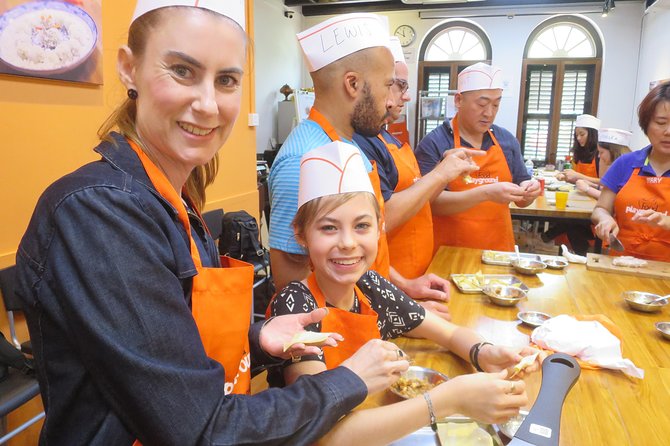
Your morning begins at 24A Sago Street, in Singapore’s Chinatown district. The class runs on the second floor of a heritage shophouse, giving the experience a stronger sense of place than a modern cooking studio in a shopping mall.
The location also works well for the rest of your day. Sago Street is close to Chinatown sights, food halls, and several MRT stations. The Sri Mariamman Temple area is nearby, and you can explore the neighborhood after class without arranging more transport.
There is no hotel pickup or drop-off. You need to make your own way to the meeting point and arrive for the 9:30 a.m. start. A mobile ticket is available, which is handy if you are moving around Singapore with only your phone.
The class ends at the same address. Since lunch is part of the experience, plan on leaving full rather than scheduling an immediate hawker-center meal.
The opening food quiz and cultural introduction
The first part usually sets the scene with an introduction to Singapore’s food traditions. One class format includes a light food quiz, which gives you an easy way to learn names, ingredients, and regional connections before cooking begins.
Instructors explain how Singaporean food draws from Malay, Chinese, Indian, and British traditions. This is not just background decoration. It helps you understand why spice pastes, noodles, coconut, rice, and grilling techniques appear together in the local food scene.
The instructors vary by date. Past classes have been led by Mary, Nur, Sara, Monica, Ann, YY, Kiat, and Cindy. The strongest teaching style is practical and warm, with clear instructions and room for questions. Monica, Sara, and Nur are among the instructors praised for friendly, easy-to-follow teaching, while YY and Kiat are noted for connecting recipes with food heritage.
The one caution is pacing. Some sessions spend too much time discussing dishes that are not on that day’s menu, or include a long personal introduction before the knives and pans come out. If you are eager to cook, this can feel slow. The trade-off is that the cultural talk gives the meal more meaning, so I would treat the first section as part of the class, not wasted time.
Demonstrating three recipes, then putting you to work
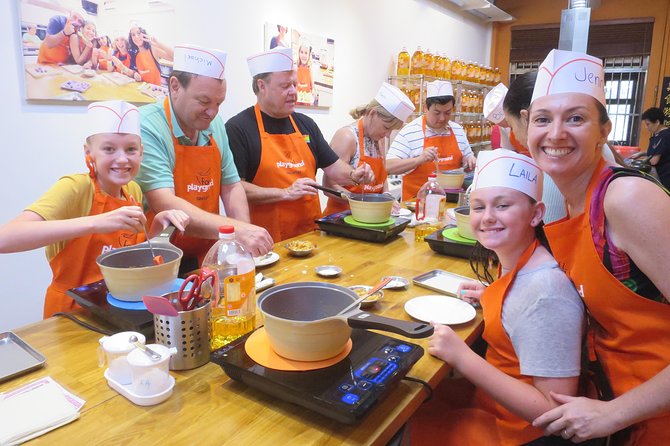
The instructor demonstrates each dish step by step before you try it. You learn how to handle the ingredients, prepare the seasoning, and move through the recipe in the right order.
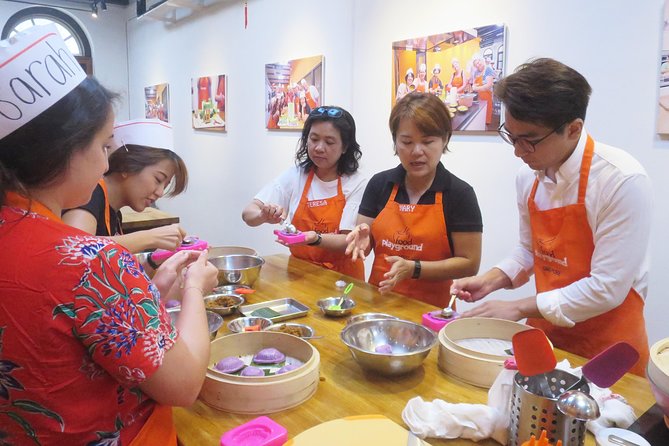
This is a shared cooking class rather than a private station for every person. Most participants work in pairs, with two people at one cooking station. The group is limited to 12, and classes may be much smaller. A six-person session, for example, allows plenty of contact with the instructor and makes it easier to ask for help.
Solo participants may have their own station, depending on the group. Couples and friends should expect to share tasks. One person might chop while the other mixes or cooks, then you switch. That arrangement is social and keeps the class moving, but it does mean you are not independently preparing every part of every dish.
You still take an active role. The cooking is not simply a demonstration followed by a meal. You participate in preparation and cooking, with instructors checking your work and helping you correct timing or technique.
For beginners, this is a good balance. You get guidance without needing to know how to make a spice paste or manage several dishes at once. Experienced home cooks may find some steps familiar, but the local context and ingredient combinations still give the class value.
A few more Singapore days out worth weighing up
- Singapore Night Photography Workshop
★ 5.0 · 20 reviews - Singapore Photography Masterclass – Private Photography Lesson
★ 5.0 · 17 reviews - Singapore: Scent Crafting Workshop with Rainforest Orchids
★ 4.4 · 11 reviews - Pau Making Workshop With Dim Sum Tasting and Factory Tour
★ 5.0 · 6 reviews
The dishes you may prepare
The menu is subject to change, but the possible dishes show the range of Singaporean cooking.
Laksa brings together noodles, aromatics, spices, and a creamy broth. It is one of the clearest examples of Southeast Asian cooking shaped by several traditions. Preparing it from the start helps you understand the difference between simply tasting a spicy soup and building its flavor.
Chicken satay offers a more direct lesson in seasoning and grilling. The appeal is in the balance of savory meat, spice, and the accompaniments served with it. If you enjoy cooking outdoors or making small skewers at home, the technique is easy to remember.
Curry chicken can involve making curry paste from scratch, an especially useful part of the session. Rather than relying only on a packaged sauce, you see how the base develops from individual ingredients. This is one of the more transferable lessons because you can use the same approach in other Southeast Asian dishes.
Hainanese chicken rice shows how a seemingly simple plate depends on careful cooking and seasoning. It is a Singapore favorite with Chinese roots, and it illustrates the local habit of turning a few well-handled ingredients into a complete meal.
Ondeh ondeh provides a sweet finish. These small treats are made with a soft rice-based exterior and a palm sugar center. They add a different texture and technique to a menu otherwise focused on savory cooking.
You will usually make three dishes, not all of the examples above. Ask about the menu if a particular recipe matters to you, and remember that ingredients and instructions can change.
Sitting down to eat what you made
Once the cooking is finished, the class moves into a shared meal. You eat the dishes you prepared with the other participants, along with water, coffee, and tea.
This final meal is more than a convenient lunch. It gives you time to compare results, ask follow-up questions, and talk with people from other places. The social element works especially well for solo visitors, since the cooking pairs naturally lead to conversation.
The food is also more satisfying because you have handled each stage yourself. You notice the texture of the noodles, the strength of the curry, or the sweetness inside the ondeh ondeh differently when you know what went into it.
Do not expect a restaurant-style tasting menu or a quiet private lunch. This is an informal group meal in the same setting as the class. If you want a polished dining room and a chef doing all the work, choose a restaurant instead.
What makes the practical follow-up useful
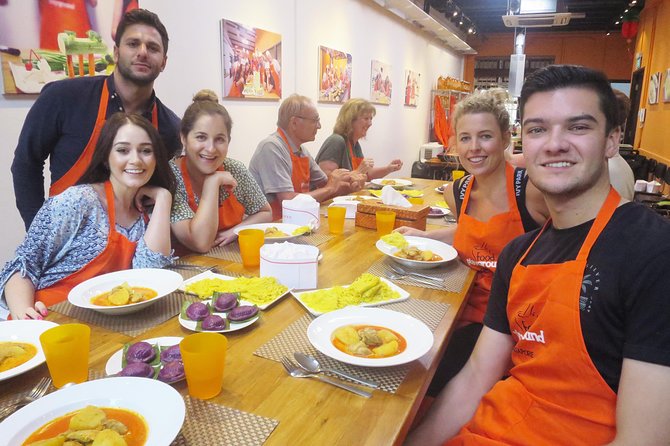
A cooking class has lasting value only if you can repeat the food at home. Food Playground sends recipes and class photos afterward, giving you a useful record of the dishes and the day.
The recipes matter most for travelers who want to recreate one Singapore meal after returning home. You can make notes during class, then use the follow-up material to remember quantities, sequence, and the small tips that are easy to forget.
The photos are a pleasant extra, especially for families or couples. The class also suits children from age seven, so a parent and child can share the work if the child is comfortable with the cooking setup. The experience is not limited to culinary professionals. Beginners are welcome, and instructors guide the group through each stage.
Tell the provider about dietary requirements when you book. Since the menu and ingredients can change, you should not assume every dietary request can be handled without advance notice.
Price, timing, and group size
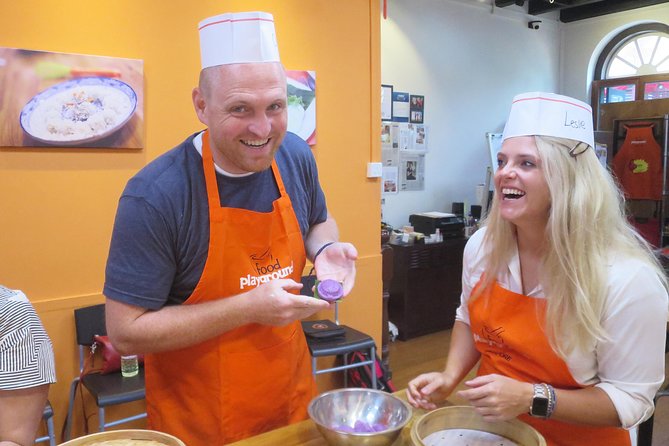
At $96.97 per person, the class costs more than a single hawker-center lunch. That comparison is not quite fair, since the fee also covers three hours of instruction, ingredients, equipment, lunch, drinks, and the chance to learn several recipes.
I consider the price reasonable if you value participation and want to carry a skill home. It is less appealing if your only goal is to eat inexpensive local food. Singapore offers cheaper meals, but none gives you the same guided practice or cultural explanation.
The three-hour length is another reason the price works. You have time for an introduction, demonstrations, hands-on preparation, and a sit-down meal. The maximum group size is 12, while the minimum is two. A smaller group is likely to feel more personal, but the experience is still designed as a social class rather than private tuition.
Group discounts may be available, which can help families or friends booking together. The activity is also popular, so reserving ahead is wise if your Singapore schedule is tight.
Who will enjoy this class most
I would recommend it to you if food is one of the main reasons you travel, or if you want more than a checklist of Chinatown sights. It suits couples, families with children aged seven or older, solo visitors, and anyone who enjoys meeting people while doing something practical.
It is particularly good for home cooks who want recipes they can repeat. The lesson on making curry paste from scratch, the cultural background, and the recipe handout give you more to take home than a standard meal.
You may want to skip it if you dislike shared work, group conversation, or long introductions. The cooking stations are generally shared, and the class pace is set by the instructor and the whole group. You also need to travel to Sago Street yourself, since transport is not included.
For a short Singapore visit, the morning timing is convenient. You can cook lunch, finish at the starting point, and spend the afternoon exploring Chinatown. Just avoid planning another major meal right afterward.
Booking and cancellation details
The class starts at 9:30 a.m. and requires at least two participants to operate. It can take up to 12 people, and confirmation is provided when you book.
You can cancel for a full refund up to 24 hours before the local start time. Cancellations or changes made inside that 24-hour window are not accepted for a refund. If the provider cancels because the minimum number is not reached, you are offered another date or experience, or a full refund.
Should you book Food Playground?
Book this class if you want to understand Singapore through its food, not just sample it. The best parts are the hands-on preparation, the small-group contact with instructors, and the explanation of how local dishes connect to Singapore’s Chinese, Malay, Indian, and British influences.
The experience is not perfect. The opening talk may be longer than necessary, and shared stations mean you will not work alone through every step. Still, the combination of three dishes, lunch, recipes, photos, and a central Chinatown location gives you solid value for three hours.
If you choose it, arrive ready to participate, mention dietary needs in advance, and keep an open mind about the menu. You may leave with a full stomach, a few new cooking skills, and a better sense of why Singapore’s food culture is so distinctive.
FAQ
How much does the Singapore Cultural Cooking Class cost?
The listed price is $96.97 per person. Group discounts may be available.
How long does the cooking class last?
The experience lasts approximately three hours, including the cooking lesson and lunch.
Where does the class begin?
The class begins at Food Playground, 24A Sago Street, Singapore 059020.
What time does the class start?
The scheduled start time is 9:30 a.m.
What food will I prepare?
You prepare three Singapore-style dishes, but the menu can change. Possible dishes include laksa, chicken satay, curry chicken, Hainanese chicken rice, and ondeh ondeh.
Are ingredients and cooking equipment included?
Yes. The price includes all equipment and ingredients, plus lunch, water, coffee, and tea.
Is hotel pickup included?
No. Hotel pickup and drop-off are not included. You meet the group at Food Playground, and the activity ends there.
Can children join the class?
Yes. The minimum age is seven. The class operates with a minimum of two people and a maximum of 12.
Can I cancel for a refund?
Yes. You can cancel at least 24 hours before the local start time for a full refund. Cancellations or changes made less than 24 hours before the start are not refunded or accepted.
Just added around Singapore
- Skyline Luge and Sky Ride Ticket Sentosa Singapore★ 3.5 · 3 reviews
- Marina Bay Sands SkyPark Observation Deck ticket in Singapore★ 4.0 · 3 reviews
- Singapore Private Full-Day Sightseeing Tour★ 5.0 · 3 reviews
- Singapore: Food and Bike Tour – Downtown★ 4.6 · 3 reviews
- Singapore: Chinatown Street Food Tour★ 5.0 · 3 reviews
- Learn to cook authentic Peranakan food with local market tour★ 3.5 · 3 reviews
- Singapore Brompton Bike Tour from Rail Corridor, with food!★ 5.0 · 3 reviews
- Guided Walking Tour to the Historical Attractions in Farrer Park★ 5.0 · 3 reviews
Cooking Classes, compared.
Private Market Visit and Cooking Class With A Professional Chef
Read our review →
Singaporean Cooking Class With A Professional Chef
Read our review →
Peranakan Cooking Class in Singapore, near Lavender MRT Station
Read our review →Browse the lists this tour appears in