
Reviewed · WALKING TOURS
Guided Walking Tour to the Historical Attractions in Farrer Park
Farrer Park reveals a side of Singapore that polished downtown tours often miss. In two and a half hours, you move from an old horse-racing ground to Hindu and Taoist temples, a working red-light area, Peranakan shophouses, local food stops, and sites tied to the Japanese Occupation. Guide Ping brings the stops together with clear stories rather than a parade of dates.
I like the strong mix of places you can see and ideas you can take home. I also like the food and neighborhood focus, especially the stop for fried Hokkien prawn noodles and the pointers to local eateries beyond the Michelin Guide. The main consideration is pace: you cover many locations in a short time, and some stops receive only five or ten minutes.
In This Review
- Key points to know before booking
- Why Farrer Park makes a fine walking tour base
- Race Course Road and the making of Farrer Park
- Two temples, two traditions
- Balestier Road, a local food center
- Sri Vadapathira Kaliamman Temple and Hindu stories
- Flanders Square and a difficult present
- Petain Road and Peranakan design
- Tyrwhitt Road, Chye Seng Huat Hardware, and a changing neighborhood
- Holy Trinity Church and Chinese Renaissance architecture
- Jalan Besar Stadium and the memory of World War II
- Former Victoria School and Kitchener Road
- Is $31.38 a good price?
- Who will enjoy this walk most?
- Should you book the Farrer Park walking tour?
- FAQ
- Where does the Farrer Park walking tour start?
- What time does the tour begin?
- How long does the walking tour last?
- Where does the tour finish?
- What is included in the tour price?
- Is food included?
- How many people can join the tour?
Key points to know before booking
- Guide Ping gives the walk its shape: Her friendly, well-informed storytelling helps connect temples, food, sport, architecture, and wartime events.
- The route reaches beyond standard Singapore sightseeing: You visit Farrer Park, Balestier, Serangoon, Flanders Square, Petain Road, Tyrwhitt Road, and Jalan Besar.
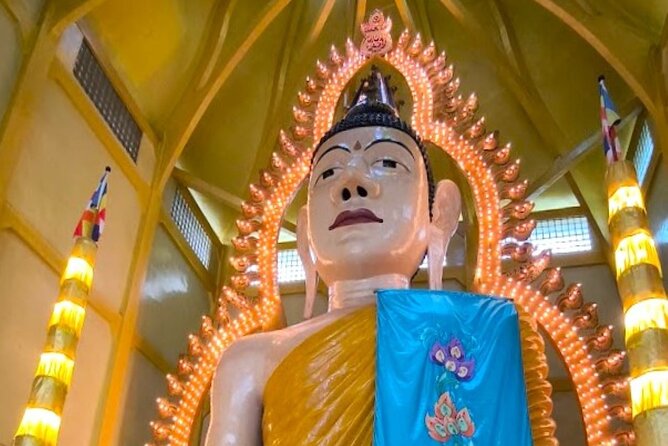
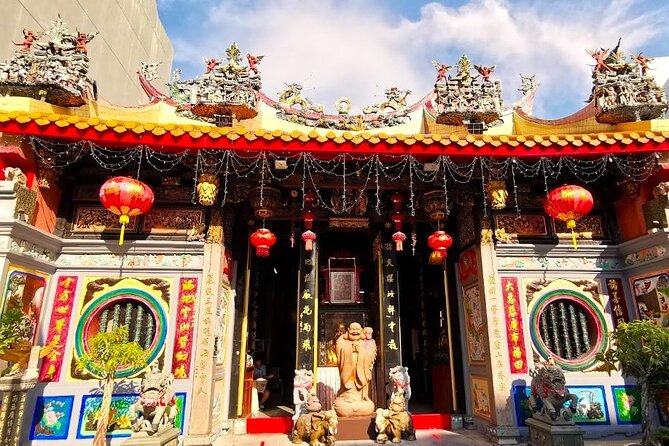
- You enter two important temples: Sakya Muni Buddha Gaya Temple includes a reclining Buddha chamber, while Leong San See Temple presents ornate Taoist design.
- The food stop is part of the experience: A short break takes place at a coffee shop known for fried Hokkien prawn noodles.
- The route handles difficult subjects directly: Flanders Square’s active daytime red-light area and Jalan Besar’s wartime story are treated as part of the neighborhood’s real past and present.
- The small group helps: A maximum of 15 people is easier to manage on narrow streets and inside active religious sites.
Why Farrer Park makes a fine walking tour base
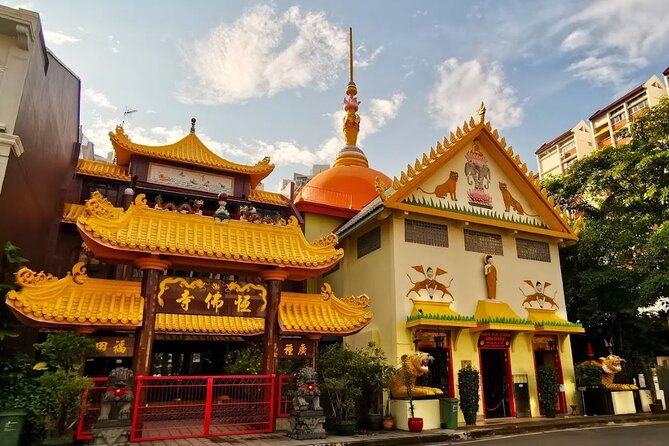
Farrer Park is not a single attraction. It is a district where several versions of Singapore sit close together. The area recalls horse racing, early immigrant communities, religious life, football, colonial-era schooling, World War II, and today’s café culture.
That mix gives this walk its value. You are not simply checking off monuments. You are watching the character of a neighborhood change from block to block. A temple may sit near a sports field. A row of carefully restored shophouses may be only a short walk from a red-light district. A former school ground may lead into a conversation about Singapore under Japanese rule.
The tour starts at lyf Farrer Park Singapore on Perumal Road at 11 a.m. It returns to the same meeting point. Since the walk runs through several districts, wear comfortable shoes and be ready for regular stops, short pauses, and continued walking between them. The exact walking distance is not given, but the 2 hour 30 minute duration and 13 stops point to a fairly active morning and early afternoon.
The group is capped at 15 people. That matters here. Religious buildings can feel cramped with a large crowd, and a smaller group gives you a better chance to hear Ping without standing right beside the guide.
More history and heritage around Singapore:
- Historical Singapore Bike Tour on Full-Sized Bicycles
★ 5.0 · 1,421 reviews - Singapore: Historical Half-Day Bike Tour
★ 4.8 · 399 reviews - Singapore Private Food, Culture and Heritage Tour with 9 tastings
★ 5.0 · 394 reviews
Race Course Road and the making of Farrer Park
The first stop sets up the district’s story. Race Course Road recalls the horse-racing track that operated here from 1843 to 1933. The track later became a sporting field known as Farrer Park, giving the area its modern name and its long connection with recreation.
This is a useful opening because it gives you a reason for the district’s name before the tour moves into temples and side streets. It also shows how city land changes purpose. What began as a racecourse became a sporting ground, and the area continues to carry that sporting identity through places such as Jalan Besar Stadium later in the walk.
You spend about 10 minutes here. That is enough for an explanation and a look around, but not a long historical lecture. If you want a full account of Singapore horse racing, this is not that. The stop works better as a quick piece of local context.
Two temples, two traditions
Sakya Muni Buddha Gaya Temple is one of the longer stops, at about 20 minutes. The group enters a chamber with a reclining Buddha and looks at sculptures showing scenes from the Buddha’s life. The setting gives you more than an exterior photograph. You get a chance to see how religious art teaches stories through posture, scale, and carved detail.
The tour then visits Leong San See Temple, also for about 20 minutes. Here the focus shifts to Taoism, ancestral worship, and ornate architecture. The contrast between the two temples is one of the walk’s strongest features. You are not treating Singapore’s religious buildings as interchangeable photo stops. You hear how different traditions express belief and remember the dead.
Please remember that these are active places of worship. The schedule allows time to look and listen, but it does not promise a private visit or a quiet building. Follow Ping’s instructions and dress in a way that feels respectful for religious sites.
For me, this pair of stops gives the walk much of its substance. You see decoration, but you also get a basic guide to the beliefs and practices behind it. That makes the buildings easier to understand when you pass them again on your own.
Balestier Road, a local food center
The Balestier stop lasts around 10 minutes and covers the origin of the road’s name, its connection with America, and the area’s role as a food destination. The tour does not treat the street as a museum piece. It presents Balestier as a place where history and everyday eating still meet.
The food theme becomes more concrete in Serangoon. You pause for about 10 minutes at a local coffee shop serving fried Hokkien prawn noodles. This is not described as a full meal or a tasting menu, so you should think of it as a short food break rather than lunch included in the ticket.
That distinction matters when you budget. The $31.38 price covers the English-speaking licensed guide, but food and gratuities are not included. Bring enough money if you want to order noodles or something else at the coffee shop.
I like this part because food gives you a practical way to remember a district. You are told where locals eat, then given a chance to see the kind of coffee shop that makes Singapore’s neighborhood food culture so appealing. The tour also points out favorite eateries that have not been picked up by the Michelin Guide. That can be more useful than another famous restaurant recommendation, especially if you plan to return to Farrer Park or Serangoon later.
More walking tours around Singapore:
- Singapore: Private Walking Tour with a Local
★ 4.7 · 410 reviews - Private Customised Singapore Walking Tour
★ 5.0 · 370 reviews - Singapore: Chinatown, Little India, Arab Street Walking Tour
★ 4.9 · 207 reviews - Singapore: Chinatown and Little India Guided Walking Tour
★ 4.8 · 190 reviews
Sri Vadapathira Kaliamman Temple and Hindu stories
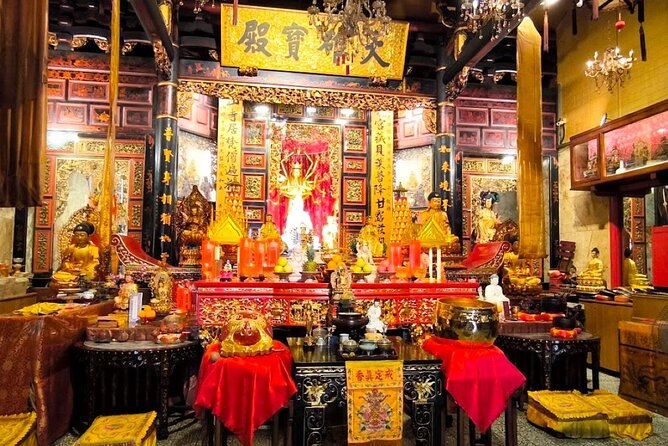
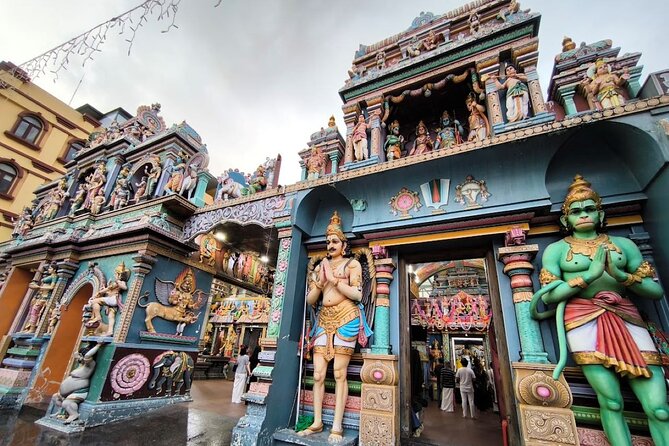
Sri Vadapathira Kaliamman Temple adds a Hindu setting to the tour. The temple dates from around 1870, and the guide explains stories connected with Hindu gods.
The scheduled stop is about 10 minutes, so expect an introduction rather than a detailed study of Hindu theology. Its value comes partly from the wider pattern of the day. Within a few hours, you have encountered Buddhist, Taoist, and Hindu traditions, each in its own building and neighborhood setting.
The colorful temple also breaks up the architectural rhythm of the older shophouses and streets. If your interest is photography, this should be a worthwhile stop, though the short time means you may need to listen and look quickly.
Flanders Square and a difficult present
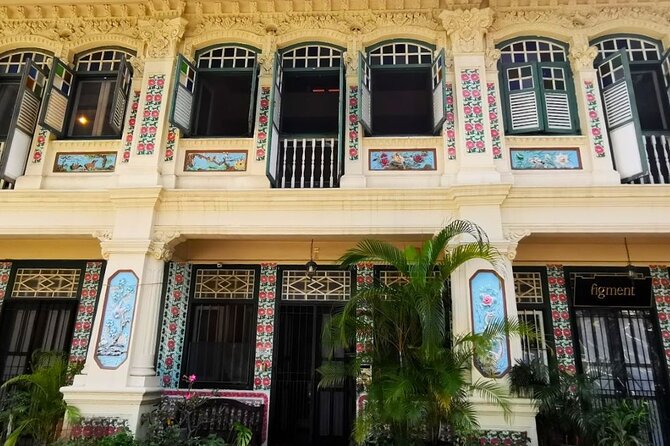
Flanders Square is the tour’s most unusual stop. It is described as an active red-light area during the day that shuts at night. The group spends about 15 minutes learning about this part of the neighborhood.
This is not a sanitized city tour. You are shown a working district that does not fit the usual image of Singapore as only spotless shopping streets and grand civic buildings. The stop also helps you understand why the polished Petain Road shophouses nearby feel so striking.
The subject may not suit everyone. If you prefer tours that avoid adult districts, this could be a reason to choose another walk. For many people, though, the stop adds honesty. It treats the area as part of present-day Singapore rather than pretending every street has been arranged for sightseeing.
The timing is also notable. You visit at 11 a.m., when the area is active, rather than seeing it only after dark. That is an unusual angle, and one that makes the neighborhood’s working character clear.
Petain Road and Peranakan design
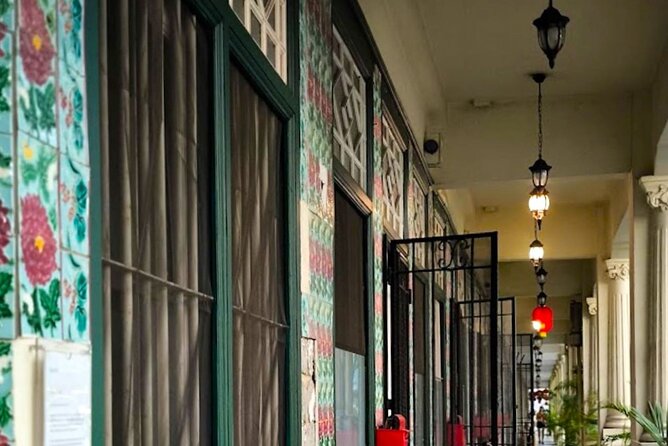
Petain Road lies close to Flanders Square, but the mood changes quickly. The street is known for a particularly beautiful row of restored heritage shophouses. The guide discusses their architecture and introduces the Peranakans, a cultural community with roots in the region’s long history of trade and settlement.
The 10-minute stop is short, yet the buildings give you plenty to notice: narrow frontages, repeated façades, decorative details, and the way the shophouses form a continuous street wall. The tour’s main strength here is the contrast with the previous stop. You do not need a long transfer to see two very different faces of the same district.
If architecture is your main interest, you may wish the schedule allowed more time. Still, Ping’s explanation helps you look with purpose instead of simply passing through and taking a quick photo. Make a mental note of Petain Road, since it is the kind of place you may want to revisit at a slower pace.
Tyrwhitt Road, Chye Seng Huat Hardware, and a changing neighborhood
At Chye Seng Huat Hardware, the focus moves to the hip cafés and modern spots around Tyrwhitt Road. The name refers to a former hardware shop that has become associated with the area’s newer café culture, while the surrounding streets retain their older character.
This is another useful contrast. Singapore’s neighborhoods do not change all at once. Old temples, former industrial buildings, heritage houses, food stalls, and stylish cafés can occupy the same small area. You get a quick look at that change without leaving the district.
The visit lasts about 10 minutes. It is best understood as a neighborhood orientation. You will not have time to explore every café, but you will get ideas for where to wander after the tour.
Holy Trinity Church and Chinese Renaissance architecture
Holy Trinity Church receives only five minutes, making it a brief architectural stop. It is one of two churches in Singapore built in the Chinese Renaissance style.
That detail gives the building a special place in the route. The tour has already shown several religious traditions, and this church adds another example of how faith communities adapted building styles to local culture. Because the stop is so short, you should expect to hear the key point, see the exterior or main features available during the visit, and move on.
This is a good example of the tour’s tradeoff. You get remarkable variety, but no single building receives the treatment of a specialist architecture tour.
Jalan Besar Stadium and the memory of World War II
Jalan Besar Stadium is described as the birthplace of Singapore soccer. It was also a major inspection site during Operation Sook Ching, part of the Japanese Occupation of Singapore. The tour uses this stop to explain the war and the atrocities suffered during that period.
Only five minutes are allocated here, but the subject carries weight. The stadium is not presented only as a sports venue. It becomes a place where national sporting memory and painful wartime memory meet.
You should expect a concise account, not a museum-style examination of the occupation. If World War II history is central to your trip, use the stop as a starting point and seek a more extended museum visit elsewhere. Within this walking tour, however, it prevents the route from becoming only an architecture-and-food outing.
Former Victoria School and Kitchener Road
At the People’s Association, you see the grounds of the former Victoria School. The stop takes about five minutes. It is another quick reminder that ordinary-looking city spaces can carry institutional and social history.
The final stop is Kitchener Road, where Ping points out favorite local eateries and tells the story of an amusement park that once entertained people including Charlie Chaplin. The 15-minute stop gives the tour a fitting close: food, entertainment, and the changing uses of city space.
You finish back at the starting point. That is practical if you want to continue exploring Farrer Park on your own or return to your accommodation. Since the tour begins and ends at the same place, you do not need to arrange a pickup at another part of Singapore.
Is $31.38 a good price?
At $31.38 per person, this is a fair price for a small-group, guide-led walk lasting about two and a half hours. The ticket pays for access to Ping’s explanations and route planning, not for meals or entrance fees. The listed attractions have no separate admission charge, but you should still budget for your own food and any gratuity.
The real value is the range of subjects covered. A self-guided walk could take you past the temples, stadium, shophouses, and cafés, but you might not know the racecourse story, the links between the streets, or the meaning of the wartime sites. The guide turns scattered locations into one readable neighborhood story.
The downside is that the tour moves quickly. If you stop often for photographs, want long temple visits, or prefer one subject explored in depth, you may find the schedule tight. If you like variety and an informed guide, the price makes more sense.
The tour is booked an average of 21 days ahead, so planning early is sensible if your Singapore dates are fixed. Free cancellation is available up to 24 hours before the 11 a.m. start. A mobile ticket is provided, and the tour is near public transportation.
Who will enjoy this walk most?
I would choose this tour if you have already seen Singapore’s headline sights and want a neighborhood with more texture. It also suits a first-time visitor who wants to understand how religion, sport, food, migration, and war shaped one part of the city.
The route works especially well for:
- People who enjoy local food suggestions more than formal tastings
- Visitors interested in temples and street architecture
- Anyone curious about Singapore beyond the central tourist areas
- Small groups who prefer an English-speaking guide
- Repeat visitors looking for places they might not find alone
You may want another type of tour if you need a low-walking activity, dislike adult districts, or want long visits inside museums and monuments. The available information says most people can participate, but it does not give an exact distance or detailed accessibility information. Ask the operator if those details are important to you.
Should you book the Farrer Park walking tour?
Book it if you want a compact, story-led look at a part of Singapore that mixes temples, food, heritage buildings, sport, and difficult modern realities. Ping’s personal guidance is the key reason to choose a tour rather than simply following a map. Her friendly style and strong grasp of local history give the route its focus.
I would not book it for a leisurely architecture stroll. Thirteen stops in 150 minutes means several visits are brief, and the food stop is not included in the price. But if you value range, local context, and places outside the usual sightseeing circuit, $31.38 is a sensible buy. Bring comfortable shoes, a little extra money for noodles, and an open mind about the less polished parts of Singapore.
FAQ
Where does the Farrer Park walking tour start?
The tour starts at lyf Farrer Park Singapore, 2 Perumal Road, #01-01, Singapore 218773.
What time does the tour begin?
The tour starts at 11 a.m.
How long does the walking tour last?
The experience lasts approximately 2 hours and 30 minutes.
Where does the tour finish?
The tour ends back at the meeting point at lyf Farrer Park Singapore.
What is included in the tour price?
An English-speaking licensed tourist guide is included.
Is food included?
Food is not included. The route includes a short break at a local coffee shop serving fried Hokkien prawn noodles, but you pay for your own food.
How many people can join the tour?
The group has a maximum of 15 people.
Just added around Singapore
- Skyline Luge and Sky Ride Ticket Sentosa Singapore★ 3.5 · 3 reviews
- Marina Bay Sands SkyPark Observation Deck ticket in Singapore★ 4.0 · 3 reviews
- Singapore Private Full-Day Sightseeing Tour★ 5.0 · 3 reviews
- Singapore: Food and Bike Tour – Downtown★ 4.6 · 3 reviews
- Singapore: Chinatown Street Food Tour★ 5.0 · 3 reviews
- Learn to cook authentic Peranakan food with local market tour★ 3.5 · 3 reviews
- Singapore Brompton Bike Tour from Rail Corridor, with food!★ 5.0 · 3 reviews
- Singapore: Bird Paradise★ 5.0 · 3 reviews
Walking Tours, compared.
Chinatown, Little India, Arab Street Walking Tour
Read our review →
Singapore Group History & Culture Walking Tour
Read our review →
Half Day or Full Day Private Custom Walking Tour of Singapore
Read our review →Browse the lists this tour appears in