
Reviewed · PHOTOGRAPHY SESSIONS
Singapore Night Photography Workshop
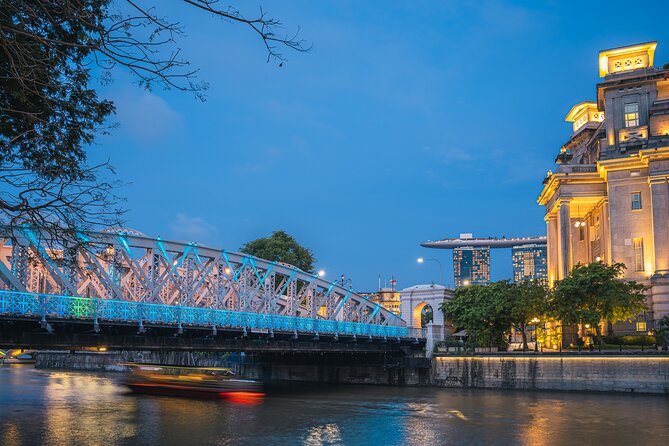
Singapore looks its most dramatic as daylight fades, and this workshop gives you a reason to slow down and frame it carefully. Along the Singapore River, you’ll photograph old and new architecture, people, reflections, and the city skyline while a professional photographer shows you how to handle low light.
I like the maximum three-person group, which leaves room for real coaching rather than a quick talk delivered to a crowd. I also like the clear goal: you are not just sightseeing at night, you are practicing settings and composition until the changing light gives you something worth keeping.
The main drawback is the equipment rule. You must bring your own camera gear, including a tripod, memory cards, and batteries, and the experience is weather dependent. At $145.26 per person for about two hours, this makes the most sense if you already own suitable equipment and want focused instruction.
In This Review
- Key points about the Singapore night shoot
- Why twilight is the right time for this workshop
- Starting at Clarke Quay Central at 6:30 pm
- Working along the Singapore River
- Camera settings for light trails and light bursts
- Composition lessons from Singapore’s waterfront
- A small group with room for real questions
- Photo review gives the lesson a useful finish
- Is $145.26 a fair price for two hours?
- Weather, cancellation, and practical planning
- Who should book this Singapore photography workshop?
- Should you book the night photography workshop?
- FAQ
- Where does the Singapore Night Photography Workshop start?
- What time does the workshop begin?
- How long does the experience last?
- Where does the workshop end?
- How many people can join the workshop?
- Is photography equipment provided?
- What happens if bad weather cancels the workshop?
Key points about the Singapore night shoot
- Twilight timing: Start at 6:30 pm and work through the change from fading daylight to night.
- Singapore River setting: Photograph modern towers, older riverside architecture, reflections, and city scenes from the waterfront.
- Small private group: The activity is limited to your own group, with no more than three people at a time.
- Practical camera work: Learn settings for light trails, light bursts, low-light scenes, and silky water.
- Photo review included: The session includes a review of your images, not just instruction while walking.
- Bring your own kit: Camera, lens, tripod, memory cards, and batteries are not provided.
Why twilight is the right time for this workshop
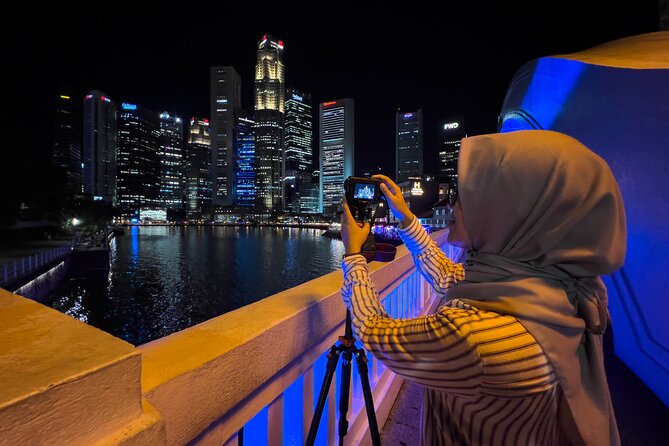
The useful part of this experience is its timing. You begin at 6:30 pm, when the sky is changing, then keep shooting as artificial lights take over. That gives you several types of night photography in one outing instead of placing you in full darkness from the first frame.
Twilight is forgiving in a way that deep night is not. There is still some light on building facades and the river, so you can work on balanced exposures before tackling darker scenes. As the sky loses color, the city lights become more important, and you can compare how the same waterfront looks from one stage to the next.
I like this format because it turns a short Singapore walk into a practical lesson. You are asked to watch light, not simply point at famous buildings. The change from day to night also gives the photographer guiding you a natural way to explain why one setting works at one moment and fails ten minutes later.
You should not expect a full camera course in two hours. You will get a focused introduction to night photography, with time to practice several effects. If you are new to manual settings, the workshop can help you understand the basics. If you already shoot often, the value comes from getting fresh angles and direct feedback on your choices.
More photo walks and shoots:
- #instawalk: Bugis, Waterloo, Kampong Glam
★ 5.0 · 60 reviews - Vacation Photographer in Singapore
★ 5.0 · 27 reviews - Instawalk with Phonetography of Iconic Singapore
★ 5.0 · 26 reviews
Starting at Clarke Quay Central at 6:30 pm
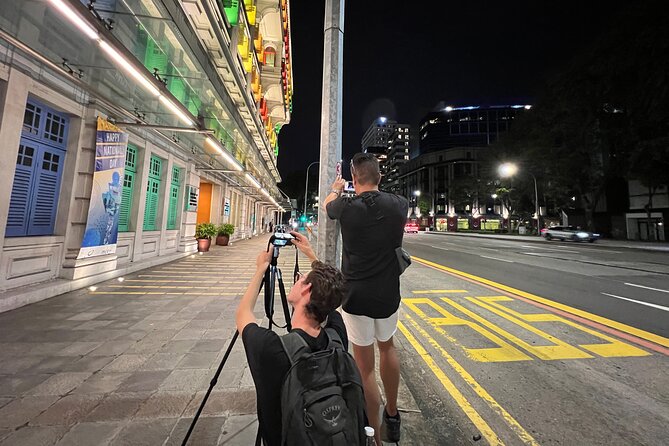
The meeting point is Clarke Quay Central, at 6 Eu Tong Sen Street. The activity begins and ends at this meeting point, so you do not need to arrange a separate return transfer. Hotel pickup and drop-off are not included, but the meeting point is near public transportation.
That setup is simple, though you should allow enough time to find the exact meeting place. Arriving with your camera assembled and your batteries charged will protect your short session from avoidable delays. A two-hour workshop moves quickly, especially when the light is changing.
The provider is Singapore Photography Workshops, and the instructor is a professional travel photographer. No individual guide name is provided, so you should not book this expecting a particular named photographer. The important point is the guide’s role: you are working with someone who can explain both camera settings and the visual choices behind a good frame.
Because the group is private and capped at three people, you can ask questions that fit your own camera. That matters more than it may sound. Night photography often exposes small gaps in understanding, such as why a shutter speed creates blur, why a bright sign affects an exposure, or how a tripod changes what you can attempt.
Working along the Singapore River
The route centers on one stop, the Singapore River and its riverside waterfront. The location lets you photograph a mix of modern and historical architecture without spending the session moving between distant parts of the city.
You will be guided to different angles along the riverfront. This is where the workshop’s sightseeing purpose pays off. Rather than taking the most obvious view from the first available spot, you can work on composition by shifting your position, looking for reflections, and deciding how much of the skyline belongs in the frame.
The river also offers different subjects close together. Buildings give you strong lines and bright windows. People add scale and movement. Water can hold reflections or become smooth and silky when you use a longer exposure. The city skyline supplies a broad subject, but the guide can help you avoid making every image feel like the same wide postcard.
The information provided does not promise a fixed list of buildings or a precise walking route, so you should think of this as a flexible riverside shoot rather than a checklist of landmarks. That is a benefit for photography, since the instructor can respond to the light and direct you toward useful viewpoints. It also means you should not book it if your main goal is to visit a particular building from a guaranteed angle.
Camera settings for light trails and light bursts
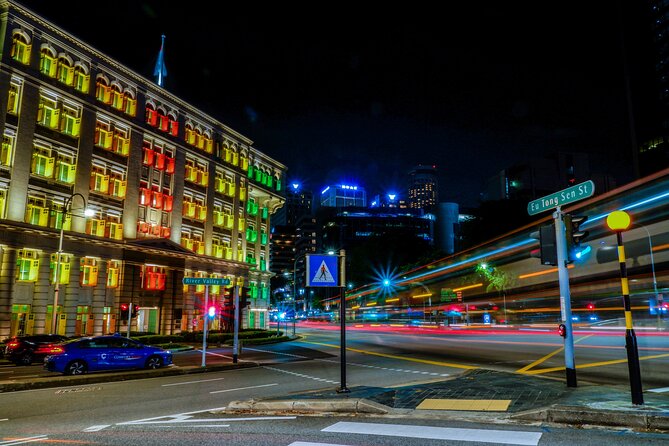
The workshop focuses on settings that produce visible creative effects. Light trails are created when moving lights leave lines through the frame. Light bursts can make bright points appear more pronounced, while longer exposures can turn moving water into a smoother surface.
You will not simply hear these terms and move on. The format is built around putting the ideas into practice as you photograph the riverfront. That hands-on step is the strongest reason to choose a workshop instead of trying to learn from a general sightseeing tour.
The guide can also help you adjust settings for the changing light. Early in the evening, the remaining daylight can help retain detail in buildings. Later, the brighter city lights may require a different approach. You should expect to work through several camera choices rather than rely on one setting for every photograph.
A tripod is required as part of your own equipment. It is especially important for the long exposures used to create silky water and some light effects. Since tripods are not supplied, check your packing plans before booking. The same applies to your camera, lens, memory cards, and batteries. You are responsible for bringing the complete working kit.
A few more Singapore days out worth weighing up
- Experience Singapore: Cultural Cooking Class
★ 5.0 · 1,514 reviews - Singapore: Hands-on Cooking Class with Cultural Immersion
★ 4.9 · 107 reviews - Singapore: Market-to-Table Experience and Cooking Class
★ 5.0 · 17 reviews - Singapore Photography Masterclass – Private Photography Lesson
★ 5.0 · 17 reviews
Composition lessons from Singapore’s waterfront
Good night photography is not only about getting a sharp, bright picture. It is also about deciding what belongs in the frame. The guide will point you toward angles that can improve composition, which may help you see the riverfront with more care.
You might practice placing the river as a leading line, using reflections to balance the frame, or including people to show the scale of the buildings. The exact exercise will depend on the group, the available light, and the scenes along the route. The useful part is that you receive direction while standing in front of the subject, when the advice can immediately be tested.
I like the mix of old and new architecture here. Modern towers can give you clean shapes and bright patterns, while older structures can add texture and contrast. You are not limited to one type of city photograph, and that variety helps you understand how composition changes with the subject.
The session also encourages you to photograph people and city activity, not just buildings. That gives your final set more range. Just remember that a two-hour workshop cannot cover every photographic style. Its focus is the riverfront at twilight and night, with practical attention to low-light work.
A small group with room for real questions
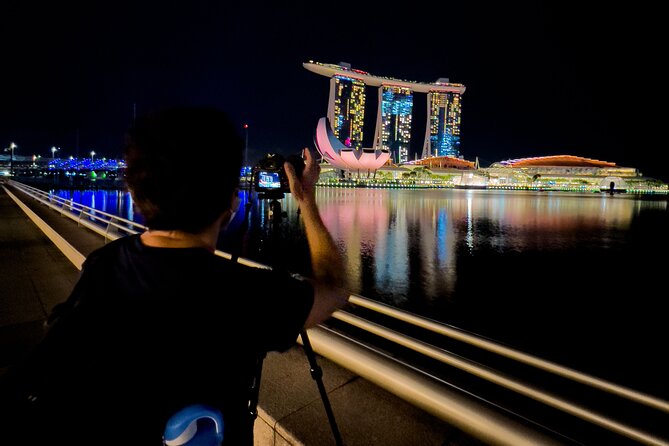
The group size is limited to three people, and the activity is private to your party. This is one of the experience’s clearest advantages. A photographer can look at your camera settings, see what you are trying to do, and offer advice without splitting attention across a large crowd.
Small groups also make it easier to stop at a viewpoint for a few minutes. Night photography often needs patience. You may need to wait for a person to move, a light to enter the frame, or a suitable moment when the scene feels balanced. A large group would make that slower and less comfortable.
The tradeoff is that the price is charged per person, not as a low-cost group walk. At $145.26 per person, you are paying for direct instruction and a private format rather than transportation, meals, or supplied equipment. For two people who want to learn together, the cost may feel reasonable because both can ask questions and share the session. For a casual photographer who only wants evening views, it may be harder to justify.
The private format should suit couples, friends, or a solo photographer who prefers individual attention. Most people can participate, and service animals are allowed. Still, you should be comfortable walking around the riverside area while carrying your camera equipment, since the session is built around photographing at several points along the waterfront.
Photo review gives the lesson a useful finish
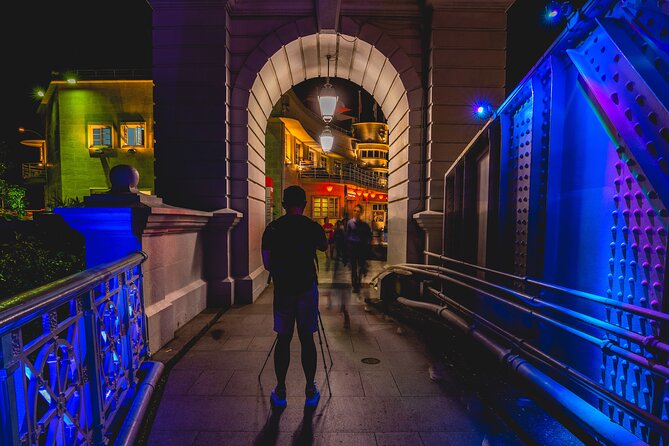
Photo review is included, and that adds value to the short duration. Without it, you might remember the settings but not understand which choices helped the image. Reviewing photographs gives you a chance to connect the technical steps with the results.
The review can help you see whether your composition is crowded, whether the highlights are too bright, or whether a light trail improves the image instead of distracting from it. It also gives the guide a chance to respond to the work you actually produced during the evening.
The available description does not specify how many images are reviewed or whether edited files are supplied. You should therefore treat photo review as feedback and instruction, not as a promised editing service or a package of finished photographs.
The strongest praise attached to this experience focuses on the advice and information provided during the night. That matches the workshop’s design. You are paying for practical help, and the session works best when you ask questions, show the guide what you are trying to achieve, and are willing to change your settings.
Is $145.26 a fair price for two hours?
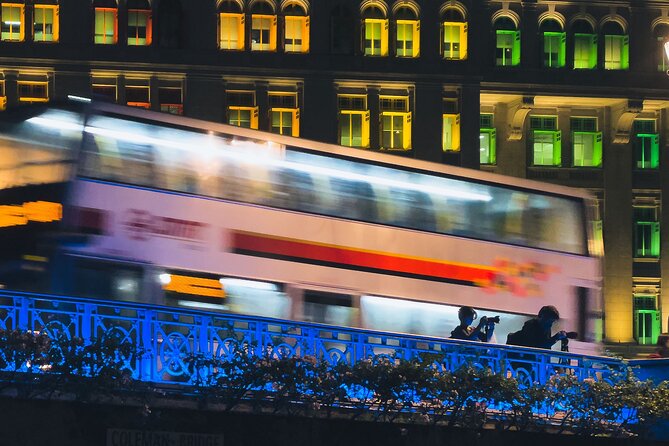
The price is $145.26 per person. On a simple sightseeing basis, that is not cheap for a two-hour outing. The cost does not include food, drinks, transport, or photography equipment, so you should compare it with the price of a normal evening walk, not assume those extras are covered.
The value improves if you want instruction rather than a guided stroll. You receive a professional photographer instructor, a photography tutorial, a private group of up to three, access to a strong riverfront setting, and a photo review. Those elements can save you time if you are struggling with night settings on your own.
It is also a good fit if you already carry a camera, tripod, and the required accessories. If you need to rent or buy several pieces of equipment just for this activity, the total cost rises quickly. The workshop is not an equipment rental service.
I would judge the price by your goal. If your aim is to return home with better low-light skills, the focused coaching may be worth it. If you only want to see Singapore lit up at night, you can enjoy the same general area without booking a photography lesson.
Weather, cancellation, and practical planning
The experience requires good weather. If poor weather causes the activity to be canceled, you are offered another date or a full refund. That safeguard matters because rain can affect both the walk and the long-exposure techniques.
The cancellation policy is strict for changes made by you. The experience is non-refundable and cannot be changed for any reason, so check your schedule before paying. Confirmation is sent within 48 hours of booking, subject to availability.
Bring the equipment listed for the session: camera, lens, tripod, memory cards, and batteries. Since none of it is included, a missing battery or card could take away valuable practice time. Food and drinks are also your responsibility, though the short duration means you can plan around the workshop.
You can use a mobile ticket, and the meeting point is near public transportation. The activity ends where it starts, which keeps the evening straightforward. Most people can participate, and service animals are allowed.
Who should book this Singapore photography workshop?
I would recommend it to you if you already own a camera and want to move beyond automatic settings. It is also suited to a couple or small group with different skill levels, since the private format allows the guide to respond to each person.
It should appeal to photographers who enjoy city scenes, reflections, architecture, and movement. The Singapore River provides enough variety for a short session, while the twilight-to-night timing gives you a natural lesson in changing exposure.
You may want to skip it if you do not have a tripod, if you prefer a relaxed sightseeing walk, or if you need a fixed list of landmarks and guaranteed viewpoints. The workshop is purpose-driven. You will spend much of the evening adjusting settings, checking compositions, and trying again.
The perfect rating from 20 submitted opinions, along with full recommendation, fits the experience’s strongest feature: direct advice in a very small group. Still, the high rating does not change the practical limits. It remains a short, equipment-dependent, weather-sensitive lesson.
Should you book the night photography workshop?
Book it if you want to learn how to photograph Singapore after dark, not simply look at it. The small group, riverside setting, professional instruction, and included photo review give the session a clear purpose, and the light trails, light bursts, and silky-water effects offer useful goals to work toward.
At $145.26, it is best viewed as a private photography lesson with sightseeing attached. Bring the right equipment, arrive ready to work, and keep your schedule firm because the booking cannot be changed or refunded by you. If that sounds like your kind of evening, this is a focused way to improve your night photography while seeing the Singapore River at its most photogenic.
FAQ
Where does the Singapore Night Photography Workshop start?
It starts at Clarke Quay Central, 6 Eu Tong Sen Street, Singapore 059817.
What time does the workshop begin?
The workshop begins at 6:30 pm.
How long does the experience last?
It lasts approximately two hours.
Where does the workshop end?
The activity ends back at the meeting point at Clarke Quay Central.
How many people can join the workshop?
The workshop is limited to a maximum of three people at a time, and only your group participates.
Is photography equipment provided?
No. You must bring your own camera, lens, tripod, memory cards, and batteries.
What happens if bad weather cancels the workshop?
If poor weather causes the experience to be canceled, you will be offered a different date or a full refund.
Just added around Singapore
- Skyline Luge and Sky Ride Ticket Sentosa Singapore★ 3.5 · 3 reviews
- Marina Bay Sands SkyPark Observation Deck ticket in Singapore★ 4.0 · 3 reviews
- Singapore Private Full-Day Sightseeing Tour★ 5.0 · 3 reviews
- Singapore: Food and Bike Tour – Downtown★ 4.6 · 3 reviews
- Singapore: Chinatown Street Food Tour★ 5.0 · 3 reviews
- Learn to cook authentic Peranakan food with local market tour★ 3.5 · 3 reviews
- Guided Walking Tour to the Historical Attractions in Farrer Park★ 5.0 · 3 reviews
- Singapore Brompton Bike Tour from Rail Corridor, with food!★ 5.0 · 3 reviews
Photography Sessions, compared.
Instawalk with Phonetography of Iconic Singapore
Read our review →
Moments in the City Private Photography Session
Read our review →
Singapore Photography Masterclass – Private Photography Lesson
Read our review →
Instawalks of Iconic Singapore Photography Services
Read our review →
Singapore Vacation Photographer | Photography Tour | Photoshoot
Read our review →Browse the lists this tour appears in