
Reviewed · LITTLE INDIA TOURS
Kampong Glam and Little India Join-in Walking Tour
Singapore’s best cultural lessons often happen on foot, where a mosque dome, flower stall, temple, and old shophouse appear within a few blocks. This 3.5-hour walk links Kampong Glam and Little India, two districts that give Singapore its human scale and multicultural character.
I like the route’s clear contrast: Kampong Glam brings Malay and Arab traditions, textile shops, cafés, and Sultan Mosque, while Little India adds temples, spices, sweets, and market life. I also like the small group cap of 15, which gives the guide room to answer questions. The main drawback is that this is a fairly brisk morning walk, with an MRT transfer between districts and no admission fees included.
In This Review
- Key points to know
- Why this route works for Singapore
- Haji Lane gives Kampong Glam a modern opening
- Arab Street and Bussorah Street frame Sultan Mosque
- Gedung Kuning and Istana Kampong Glam add royal context
- The MRT shift changes the mood
- Tekka Centre brings food and daily life into focus
- Tan Teng Niah’s house breaks the pattern
- Sri Veeramakaliamman Temple is the spiritual center
- Little India Arcade and Campbell Lane finish the walk
- How much value do you get for $84.75?
- Who will enjoy this morning most?
- Practical details before you reserve
- Should you book the Kampong Glam and Little India walk?
- FAQ
- How long is the Kampong Glam and Little India walking tour?
- What time does the tour start?
- Where does the tour begin and end?
- Is transportation included between Kampong Glam and Little India?
- Is a guide included?
- Are admission fees included?
- How many people can join the tour?
Key points to know
- Two distinct districts in one morning: Begin in Kampong Glam near Bugis and finish in Little India.
- A guide-led cultural walk: An English-speaking licensed guide explains the places, customs, and stories along the route.
- Strong visual variety: Expect street art on Haji Lane, Sultan Mosque’s golden dome, colorful shophouses, Hindu temple sculpture, and market stalls.
- The MRT connects the neighborhoods: The route includes a train ride between Kampong Glam and Little India, according to the tour experience.
- Small group size: The maximum is 15 people, a useful limit for a walking tour with frequent stops.
- Best for active sightseers: You need a moderate level of fitness and should expect to walk for about three and a half hours.
Why this route works for Singapore
Many city tours spread themselves thin across famous sights. This one takes a narrower, smarter approach. It concentrates on two neighborhoods where Singapore’s past remains visible in the streets, buildings, food, and religious life.
Kampong Glam and Little India are not museum districts frozen in time. They are working neighborhoods. You see shops, restaurants, places of worship, markets, and old buildings still tied to daily life. That matters because a guide can explain not only what a building is, but why it remains part of the city.
The route begins at Bugis at 9:00 a.m. and ends in Little India. The early start is useful in Singapore’s heat, especially since the tour offers little shelter from the sun while moving between stops. You will want comfortable shoes, water, and clothing suitable for entering or viewing religious sites.
More of Little India to explore:
- Chinatown, Little India, Kampong Gelam City Highlights Tour
★ 5.0 · 224 reviews - Singapore: Chinatown, Little India, Arab Street Walking Tour
★ 4.9 · 207 reviews - Singapore: Chinatown and Little India Guided Walking Tour
★ 4.8 · 190 reviews
Haji Lane gives Kampong Glam a modern opening
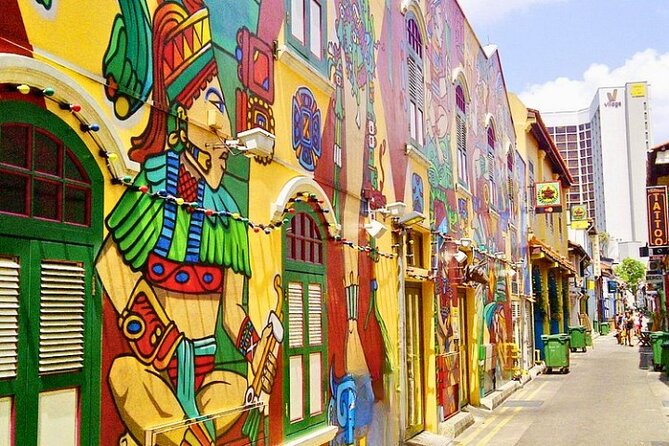
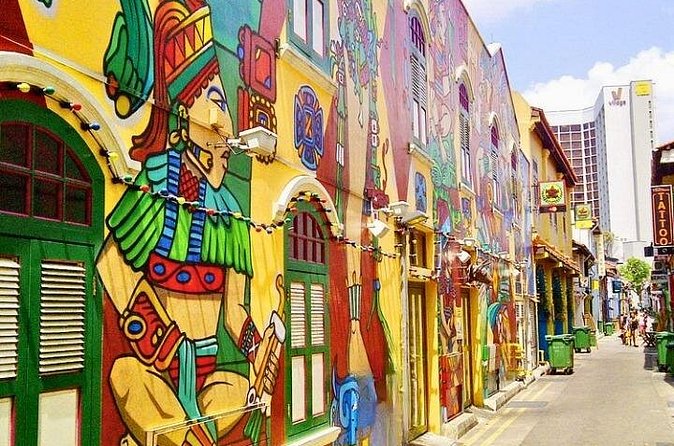
Haji Lane is a short but lively introduction to Kampong Glam. Its walls carry bold street art, and independent shops and cafés occupy old shophouses. The lane once housed Muslim pilgrims traveling toward Mecca, but its present character is much more contemporary.
The stop is brief, about 10 minutes, so expect an orientation rather than a long shopping break. That is probably the right choice. Haji Lane is compact, and a guide can give you the background before leading you toward the older streets nearby.
I like this first stop because it prevents Kampong Glam from being reduced to one mosque and a few postcard views. You see the district’s newer side before learning how older Malay and Islamic traditions shaped it.
Arab Street and Bussorah Street frame Sultan Mosque
Arab Street brings the district’s Islamic and Middle Eastern connections into view. Textile shops, eateries, and storefronts line the road, with Sultan Mosque providing the visual anchor.
Bussorah Street, the pedestrian way in front of Sultan Mosque, is especially useful for understanding the district’s layout. Heritage shophouses line the approach, and the street offers food, souvenirs, and places to pause. It is also one of the clearest spots to appreciate how religious, commercial, and residential uses overlap in Kampong Glam.
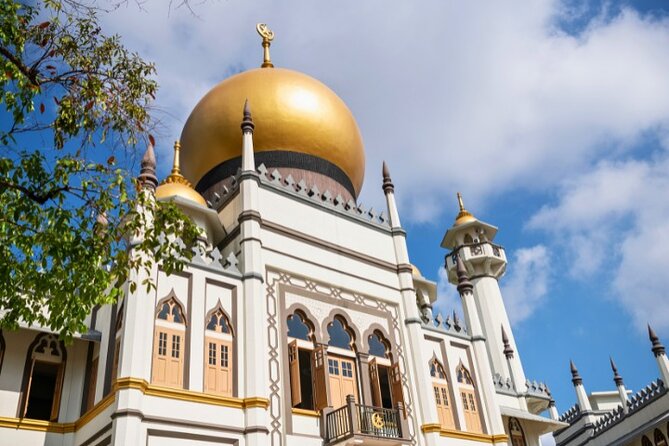
The tour then spends around 15 minutes at Sultan Mosque, also called Masjid Sultan. The mosque was built in 1824 for Sultan Hussein Shah, the first sultan of Singapore, and its large golden domes make it one of the city’s most recognizable religious buildings.
The supplied details do not promise interior admission, so you should not assume you will go inside. The admission policy also says entry fees are not included. Even from the outside, the mosque gives the guide a strong starting point for explaining Singapore’s Malay royal and Muslim past.
Gedung Kuning and Istana Kampong Glam add royal context
Gedung Kuning means Yellow Mansion in Malay. This historic building dates to the 1850s and once served as a residence for Malay nobility. It now contains a restaurant and cultural uses, but the short five-minute stop is mainly about placing the building within the district’s former royal quarter.
Next comes Istana Kampong Glam, the old palace of Sultan Hussein Shah and his descendants. Built in the 1840s, it now houses the Malay Heritage Centre, which presents Malay traditions and the community’s part in Singapore’s development.
Again, the stop is listed at about five minutes, and admission is not included. Treat this as a guided exterior visit unless your guide says otherwise. The value is not in spending a long time inside. It is in seeing the palace grounds and connecting the mosque, mansion, and commercial streets to the former Malay royal center.
This part of the tour is where a good guide makes the difference. The available feedback names Charles and describes him as especially helpful, clear, and willing to answer questions beyond the basic route. That does not guarantee Charles will lead every departure, but the tour clearly depends on the guide’s ability to turn a series of buildings into a connected story.
More around Kampong Glam and Arab Street:
- Kampong Glam, Little India & Chinatown with Local Street Food Tastings
★ 4.5 · 70 reviews - #instawalk: Bugis, Waterloo, Kampong Glam
★ 5.0 · 60 reviews - Tasting Trails: Chinatown OR with Kampong Glam, Little India
★ 5.0 · 59 reviews - 5 hours Little India, Kampong Glam, Chinatown with 9 Food Tasting
★ 5.0 · 58 reviews
The MRT shift changes the mood
The route then moves toward Little India, with Race Course Road providing a link to the next neighborhood. The street takes its name from the Serangoon Road Race Course, Singapore’s first horse racing track, established in 1842 near present-day Farrer Park.
This is not a tour built around private transport. The experience includes walking and, based on the route description, an MRT ride between the two communities. That public transit connection is practical and fitting. You see how close these districts are within Singapore’s city center, while also getting a short break from the pavement.
The transfer does mean the tour is not one continuous walk. If you prefer a totally private route with no train connection, this may feel less polished. If you like seeing how locals move around the city, the MRT segment adds useful context.
Tekka Centre brings food and daily life into focus
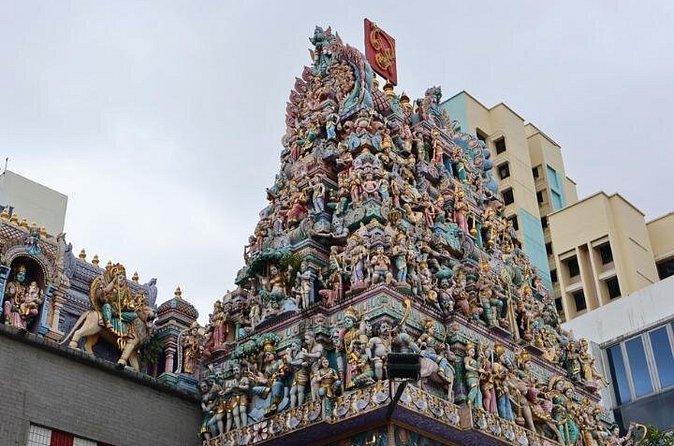
Little India’s Tekka Centre is one of the most useful stops on the route. The complex combines a wet market, hawker center, and shops. The original market opened in 1915, and the present site was reconstructed in 1982.
The tour allows about 15 minutes here. That is enough to look around and absorb the smells of spices, cooked food, flowers, and market produce, but not enough for a leisurely meal. You may find yourself wishing for extra time, particularly if you enjoy food photography or want to browse every stall.
Still, a short guided visit has an advantage. Markets can feel confusing when you first enter them. Your guide can point out what you are seeing and explain why Tekka Centre matters to the neighborhood. Since food and shopping purchases are not included, bring money if you want to buy something, but do not count on a full meal during the scheduled walk.
Tan Teng Niah’s house breaks the pattern
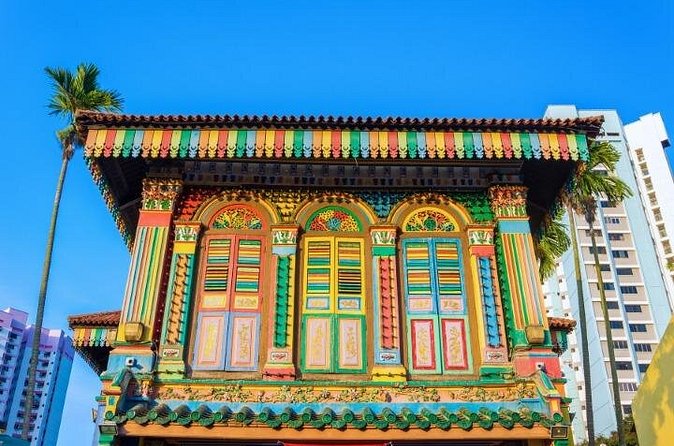
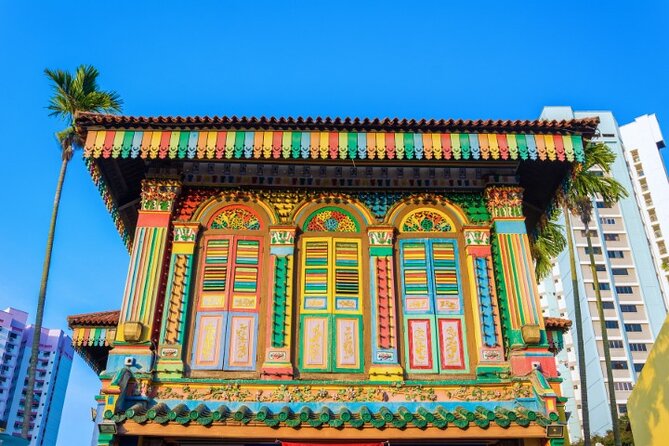
The Former House of Tan Teng Niah is one of Little India’s most memorable photo stops. This brightly painted Chinese villa was built in 1900 by confectionery businessman Tan Teng Niah. It is unusual because it survives in the middle of a district strongly associated with Indian culture.
The five-minute visit is short, but the building needs little introduction to catch your eye. Its presence also gives the guide a chance to explain that Singapore’s ethnic districts have never been completely sealed communities. Chinese, Malay, Indian, Arab, and other groups have lived and worked alongside one another.
Admission is not included, although this stop is primarily an exterior viewing point in the route provided. You get the most from it by listening to the story rather than expecting a formal house tour.
Sri Veeramakaliamman Temple is the spiritual center
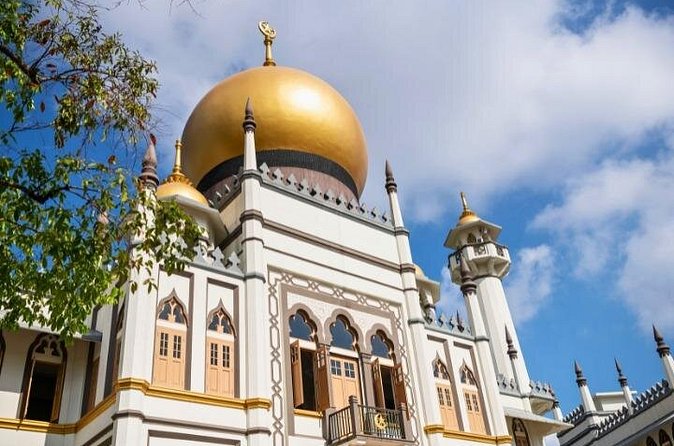
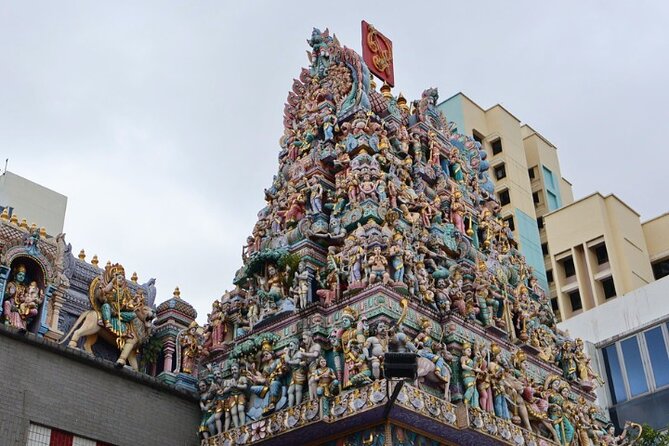
Sri Veeramakaliamman Temple is one of Singapore’s oldest Hindu temples. It began as a shrine in 1855 and was rebuilt in 1881 by Indian pioneers along Serangoon Road. The temple is dedicated to the fierce Hindu goddess Kali.
The scheduled visit lasts about 15 minutes. That gives you time to study the temple’s exterior details and, if access is permitted at the time, observe the worship space respectfully. The tour information lists admission as free, but religious sites may have rules about clothing, photography, footwear, and behavior. Follow the guide’s instructions and do not treat the temple as a set for photographs.
For me, this is one of the route’s most important stops. A market or colorful building can show you how a district looks. A working temple helps you understand how the community practices its faith. The distinction is worth making, especially on a tour that aims to explain culture rather than simply collect photographs.
Little India Arcade and Campbell Lane finish the walk
Little India Arcade occupies conserved neoclassical shophouses built in 1913. The shopping complex officially opened in 1995 and includes stores tied to Indian goods and traditions.
The stop lasts around 10 minutes. You might find clothing, souvenirs, sweets, and other items associated with the neighborhood, but the schedule is too tight for serious shopping. Think of the arcade as a final look at how old architecture supports newer commercial life.
Campbell Lane completes the route. This pedestrian street was once linked to livestock trading and now serves as a busy cultural and shopping corridor. Its setting helps bring together the themes of the morning: old trades, religious practice, food, commerce, and neighborhood change.
The end point is Little India, not Bugis. That is convenient if you plan to continue eating, shopping, or exploring the temples and streets on your own. It also means you should not schedule a fixed activity back near Bugis immediately after the tour. The listed duration is approximate.
How much value do you get for $84.75?
At $84.75 per person, this is not a cheap way to spend a morning in Singapore. You are paying for the structure, the guide, the local explanation, and the convenience of linking two districts without having to plan the route yourself.
The price makes more sense if you value context. You could walk through Haji Lane, Sultan Mosque, Tekka Centre, and Little India independently for little or no admission cost. What is harder to reproduce is the connected explanation: why Kampong Glam developed around Malay royalty and Islam, how Little India’s streets took shape, and how buildings from different communities fit within one city.
The small group limit helps. With no more than 15 people, you should have a better chance of hearing the guide and asking questions than on a large coach-style outing. The available comments place strong emphasis on Charles’s teaching, personal attention, and willingness to help with questions beyond the scheduled route. Those qualities are central to the price.
I would not book this expecting included food, shopping, or entry to paid attractions. The tour includes the 3.5-hour walk and an English-speaking licensed tourist guide. Everything else is your responsibility, including any admission cost, purchases, and food.
Who will enjoy this morning most?
I would choose this tour if you want an introduction to Singapore’s cultural districts but do not want a broad, vehicle-based city tour. It suits first-time visitors who want a clear route and enough background to continue exploring alone afterward.
It also fits solo visitors and couples who prefer company without joining a huge group. The maximum of 15 is small enough for questions, while the walking format keeps you close to the streets.
Families with older children may like the mix of murals, markets, temples, shops, and train travel. The moderate fitness requirement matters, though. This is not a gentle sightseeing ride, and the heat can make 3.5 hours feel longer.
You should think twice if shopping and eating are your main goals. The tour gives you brief looks at Tekka Centre, Little India Arcade, and Campbell Lane, but the timetable does not leave much room for a proper meal or extended browsing.
Practical details before you reserve
The tour starts at Bugis at 9:00 a.m. and ends in Little India. Since the exact starting point within Bugis is not stated here, check your confirmation carefully and arrive with time to spare.
A mobile ticket is provided, and confirmation is received when you book. The route is near public transportation, and the MRT portion makes transit part of the experience rather than an inconvenience.
Wear comfortable shoes and bring water. You should be prepared for regular walking, short stops, street crossings, and time outdoors. Modest clothing is a sensible choice for a route that includes a mosque and Hindu temple.
Free cancellation is available up to 24 hours before the start time for a full refund. Cancellations or changes made less than 24 hours before the start are not accepted for a refund.
Should you book the Kampong Glam and Little India walk?
I would book it if you want human stories and neighborhood detail, not just Singapore’s headline sights. The two-district format is efficient, the group size is sensible, and the route includes several places you might otherwise pass without understanding.
The strongest reason to choose it is the guide-led explanation, especially if Charles is leading your departure. The main caution is value: at $84.75, you should be ready to pay for interpretation rather than admissions or included meals.
Book this tour for a well-organized cultural introduction, then return to Little India afterward for a slower meal or more shopping. Skip it if you prefer to explore at your own pace, spend long periods inside temples and markets, or avoid public transportation during a walking excursion.
FAQ
How long is the Kampong Glam and Little India walking tour?
The tour lasts approximately 3 hours and 30 minutes.
What time does the tour start?
The start time is 9:00 a.m.
Where does the tour begin and end?
It begins in Bugis, Singapore, and ends in Little India, Singapore.
Is transportation included between Kampong Glam and Little India?
The route includes an MRT ride between the two districts, as described for the experience. The tour is otherwise a walking tour.
Is a guide included?
Yes. The tour includes an English-speaking licensed tourist guide.
Are admission fees included?
No. Admission fees and anything not listed in the inclusions are not included. Several stops are listed with free admission, while entry to Gedung Kuning, Istana Kampong Glam, the Former House of Tan Teng Niah, and Little India Arcade is not included.
How many people can join the tour?
The maximum group size is 15 travelers.
More Walking Tours in Singapore
- Singapore: Private Walking Tour with a Local
★ 4.7 · 410 reviews - Private Customised Singapore Walking Tour
★ 5.0 · 370 reviews - Singapore: Customized Private Tours (Car/Bus/Walking)
★ 5.0 · 181 reviews - Eat Snap Katong Walking Food Tour
★ 5.0 · 174 reviews
Just added around Singapore
- Skyline Luge and Sky Ride Ticket Sentosa Singapore★ 3.5 · 3 reviews
- Marina Bay Sands SkyPark Observation Deck ticket in Singapore★ 4.0 · 3 reviews
- Singapore Private Full-Day Sightseeing Tour★ 5.0 · 3 reviews
- Singapore: Food and Bike Tour – Downtown★ 4.6 · 3 reviews
- Singapore: Chinatown Street Food Tour★ 5.0 · 3 reviews
- Learn to cook authentic Peranakan food with local market tour★ 3.5 · 3 reviews
- Singapore Brompton Bike Tour from Rail Corridor, with food!★ 5.0 · 3 reviews
- Guided Walking Tour to the Historical Attractions in Farrer Park★ 5.0 · 3 reviews
Little India Tours, compared.
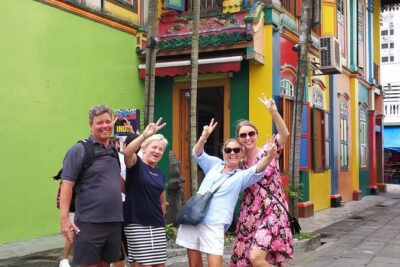
Chinatown, Little India, Kampong Gelam City Highlights Tour
Read our review →Chinatown, Little India, Arab Street Walking Tour
Read our review →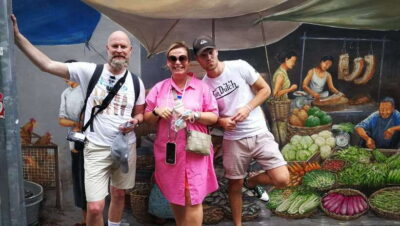
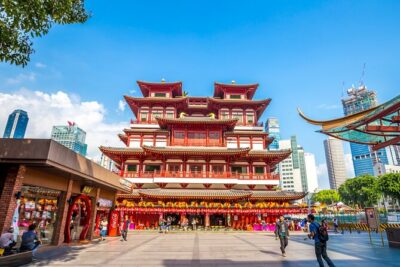
Kampong Glam, Little India & Chinatown with Local Street Food Tastings
Read our review →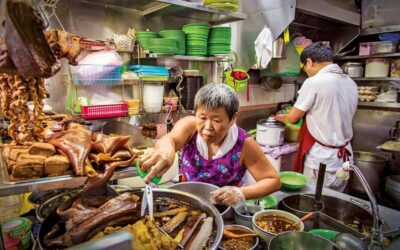
Tasting Trails: Chinatown OR with Kampong Glam, Little India
Read our review →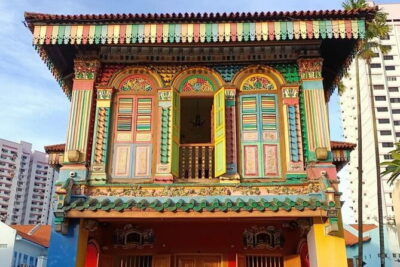
5 hours Little India, Kampong Glam, Chinatown with 9 Food Tasting
Read our review →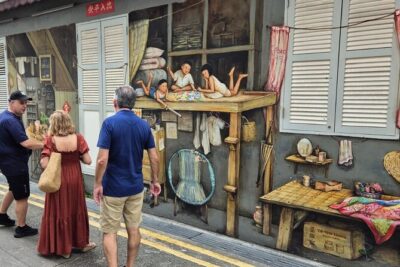
4-hour Chinatown, Little India, and Arab Street Walking Tour
Read our review →
Private Singapore Food Tour in Chinatown and Little India
Read our review →Browse the lists this tour appears in