
Reviewed · CHINATOWN TOURS
Private Singapore Food Tour in Chinatown and Little India
Singapore’s food culture makes the best argument for exploring the city on foot. This private tour links old hawker streets, Maxwell Food Centre, Chinatown’s Buddha Tooth Relic Temple, Tekka Centre, and the lanes of Little India in about three hours. You get nine shared tastings while your guide explains the people, faiths, and working traditions behind each stop.
I like the private format, since your guide can adjust the pace and explain unfamiliar dishes without rushing you along with a large group. I also like the route itself: it connects two of Singapore’s most important cultural districts by public transport and walking, rather than keeping you inside one market.
The main consideration is price. At $141.04 per person, this is not a cheap way to eat, especially since the food is served as shared tastings and includes several carb-based dishes. You are paying for the guide, context, transport, and access to local food knowledge as much as for the plates.
In This Review
- Five things to know before you book
- Why this route works so well
- Chinatown starts with Singapore’s street food story
- Maxwell Food Centre brings the biggest food lesson
- Buddha Tooth Relic Temple adds a quiet pause
- Public transport connects the two districts
- Tekka Centre shows Little India through food
- Serangoon Road brings street snacks and small details
- Two heritage sights add depth to Little India
- Campbell Lane finishes with everyday Little India
- What the $141.04 price really covers
- Who should book this private food walk
- Should you book it?
- FAQ
- How long does the Singapore food tour last?
- Where does the tour start?
- Where does the tour end?
- How many food tastings are included?
- Is the tour private?
- Is hotel pickup available?
- Can visitors with food allergies or special diets join?
Five things to know before you book
- Nine shared tastings: Expect a mix of two or three carb-based dishes, heritage foods, popular snacks, and a refreshment.
- Chinatown to Little India: The tour begins at Chinatown MRT Station and ends near Little India MRT Station.
- Private attention: Only your group takes part, with a licensed local food guide.
- Strong cultural focus: Food is paired with Singapore’s history, religion, hawker traditions, spices, and old streets.
- Allergy warning: Tastings may contain soy, gluten, wheat, chicken, pork, dairy, nuts, and spices, so this tour is not suitable for vegan visitors, people with gluten intolerance, or those with allergies.
Why this route works so well
Singapore can feel polished and modern at first glance, but its food culture grew from ordinary street cooking, immigrant communities, religious customs, and old trade routes. This tour gives you a useful way to read the city. You are not simply moving from one restaurant to another. You are walking through districts where food, worship, commerce, and family life still overlap.
The route also has a sensible rhythm. Chinatown provides the opening lesson in hawker culture. Maxwell Food Centre supplies the main cluster of tastings. A temple visit slows the pace and gives you visual context. Public transport then carries you toward Little India, where Tekka Centre and Serangoon Road bring a different set of flavors and traditions.
I would choose this tour early in a Singapore visit. A good guide can help you understand hawker centers and local dishes before you spend the rest of your trip ordering on your own. The practical help may be as useful as the food. One guide, Corliss, has helped a visitor navigate the subway and handle very spicy dishes, which is exactly the sort of small assistance that makes a first day easier.
More walks through Chinatown:
- Chinatown, Little India, Kampong Gelam City Highlights Tour
★ 5.0 · 224 reviews - Singapore: Chinatown Hawker Market Food Tour with 7 Food Tastings
★ 5.0 · 213 reviews - Singapore: Chinatown, Little India, Arab Street Walking Tour
★ 4.9 · 207 reviews
Chinatown starts with Singapore’s street food story
The first hour takes place in Chinatown, beginning at Chinatown MRT Station. Your guide leads you through older streets and alleyways connected to the city’s former traveling hawkers. The point is not just to photograph old facades. You learn how food sellers brought meals to workers and neighborhoods before Singapore’s hawker centers became organized public food halls.
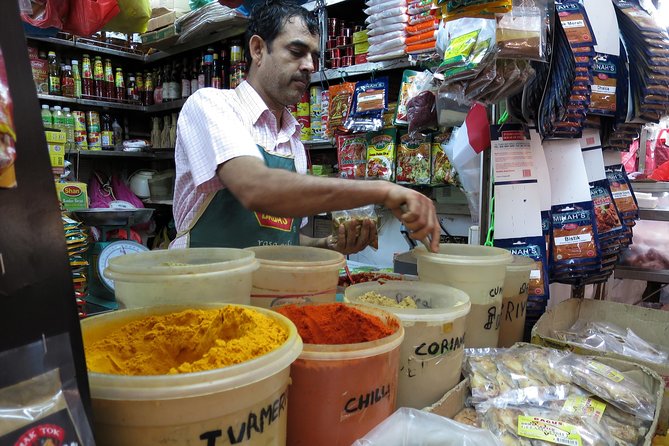
This introduction gives the tastings a human scale. You can ask why certain foods became popular, how ingredients were used, and how Chinese cooking changed in Singapore. The discussion also covers subjects that many standard sightseeing walks skip, including spices, slaughterhouses, and the movement of hawkers into established centers.
The walking is central to the experience. You should expect streets, lanes, market areas, and time on your feet rather than a seated food crawl. Wear comfortable footwear, bring water, and carry a poncho or umbrella. Singapore’s heat and rain can both affect how pleasant a three-hour walk feels.
Maxwell Food Centre brings the biggest food lesson
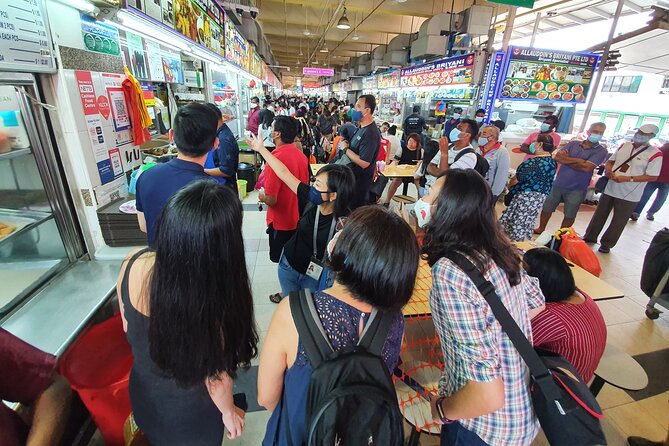
At Maxwell Food Centre, the tour focuses on Singapore’s hawker culture. Eating is treated as a national pastime, and this is where the idea becomes concrete. You taste nine items influenced by several food traditions, with the dishes meant for sharing across your private group.
The tastings include a mix of two or three carb-based dishes, popular snacks, heritage foods, and a refreshment. That wording matters. This is not nine full meals, and you should not expect a carefully paced restaurant tasting menu. It is a broad sample designed to show range.
Shared food works especially well in a private group. You can compare flavors, ask questions, and decide which dishes deserve a second order later in your trip. It also means the amount each person eats depends on the group size and appetite. If you arrive very hungry, the portions may feel modest. If you prefer trying many things instead of eating one large meal, the format should suit you.
The main weakness is value perception. One visitor felt the food choices did not fully justify the cost. That is a fair concern at $141.04 per person. I would book this for the explanations and route, not simply for the quantity of food. If your only goal is to eat as cheaply as possible, you can spend far less at a hawker center.
Buddha Tooth Relic Temple adds a quiet pause
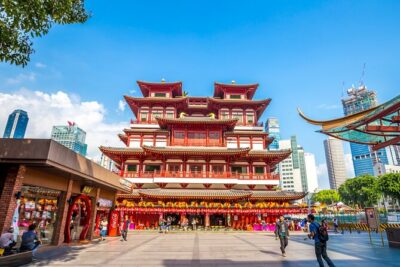
The Buddha Tooth Relic Temple and Museum provides a short break from eating and walking. The building is designed in a Tang style and is one of Chinatown’s major landmarks. You have time for photographs and a look at the temple’s architecture.
The stop is brief, about 15 minutes, so do not expect a detailed museum visit. Its value comes from placing Chinatown’s food culture beside its religious life. The tour makes clear that the district is not just a collection of stalls and souvenir shops. It is also a place of worship and community activity.
Your guide can explain the setting in relation to Singapore’s Chinese heritage, culture, and religion. Dress casually but respectfully, and follow any instructions posted at the temple. The stop is most useful if you pay attention to the contrast between the busy food streets and the more reflective temple space.
More of Little India to explore:
- Singapore: Chinatown and Little India Guided Walking Tour
★ 4.8 · 190 reviews - Kampong Glam, Little India & Chinatown with Local Street Food Tastings
★ 4.5 · 70 reviews - Tasting Trails: Chinatown OR with Kampong Glam, Little India
★ 5.0 · 59 reviews - 5 hours Little India, Kampong Glam, Chinatown with 9 Food Tasting
★ 5.0 · 58 reviews
Public transport connects the two districts
The experience includes public transportation, but not private transport. The starting point is Chinatown MRT Station, and the tour finishes near Little India MRT Station. Hotel pickup is available only when you choose the option that includes pickup. Drop-off is not included.
This arrangement keeps the experience tied to local city life. You move between districts as residents do, rather than sitting in a private vehicle. It also means you should allow a little energy for walking, station movement, and the tropical weather.
The end point is practical. After the tour, your guide can offer directions and help you get oriented around Little India MRT Station. That is useful if you plan to continue exploring the neighborhood, return to your hotel, or catch public transport to another part of Singapore.
Tekka Centre shows Little India through food
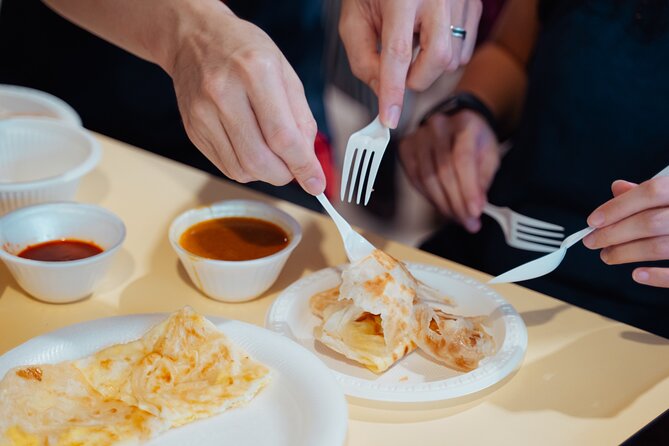
Tekka Centre changes the flavor profile and visual feel of the route. Here, you taste local dishes such as roti prata, an Indian flatbread, rojak, and other local favorites. The stop lasts about 40 minutes, making it one of the longer food-focused sections.
Roti prata is a good example of why context helps. The dish may look simple, but a guide can place it within Singapore’s Indian food traditions and explain how it fits into everyday eating. Rojak adds another contrast, with its own mix of textures and flavors.
Tekka Centre is also a working market, so the experience is not polished for sightseeing alone. You may see shoppers, food sellers, and ordinary neighborhood activity around you. That setting is part of the appeal, although it can also mean noise, heat, and crowded passages.
If you have a sensitive palate, tell your guide early. Spices are part of the food experience, and the tour includes Indian street snacks. A private guide has more room to adjust choices than a large group tour, but the food restrictions remain serious. The listed tastings may include wheat, gluten, dairy, nuts, soy, chicken, pork, and other ingredients.
Serangoon Road brings street snacks and small details
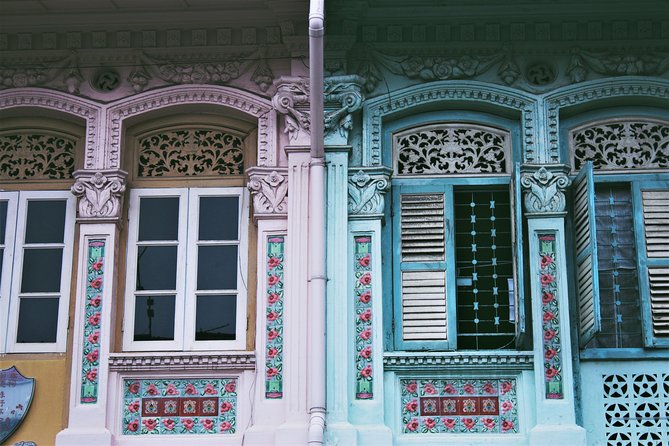
The walk along Serangoon Road lasts around 15 minutes and focuses on Indian street snacks, shops, and small pieces of public art. This is a short section, but it helps connect Tekka Centre to the wider neighborhood.
Rather than treating Little India as one market stop, the route lets you see how food businesses fit into a larger district. You may spot flower garland makers, colorful shopfronts, and street scenes that are easy to miss from a vehicle.
The guide’s role is important here. Without local context, a quick walk along a major road can feel like a transfer between stops. With explanations, it becomes a chance to understand how commerce, worship, and community life share the same streets.
Two heritage sights add depth to Little India
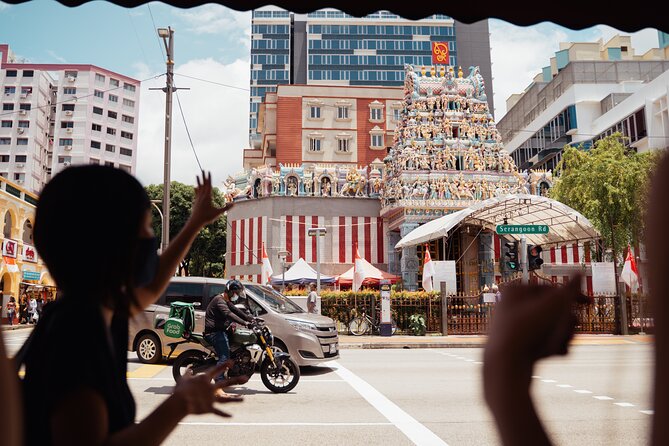
The tour includes photo opportunities at a historic temple and at the last surviving Chinese villa in Little India. The temple once served as a place of refuge during the Japanese War Occupation and remains relevant to the Hindu community today.
That detail gives the temple more weight than a quick architectural stop. You hear how a place can carry wartime memory while continuing to serve a living faith community. The visit is still short, so you should expect an exterior-focused look and photographs rather than a long religious tour.
The Chinese villa offers a different story. Its design combines Malay, Chinese, and European influences, showing how several cultural traditions met in Singapore’s built environment. It is an especially useful stop because it complicates the idea that Chinatown belongs only to Chinese culture or Little India only to Indian culture.
These brief stops are where the tour’s food-and-heritage approach earns its keep. You see that Singapore’s neighborhoods developed through contact between communities, not in complete isolation from one another.
Campbell Lane finishes with everyday Little India
Campbell Lane is the final listed stop, lasting about 15 minutes. You see flower garland artisans, street markets, and the nearby Little India Heritage Centre. The lane gives you a final slice of local life before the tour ends at Little India MRT Station.
Garland making is a particularly good detail to notice. Flowers are tied to religious practice, festivals, and daily custom, so the small workshops offer a visual link to the temples and food traditions you have seen along the route.
This ending also leaves you in a useful area for further exploring. Your guide can provide directions, but there is no hotel drop-off. Plan your next move before the tour ends if you have a timed reservation or a flight connection.
What the $141.04 price really covers
The price is high for a three-hour food walk, especially compared with Singapore’s famously affordable hawker food. Nine tastings alone do not make the tour a bargain. Some of the dishes are shared, and the selection includes filling starch-based foods, so the total amount of food may not match what you could buy independently.
The better way to judge the price is to separate the food cost from the service. You are paying for a private guide, a planned route through two districts, public transport, cultural interpretation, temple visits, and help choosing and understanding unfamiliar dishes. The private setup is valuable if you want to ask many questions, need a flexible pace, or are arranging a first food experience in Singapore.
I would consider the price reasonable for someone who values personal guidance and cultural explanation. I would not recommend it to a budget-focused eater who is comfortable ordering alone. Group discounts may help if you are traveling with several people, but the cost is still worth checking against your group’s total budget.
Who should book this private food walk
I would recommend it most strongly to first-time visitors who want an introduction to Singapore’s food culture without spending hours researching hawker centers and neighborhoods themselves. Families and small private groups may also appreciate the ability to stay together and ask questions freely.
It can suit visitors interested in religion, migration, architecture, and local history as much as food. The temples, villa, heritage streets, and market life make this more than a dish-by-dish tasting.
I would be cautious if you are vegan, gluten intolerant, or allergic to nuts, dairy, wheat, soy, chicken, pork, or spices. The experience specifically says it is not suitable for those dietary needs. Visitors who dislike shared food or want full-sized meals at every stop may also find the format less satisfying.
Bring water, dress casually, and wear shoes made for walking. A poncho or umbrella is sensible. Free cancellation is available when you cancel at least 24 hours before the start time, but changes made inside that window are not accepted.
Should you book it?
Book this tour if you want a private introduction to Singapore’s food and cultures, with a guide who can explain what you are eating and where the traditions come from. Rachel, Kelvin, and Corliss are among the guides associated with the experience, though your assigned guide is not guaranteed.
Skip it if you mainly want the lowest-cost hawker meals or if your diet makes the listed ingredients unsafe. For everyone else, the strongest reason to go is the route: Chinatown and Little India become connected stories, and the food gives you a practical way to understand both.
FAQ
How long does the Singapore food tour last?
The tour lasts approximately three hours.
Where does the tour start?
It starts at Chinatown MRT Station in Singapore.
Where does the tour end?
The tour ends near Little India MRT Station. Your guide can provide directions after the experience.
How many food tastings are included?
The experience includes nine authentic tastings of food and refreshments. Tastings are intended for sharing and include two or three carb-based dishes, popular snacks, and heritage foods.
Is the tour private?
Yes. Only your group participates in the private tour.
Is hotel pickup available?
Hotel pickup is available when you select the option that includes pickup. Private transportation is not included, and there is no drop-off service.
Can visitors with food allergies or special diets join?
The tastings may include soy, gluten, wheat, chicken, pork, dairy, nuts, and spices. The experience is not suitable for vegan visitors, people with gluten intolerance, or people with allergies.
More Hawker and Street Food Tours
- Small Group: Michelin and Local Hawker Food Tour with 9 tastings
★ 5.0 · 1,890 reviews - Small Group: Singapore Street Food & Night Tour with 9 tastings
★ 5.0 · 1,240 reviews - The Award-Winning PRIVATE Food Tour: 10 Tastings of 3 Cultures
★ 4.5 · 1,017 reviews - Singapore: Chinese, Indian & Arabic Quarters, Culture & Food Tour
★ 5.0 · 789 reviews
Just added around Singapore
- Skyline Luge and Sky Ride Ticket Sentosa Singapore★ 3.5 · 3 reviews
- Marina Bay Sands SkyPark Observation Deck ticket in Singapore★ 4.0 · 3 reviews
- Singapore Private Full-Day Sightseeing Tour★ 5.0 · 3 reviews
- Singapore: Food and Bike Tour – Downtown★ 4.6 · 3 reviews
- Singapore: Chinatown Street Food Tour★ 5.0 · 3 reviews
- Learn to cook authentic Peranakan food with local market tour★ 3.5 · 3 reviews
- Singapore Brompton Bike Tour from Rail Corridor, with food!★ 5.0 · 3 reviews
- Guided Walking Tour to the Historical Attractions in Farrer Park★ 5.0 · 3 reviews
Chinatown Tours, compared.
Chinatown, Little India, Kampong Gelam City Highlights Tour
Read our review →
Chinatown Hawker Market Food Tour with 7 Food Tastings
Read our review →Chinatown, Little India, Arab Street Walking Tour
Read our review →
Kampong Glam, Little India & Chinatown with Local Street Food Tastings
Read our review →
Browse the lists this tour appears in