
Reviewed · CHINATOWN TOURS
Singapore: Chinatown and Little India Guided Walking Tour
Singapore’s story is easiest to grasp one neighborhood at a time. This three-hour cultural walk links Little India, Kampong Glam, and Chinatown, showing how Malay, Indian, Chinese, and other communities shaped the modern city. You see temples, mosques, murals, old shophouses, textile shops, and ordinary streets rather than only Singapore’s polished skyline.
I like the way the tour uses the MRT as part of the experience, helping you move around like a local instead of staying inside one small district. I also like the human scale: guides such as Yap, Yong, Cheyenne, Kyanta, and Vidhya have been praised for clear history, good photo help, food tips, and thoughtful breaks. The main drawback is simple: three hours means plenty of walking, often in heat or rain, and each neighborhood receives only a short introduction.
In This Review
- Key points before you book
- Why these three neighborhoods explain Singapore so well
- Starting in Little India
- Crossing into Kampong Glam
- Finishing in Chinatown
- The MRT ride is part of the lesson
- What the guides add
- How hard is the walking?
- Group size and personal attention
- Is $78 a fair price?
- Who should book this walk?
- FAQ
- How long does the Singapore cultural walking tour last?
- Where does the tour start?
- Where does the tour finish?
- Which language is the tour conducted in?
- Are food, drinks, and hotel transfers included?
- What happens if it rains?
- Should you book it?
Key points before you book
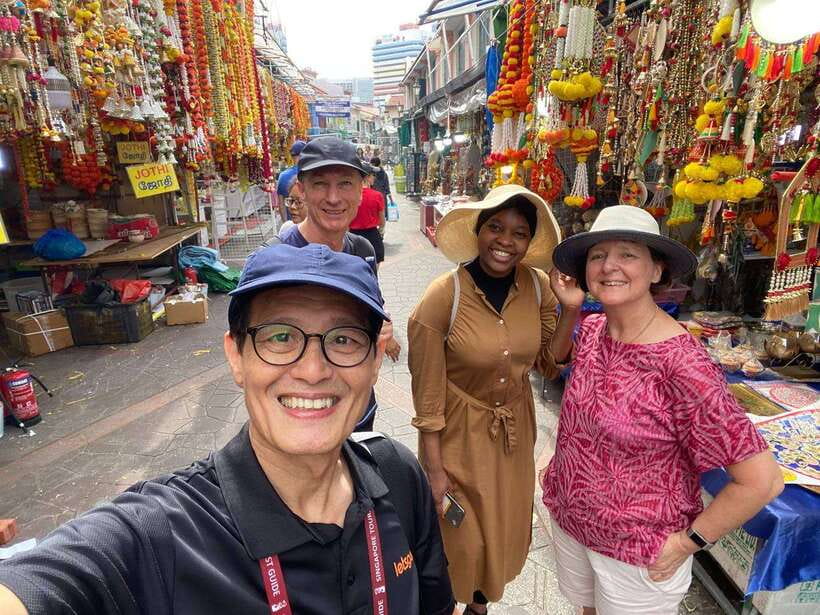
- Three cultural districts in one morning or afternoon: Visit Little India, Kampong Glam, and Chinatown in a single outing.
- A real walking tour: Expect about three hours on foot, with some MRT use between areas.
- Local history with everyday context: Learn how Chinese, Indian, Malay, and Muslim communities developed within Singapore.
- Good photo stops: Look for murals, painted shophouses, temples, mosques, and busy market streets.
- Small-group feel is possible: Some departures have had only two to four people, allowing more questions and personal attention.
- Rain is not an automatic deal-breaker: The tour can operate in rain, but thunderstorms may cause a reschedule.
Why these three neighborhoods explain Singapore so well
Singapore can look almost too tidy and modern at first glance. Glass towers, spotless stations, and fast trains give you a picture of a highly organized city, but they do not tell you much about the people who built its character.
This walk changes that. Little India, Kampong Glam, and Chinatown each offer a different set of sights, sounds, smells, and religious traditions. The value is not simply ticking off three addresses. Your guide connects the districts to migration, trade, faith, housing, food, and daily life.
That context matters. A painted shophouse becomes more than a colorful backdrop when you understand how these narrow buildings once served as homes, shops, workshops, and meeting places. A temple or mosque becomes more meaningful when your guide explains its place in the surrounding community.
The tour is also useful early in your stay. Several guides have helped participants understand the MRT, suggested places to eat, and pointed out areas worth revisiting alone. I would treat the walk as both a cultural introduction and a practical orientation session.
More walks through Chinatown:
- Chinatown, Little India, Kampong Gelam City Highlights Tour
★ 5.0 · 224 reviews - Singapore: Chinatown Hawker Market Food Tour with 7 Food Tastings
★ 5.0 · 213 reviews - Singapore: Chinatown, Little India, Arab Street Walking Tour
★ 4.9 · 207 reviews
Starting in Little India
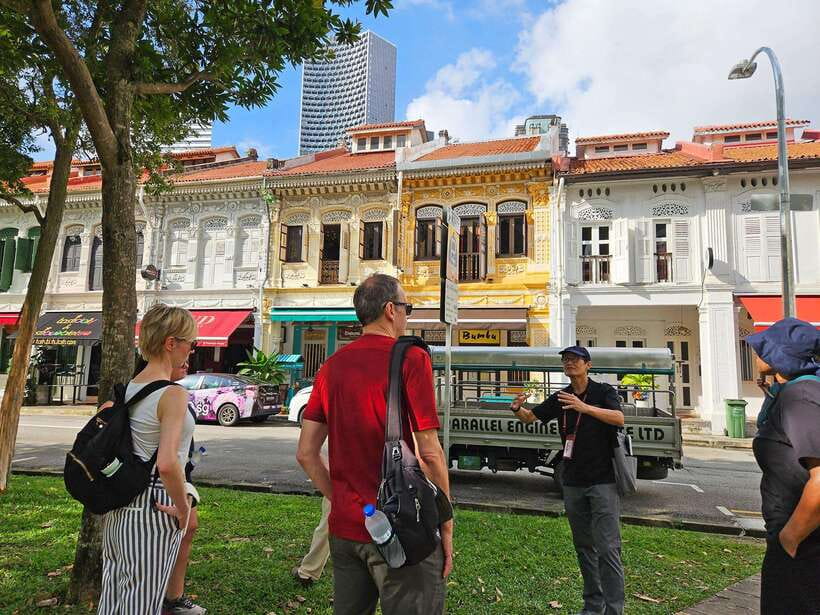
The tour begins at Let’s Go Tour Singapore, with the guide identifiable by a black shirt bearing the Let’s Go Tour logo. From there, you head into Little India for sightseeing and photo stops.
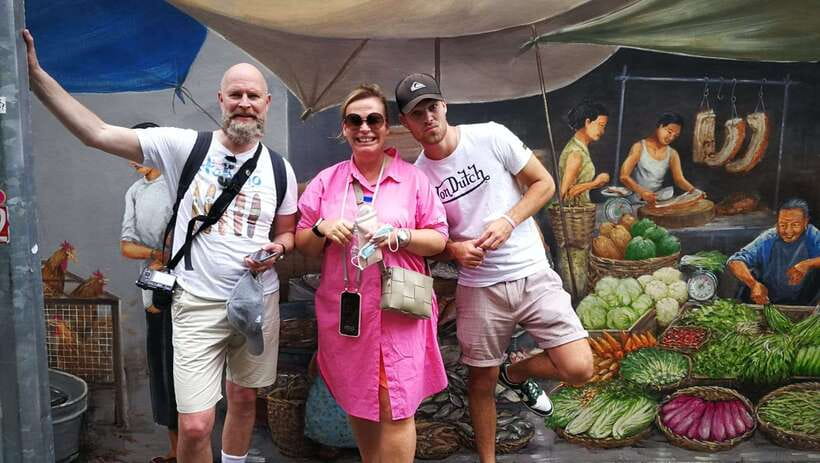
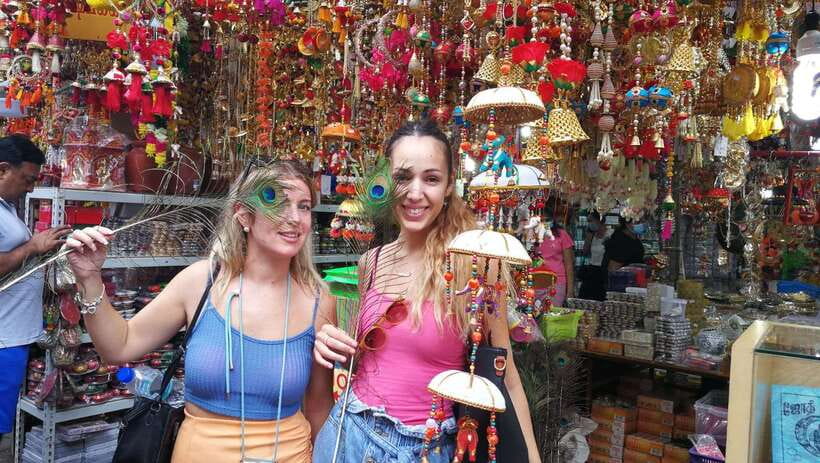
Little India gives you some of the strongest visual material of the day. Expect brightly painted shophouses, street murals, temples, mosques, and streets shaped by Indian culture. The area is especially good for seeing how old buildings and modern city life sit close together.
Your guide will explain the area rather than simply point out colorful facades. You may hear about Singapore’s Indian community, religious traditions, the role of commerce, and how the district fits into the country’s wider mix of cultures. The goal is to help you read the neighborhood, not just photograph it.
This is also a good place to ask practical questions. Guides have offered suggestions about food, drinks, and places to explore later. If you have dietary restrictions, say so early. One guide was specifically praised for giving personal food advice, which can be useful in a district where there are many choices but not always much explanation in English.
The main limitation is time. Little India has enough shops, shrines, food stalls, and side streets to fill several hours on its own. On this tour, you get a guided overview rather than a full visit to every major sight. If you want a long meal or detailed shopping stop, plan to return independently.
Crossing into Kampong Glam
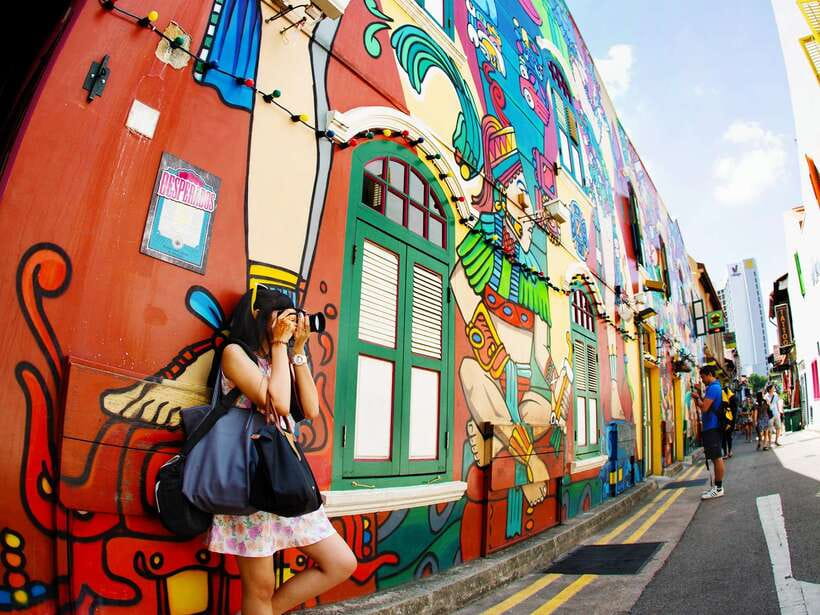
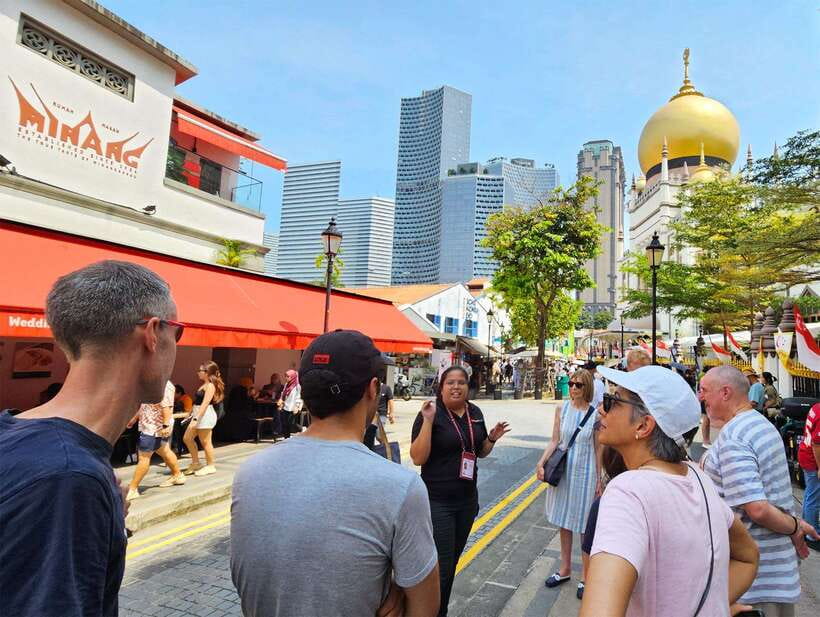
Next comes Kampong Glam, Singapore’s Muslim quarter. This district brings a Malay and Muslim perspective to the tour, with mosques, textile stores, street art, and 19th-century shophouses.
Kampong Glam is a particularly useful stop because it shows Singapore beyond the Chinese and Indian districts that many first-time visitors focus on. The neighborhood’s identity comes through in its religious buildings, traditional shops, painted walls, and Arab Street area. You see a working district, not a preserved museum set.
The Sultan Mosque area is an important part of the visit, though the exact amount of time spent inside any building is not specified. Your guide provides commentary and points out places that help explain the community’s past and present. You may also receive suggestions for returning to Arab Street on your own. One participant did exactly that after gaining confidence from the guided visit.
The textile shops are worth noticing even if you do not plan to buy anything. They help show the commercial side of Kampong Glam and give the district a different feel from Little India or Chinatown. Street art adds another layer, with walls and facades providing some of the best photo opportunities along the route.
I would keep your camera ready here. Guides are often helpful with photos and can point out angles you might miss while walking. Still, do not expect a long photography session at every mural. The group needs to keep moving to fit three districts into three hours.
Finishing in Chinatown
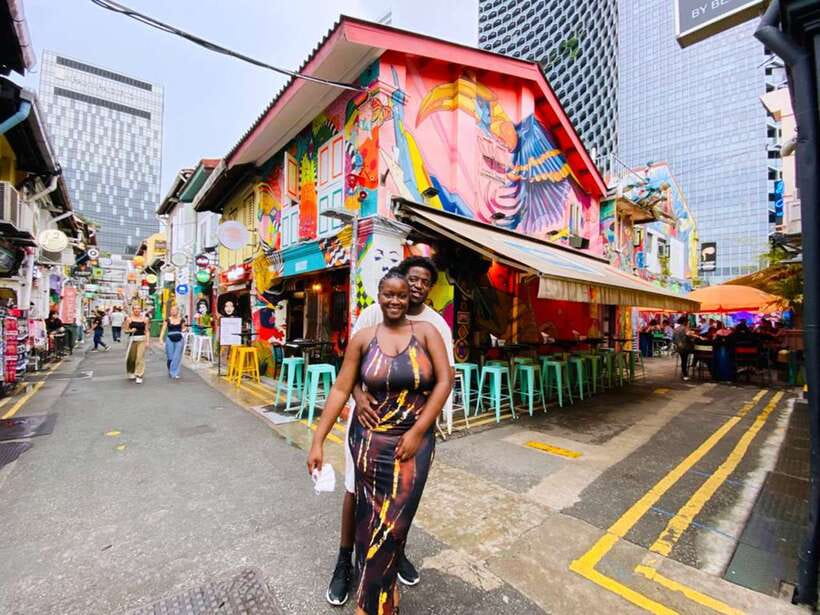
The walk ends in Chinatown, at Chinatown MRT Station, known as DT19. This final stop gives you a chance to experience one of Singapore’s best-known cultural quarters at street level.
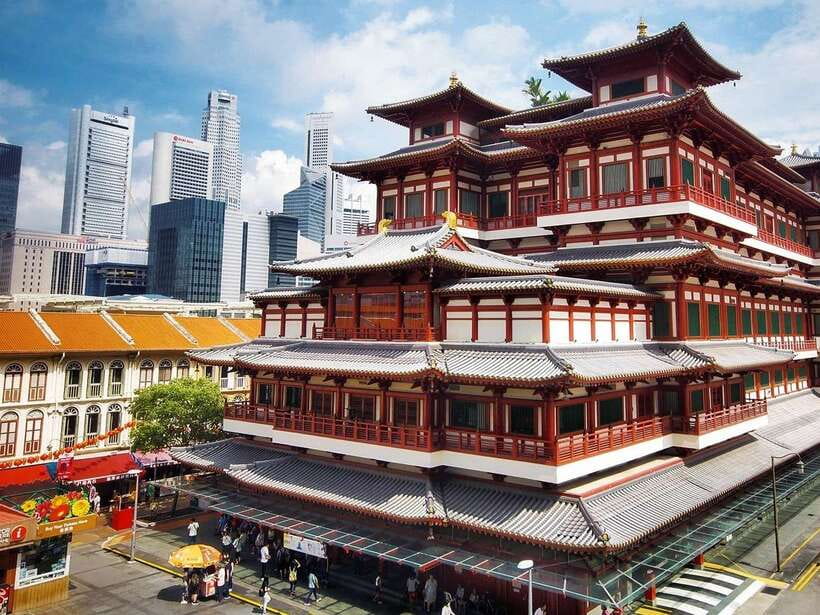
Chinatown is more than red lanterns and souvenir shops. The important part of the visit is seeing how the neighborhood functions as a slice of local life. Your guide discusses the Chinese community, the district’s development, and the way older Singapore fits into the modern city around it.
Expect a busy atmosphere, traditional buildings, shops, food options, and plenty of people moving through the streets. The area can be crowded, especially on weekends. One useful point from the tour experience is that the popular parts may receive only a brief stop when foot traffic is heavy. That is understandable, but it means you should return later if you want to browse slowly or eat lunch without watching the clock.
Ending at Chinatown MRT Station is convenient. You can continue exploring, find food nearby, or use the station to reach another part of Singapore. The finish also makes sense from a practical point of view: after learning how the MRT works during the outing, you can continue using it on your own.
More of Little India to explore:
- Kampong Glam, Little India & Chinatown with Local Street Food Tastings
★ 4.5 · 70 reviews - Tasting Trails: Chinatown OR with Kampong Glam, Little India
★ 5.0 · 59 reviews - 5 hours Little India, Kampong Glam, Chinatown with 9 Food Tasting
★ 5.0 · 58 reviews - Private Singapore Food Tour in Chinatown and Little India
★ 5.0 · 32 reviews
The MRT ride is part of the lesson
This is advertised as a walking tour, but you may also use Singapore’s MRT between neighborhoods. That is a strength, not a distraction.
Moving by train shows you how close these districts are within the wider city and gives your guide a chance to explain the transport system. Several participants found the MRT introduction useful for the rest of their stay. If you are new to Singapore, that confidence can be worth more than it sounds. A city becomes easier to explore once you know how to connect its neighborhoods.
The train rides also prevent the route from becoming an exhausting continuous march through central streets. Even so, do not mistake the MRT for a low-effort tour. You will walk through each district, stand during explanations, and move between stops.
The route can be tailored to the group to some degree. Guides have adjusted explanations when someone had already seen Chinatown, and some have added time when questions or photo stops needed it. That flexibility depends on the group and schedule, but it is a useful feature of a live guided outing.
What the guides add
The guide is the heart of this experience. The company uses English-speaking licensed guides, and the strongest pattern in the feedback is the quality of their explanations and personal attention.
Yap is repeatedly described as enthusiastic, clear, and skilled at making Singapore’s history relevant to present-day life. Yong has been praised for photos, local tips, and an engaging style. Cheyenne has been noted for a comfortable walking pace, thoughtful restroom breaks, and strong explanations of all three districts.
Other named guides, including Kyanta, Chan, Colin, Jackie, Jackey, Elfie, Corliss, Angel, Vidhya, Wadi, Dani, Jaci, and Simon, have also led highly rated departures. Their styles may differ, but the useful qualities are consistent: local knowledge, humor, attention to the group, and a willingness to answer questions.
A good guide keeps the history from turning into a list of dates. One participant specifically appreciated receiving information without being overloaded with annual figures. That is the right balance for a short city walk. You want enough background to understand what you see, but you also want time to look around and enjoy the streets.
Guides have also helped with practical matters such as shade, water purchases, toilet stops, safe crossings, and photo-taking. Those small acts matter in Singapore’s heat, especially for older walkers or families with children.
How hard is the walking?
The route is manageable for many people who are comfortable walking for three hours, but it is not a gentle sightseeing bus tour. Wear proper walking shoes. That advice comes directly from the nature of the route, and one participant made the point clearly: three hours of walking can feel long if you tire easily.
Singapore’s weather adds another concern. The tour operates in rainy conditions, but thunderstorms can lead to rescheduling. Sudden rain showers are possible, so bring suitable rain protection if the forecast looks uncertain. You should also expect warm, humid conditions and use the water and rest stops when offered.
The pace has worked well for older participants, including one group that appreciated regular toilet breaks and a comfortable rhythm. Families have also enjoyed the tour, with guides helping children and adults follow the route. Still, your experience depends on the day, group size, heat, and how much time is spent answering questions.
I would avoid booking this as your first activity after a long overnight flight if you know you struggle with heat or walking. It works better when you have energy and can pay attention to the stories.
Group size and personal attention
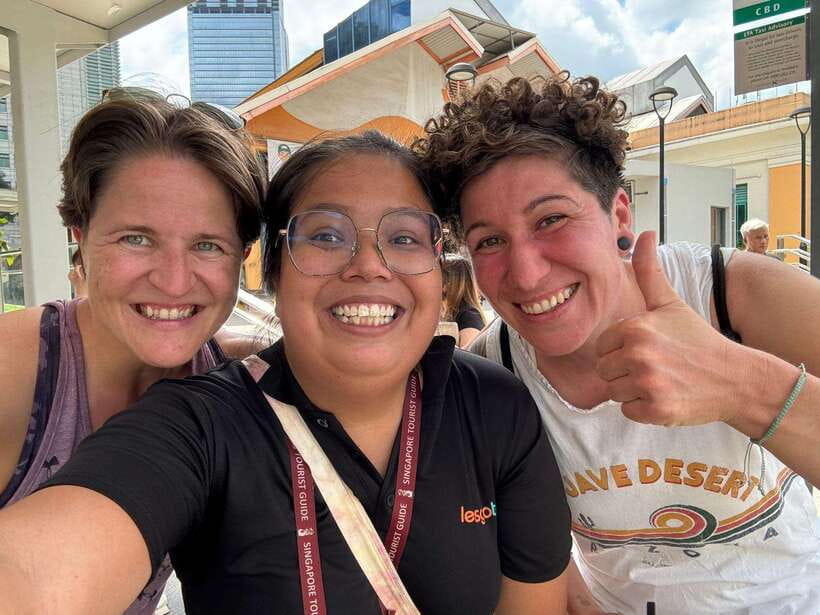
The group size is not specified, so you should not assume a private tour. However, some departures have been very small, with only two, three, or four participants. That creates a much more personal experience, with plenty of room for questions and changes in emphasis.
Small groups also make it easier to hear the guide in crowded streets and to stop for photos without holding up a large crowd. Larger groups may feel less flexible, especially at busy Chinatown sites, but the licensed guide still provides the main structure and commentary.
If you have already visited one district, mention it at the start. A guide may be able to spend more time on the places that are new to you, as happened for someone who had explored Chinatown the previous day. Do not count on a completely custom route, but clear communication can make the three hours more useful.
Is $78 a fair price?
At $78 per person, this is not the cheapest way to wander through Singapore’s cultural districts. You can walk through the neighborhoods on your own for little more than the cost of transport and whatever you choose to eat.
The question is what you want from the outing. The price includes a three-hour walking tour and a licensed English-speaking guide. Food, drinks, hotel pickup, and hotel drop-off are not included. You are paying for interpretation, route planning, local context, photo help, and the chance to ask questions in real time.
I think the value is strongest if Singapore is new to you, if you want the cultural background behind the sights, or if you are unsure how to use the MRT. It is also useful if you want a fast introduction before returning to one district on your own.
The value is weaker if you already know these neighborhoods well or mainly want long shopping and eating stops. In that case, the fixed three-hour format may feel rushed. The tour gives you a broad introduction, not an extended food crawl or a detailed architectural study.
Free cancellation up to 24 hours before the start and the option to reserve now and pay later make the booking less rigid. The company may reschedule if too few people book, and thunderstorms can also cause a change, so check your messages before setting out.
Who should book this walk?
I would recommend it to first-time visitors who want Singapore explained through its communities rather than only through major attractions. It suits solo travelers, couples, families, and older walkers who can handle a steady three-hour route.
It is also a good choice for anyone who likes local orientation. You finish knowing more about where to eat, where to return, how the MRT works, and how Little India, Kampong Glam, and Chinatown fit together.
You may want something else if you dislike group schedules, cannot walk for several hours, or want deep time in one neighborhood. The tour moves quickly because it covers three districts. Think of it as a guided first look, then use the remaining days to revisit your favorite area.
FAQ
How long does the Singapore cultural walking tour last?
The tour lasts three hours. It includes guided sightseeing and photo stops in Little India, Kampong Glam, and Chinatown.
Where does the tour start?
Meet your guide at Let’s Go Tour Singapore. The guide wears a black shirt with the Let’s Go Tour logo on the front.
Where does the tour finish?
The tour finishes at Chinatown MRT Station, station code DT19.
Which language is the tour conducted in?
The live tour guide speaks English.
Are food, drinks, and hotel transfers included?
No. Food and drinks are not included, and the tour does not include hotel pickup or drop-off.
What happens if it rains?
The tour can operate in rainy conditions. It may be rescheduled if there is a thunderstorm, and it may also be rescheduled if the minimum number of participants is not reached.
Should you book it?
Book this tour if you want one clear introduction to Singapore’s Chinese, Indian, Malay, and Muslim communities and you value a guide who can connect buildings to daily life. The strongest part is the blend of local stories, street scenes, MRT practice, photo help, and practical food advice.
Skip it if you want to linger in one district, shop at length, or avoid walking in warm weather. For most first-time visitors who can manage the pace, $78 buys a useful start to Singapore, especially when a guide such as Yap, Yong, Cheyenne, or Kyanta turns three short neighborhood visits into a readable picture of the city.
More Walking Tours in Singapore
- Singapore: Private Walking Tour with a Local
★ 4.7 · 410 reviews - Private Customised Singapore Walking Tour
★ 5.0 · 370 reviews - Singapore: Customized Private Tours (Car/Bus/Walking)
★ 5.0 · 181 reviews - Eat Snap Katong Walking Food Tour
★ 5.0 · 174 reviews
Just added around Singapore
- Skyline Luge and Sky Ride Ticket Sentosa Singapore★ 3.5 · 3 reviews
- Marina Bay Sands SkyPark Observation Deck ticket in Singapore★ 4.0 · 3 reviews
- Singapore Private Full-Day Sightseeing Tour★ 5.0 · 3 reviews
- Singapore: Food and Bike Tour – Downtown★ 4.6 · 3 reviews
- Singapore: Chinatown Street Food Tour★ 5.0 · 3 reviews
- Learn to cook authentic Peranakan food with local market tour★ 3.5 · 3 reviews
- Singapore Brompton Bike Tour from Rail Corridor, with food!★ 5.0 · 3 reviews
- Guided Walking Tour to the Historical Attractions in Farrer Park★ 5.0 · 3 reviews
Chinatown Tours, compared.
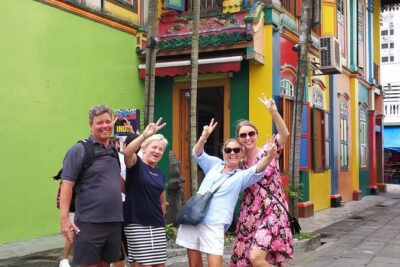
Chinatown, Little India, Kampong Gelam City Highlights Tour
Read our review →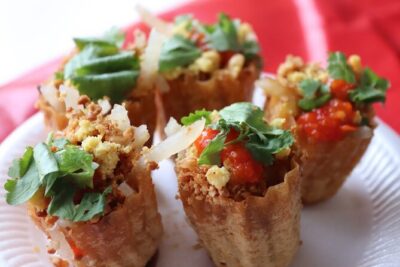
Chinatown Hawker Market Food Tour with 7 Food Tastings
Read our review →Chinatown, Little India, Arab Street Walking Tour
Read our review →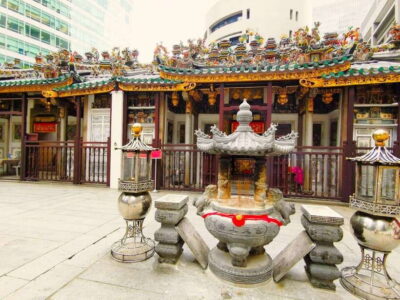
Kampong Glam, Little India & Chinatown with Local Street Food Tastings
Read our review →
Tasting Trails: Chinatown OR with Kampong Glam, Little India
Read our review →Browse the lists this tour appears in