
Reviewed · CHINATOWN TOURS
Tasting Trails: Chinatown OR with Kampong Glam, Little India
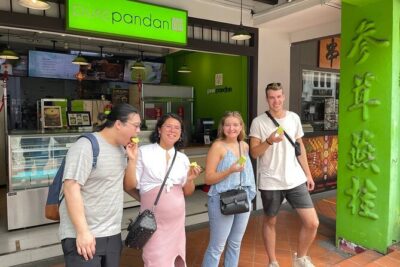
Singapore’s food culture comes into focus one bite at a time on this walking tour. You may try roasted meats, dim sum, kopi, Malay kuih, tropical fruit, and dosai while moving through Chinatown, Kampong Glam, and Little India. The guide connects each dish with the people, customs, and streets around you.
I like the well-paced route, which gives you time to eat and listen without turning the day into a march. I also like the practical local help: guides such as Jeanette, Kelvin, Leo, and Dawn explain how to order coffee and tea, point out places you might miss, and share useful ideas for eating on your own later. The main drawback is that food choices lean toward meat, and public transport costs extra on the longer option.
In This Review
- Key points at a glance
- Two ways to eat your way through Singapore
- Chinatown begins with roasted meat and old kopi
- Maxwell Food Centre turns lunch into a lesson
- Kampong Glam adds Malay flavors and street art
- Little India finishes with spices, flowers, and dosai
- The guides turn food stops into local lessons
- What the food experience is really like
- Walking, weather, and seating require flexibility
- Who gets the best value from this tour
- Is $67 a fair price?
- Should you book Tasting Trails?
- FAQ
- How much does the Tasting Trails food tour cost?
- How long does the experience last?
- Can I choose between different routes?
- How many foods and drinks are included?
- Can vegetarians join?
- What if I have a food allergy?
- Are seats reserved at the food stops?
- What should I bring?
Key points at a glance
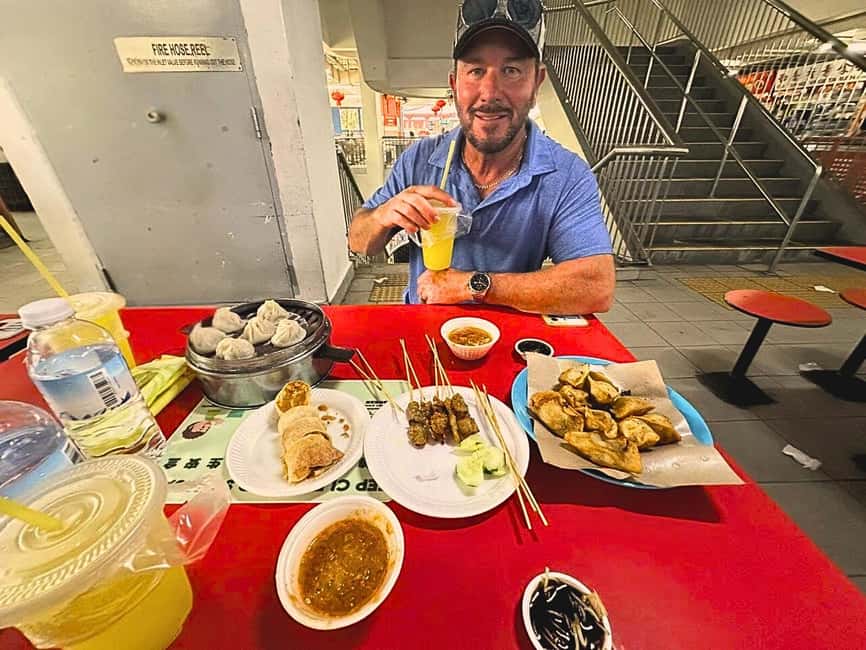
- Eight to ten tastings: Expect food and drinks from hawker stalls, heritage eateries, old coffee shops, and family-run vendors.
- Two routes: Pick the 3-hour Chinatown walk or the longer Chinatown, Kampong Glam, and Little India experience.
- Food with context: Stories cover Singapore’s Chinese, Malay, Indian, and mixed cultural traditions.
- A true hawker setup: Seats are not reserved in advance, so you may share tables or wait briefly during busy periods.
- Guides make the difference: Jeanette, Kelvin, Leo, Dawn, and other English-speaking guides have been praised for warmth, local insight, and attention to dietary needs.
- Good first-day choice: The tour helps you get your bearings and learn where and how to eat in Singapore.
Two ways to eat your way through Singapore
At $67 per person, this experience gives you a substantial amount of food, a licensed guide, walking tours in several historic districts, and local transport planning. The price is easier to justify on the longer route, where you cover three neighborhoods and receive eight to ten tastings.
The 3-hour Chinatown option is the simpler choice. It works well if your time is tight, you want to stay in one district, or you prefer a shorter introduction to Singapore food. The longer route can last roughly 4 hours, though the listed activity duration ranges from 3 to 7 hours depending on the option and schedule. Check the available start time and route carefully before booking.
The food itself is served at local hawker centers and stalls rather than in a private dining room. That matters. You get the everyday Singapore experience, but you also accept first-come, first-served seating, shared tables, and the occasional pause while an eating area opens up.
More walks through Chinatown:
- Chinatown, Little India, Kampong Gelam City Highlights Tour
★ 5.0 · 224 reviews - Singapore: Chinatown Hawker Market Food Tour with 7 Food Tastings
★ 5.0 · 213 reviews - Singapore: Chinatown, Little India, Arab Street Walking Tour
★ 4.9 · 207 reviews
Chinatown begins with roasted meat and old kopi
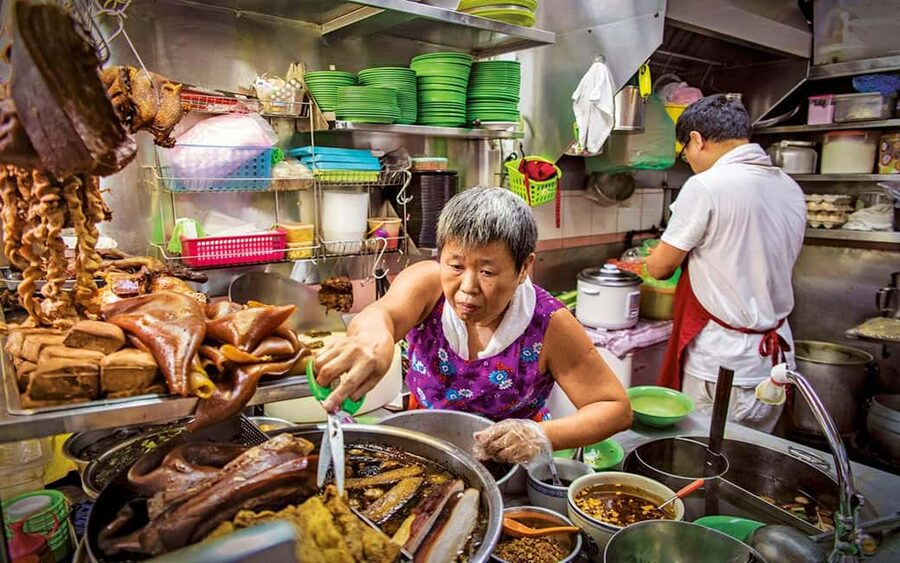
The Chinatown route starts at Bee Cheng Hiang on Pagoda Street, with a short tasting of its famous charcoal-roasted meat. This first stop sets the tone: you are not simply looking at old buildings, you are sampling something tied to Singapore’s food trade and Chinese heritage.
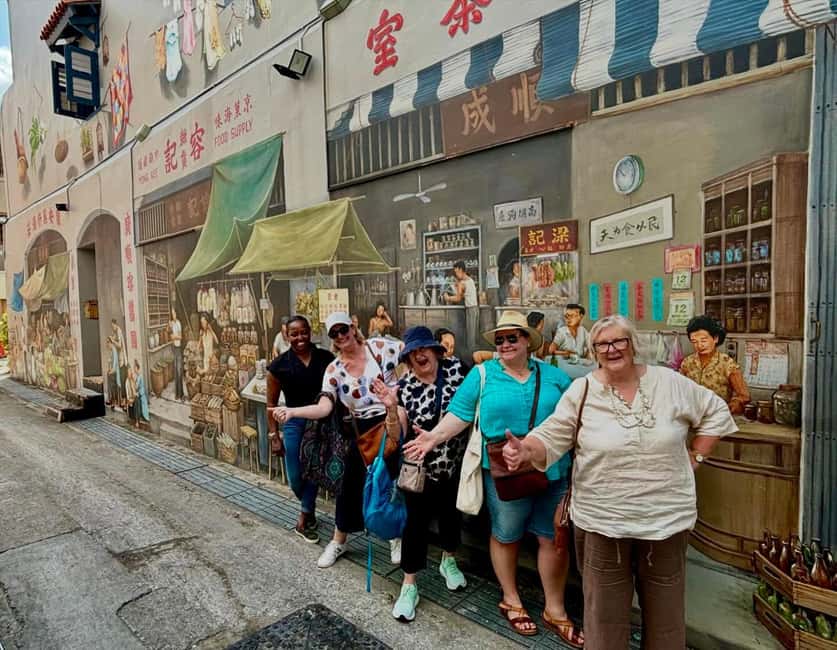
From there, the walk passes the Chinatown Heritage Centre, Smith Street, and Pagoda Street. Your guide fills in the background as you move through heritage lanes, murals, shopfronts, herbal stores, and temple precincts. The murals by Yip Yew Chong are a useful visual bonus because they show scenes of older neighborhood life in a way that is easy to understand while walking.
The route is not a formal museum tour at every stop. Some places are viewed from outside or treated as photo stops. That keeps the pace moving, but you should not book this expecting long indoor visits at each attraction.
At Nanyang Old Coffee, you pause for kopi and snacks. This is one of the more useful parts of the experience because Singapore’s coffee vocabulary can be confusing at first. Your guide can explain the local ways to order coffee or tea, and you get a chance to sit down before the next set of tastings.
Maxwell Food Centre turns lunch into a lesson
Maxwell Food Centre is one of the central food stops. Here, the guide chooses several dishes for the group to sample, helping you understand what you are eating and how different ingredients and cooking methods fit into Singapore’s food culture.
The stop is scheduled for about 20 minutes, so the meal is designed as a series of tastes rather than one leisurely lunch. The advantage is range. You can try items you might not recognize or know how to order. The limitation is that the food arrives according to stall conditions, and busy periods can affect how quickly you sit and eat.
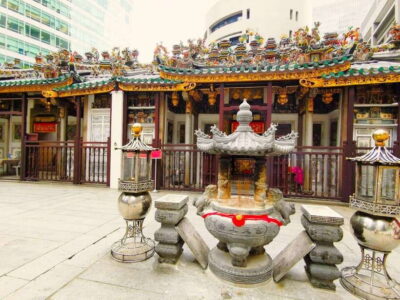
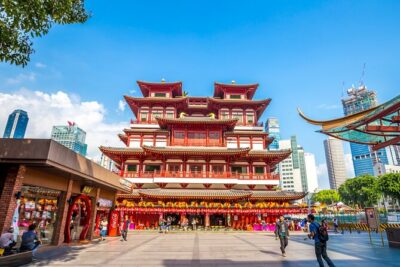
The Buddha Tooth Relic Temple follows, adding a major cultural sight to the food walk. Your guide explains the setting and points out details you could easily pass without context. This balance between eating and looking is one reason the tour suits first-time visitors.
At Chinatown Complex, you make another food stop. By this stage, the tastings add up quickly. Several people have found the portions generous enough that they were full by the end, so arrive hungry and avoid scheduling a large meal immediately before the tour.
Kampong Glam adds Malay flavors and street art
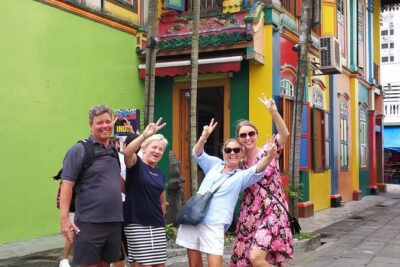
The longer option uses the metro between districts, with public transport not included in the $67 price. The route then reaches Kampong Glam, an area known for Malay and Muslim heritage, colorful shopfronts, street art, Haji Lane, and Muscat Street.
The Sultan Mosque is the main visual landmark. Its golden dome gives the neighborhood a clear sense of place, while the surrounding streets show how old traditions and newer creative businesses share the same area. Your guide provides the cultural background as you walk, so the district feels connected to the food rather than being just another photo stop.
Tastings here may include seasonal tropical fruit and Malay kuih from family-run stalls. Kuih covers a wide range of sweet and savory snacks, often with soft textures and coconut, rice, or palm sugar. Selection can change, so do not expect a fixed list of individual items every time.
This section works especially well if you like trying small portions of unfamiliar food. It is also a good break from the meat-heavy Chinatown tastings, although the full tour is not designed as a vegetarian food route.
More of Little India to explore:
- Singapore: Chinatown and Little India Guided Walking Tour
★ 4.8 · 190 reviews - Kampong Glam, Little India & Chinatown with Local Street Food Tastings
★ 4.5 · 70 reviews - 5 hours Little India, Kampong Glam, Chinatown with 9 Food Tasting
★ 5.0 · 58 reviews - Private Singapore Food Tour in Chinatown and Little India
★ 5.0 · 32 reviews
Little India finishes with spices, flowers, and dosai
The final district is Little India, reached by another short metro ride. The walk here lasts about 45 minutes and brings together spice shops, flower garlands, incense, colorful shophouses, and the Tan Teng Niah house.
Food stops near Tekka Centre may include dosai and other South Indian dishes. Dosai is a thin fermented crepe, often served with accompaniments that add spice and contrast. The guide helps you understand what to try and how the dish fits into the area’s Indian food traditions.
Little India is a sensory change from Chinatown and Kampong Glam. You see different religious symbols, hear different languages and music, and encounter another set of cooking methods and ingredients. The route gives you a useful picture of how Singapore’s districts retain distinct identities while sharing the same city.
The tradeoff is movement. The three-district option covers a lot of ground, and the metro rides add transfers and waiting time. You will get a broader introduction to Singapore, but less time in each neighborhood than you would have on separate full-day visits.
The guides turn food stops into local lessons
The strongest part of this experience is the guide. Jeanette has been especially praised for explaining food, culture, and Singaporean history with patience and care. She has also helped people with dietary concerns, explained ingredients, and offered tips for the rest of a visit.
Kelvin is described as friendly and attentive, with a talent for explaining how dishes are made and what they contain. Leo brings strong knowledge of the city’s food stalls and cultural mix, and has helped visitors find places they would not have noticed alone. Dawn has also been praised for her warmth and for making the group feel welcome.
Other named guides include Liang, Lee, Paul, Aaron, Sylvia, Silvia, and Jess. The exact guide depends on the date and booking. The repeated strength is not a scripted list of facts, but the personal connection between food and place. You can ask questions, learn how to order drinks, and get suggestions for breakfast or later meals.
That personal element matters in Singapore, where a hawker stall can look simple but still have its own ordering habits and specialty. A good guide saves you from standing in front of a menu with no idea where to begin.
What the food experience is really like
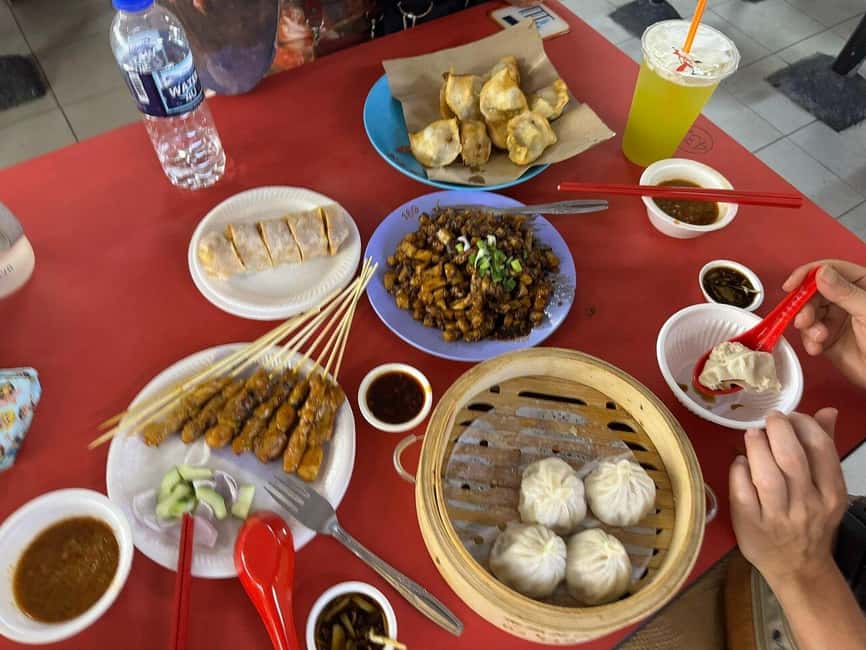
You receive eight to ten handpicked local foods and drinks. The exact dishes depend on the route, stall availability, season, and dietary requirements. Expect a broad sampling rather than a formal tasting menu with identical courses delivered at set times.
The Chinatown route focuses on roasted meats, dim sum, kopi, and hawker dishes. Kampong Glam brings Malay snacks, fruit, and kuih. Little India adds dosai and South Indian flavors. The food is intended to be shared, which lets you sample more without ordering a full portion of everything.
Vegetarians can join, but choices are limited. If you avoid meat, tell the operator before booking and repeat your needs to the guide at the start. The company will try to help, but the food comes from outside vendors, so a full vegetarian route cannot be guaranteed.
Allergies require more care. Common allergens may include nuts, gluten, shellfish, dairy, and soy. Severe allergies should be reported in advance, but the operator cannot promise allergen-free food because it does not prepare the dishes. You decide which tastings are safe for you.
Walking, weather, and seating require flexibility
Singapore is hot and humid, and this is an outdoor walking experience. Wear comfortable shoes, carry sunscreen and a hat, and bring an umbrella. The tour operates in rain, and one group completed the route during heavy rain with help from a well-prepared guide, but wet weather can still affect comfort and timing.
Bring your own water or use the included bottle as a start. You may be walking between food stops, standing at stalls, using the metro, and waiting for seats. The tour is not difficult because of any single attraction, but the long option asks you to stay on your feet across three districts.
Hawker seating is first-come, first-served. You may share a table, especially during popular meal periods. That is part of eating like a local, though it may disappoint you if you expect a reserved seat at every stop.
Private and small-group formats are available. Smaller groups should make it easier to ask questions and keep track of food preferences. At least two full-paying participants are required, and the operator can cancel or reschedule if that minimum is not met.
Who gets the best value from this tour
I would choose this for a first visit to Singapore, especially on the first or second day. You learn the names of dishes, see where locals eat, and gain enough confidence to return to hawker centers on your own.
It also suits couples, solo visitors, families, and anyone who prefers a guide with a story to tell. Children are welcome, including young children, and the mix of short walks, food, art, temples, mosques, and street scenes gives them plenty to look at. Still, parents should consider the heat, walking, and shared seating.
The tour is less suited to strict vegetarians, people with severe food allergies, and visitors who want a slow, restaurant-style meal. It is also not the right pick if you dislike public transport or want to spend a full day in only one neighborhood.
Is $67 a fair price?
The value depends on which route you choose. For Chinatown alone, $67 is a higher price than simply visiting Maxwell Food Centre yourself. You are paying for the guide, the selection of tastings, the walking route, historical explanation, and help navigating local food customs.
The longer three-district option offers better value if you want a compact overview of Singapore. It combines food, guiding, sightseeing, and route planning in several hours. You still pay for metro, bus, or taxi rides separately, and personal expenses are not covered.
The food portions appear generous enough to replace a meal, possibly more than one. That makes the price easier to accept, provided you want instruction and local context rather than just the cheapest possible meal.
Cancellation is free up to 24 hours before the start, and you can reserve while paying later. Those policies make planning easier, but the minimum group requirement and variable schedule are worth checking before you commit.
Should you book Tasting Trails?
Book it if you want a friendly introduction to Singapore through food, especially if you are unsure what to order or how the hawker centers work. Choose Chinatown for a shorter, focused walk. Pick the three-district route if you want to compare Chinese, Malay, and Indian food traditions in one outing.
I would arrive hungry, wear light comfortable clothing, carry rain protection, and tell the operator about allergies or dietary needs before the day. You should also keep the next meal light. With guides such as Jeanette, Kelvin, or Leo leading the way, this is a practical way to get oriented, eat widely, and leave with a better sense of how Singapore works.
FAQ
How much does the Tasting Trails food tour cost?
The listed price is $67 per person. Public transport, insurance, and personal expenses are not included.
How long does the experience last?
The available options range from 3 to 7 hours. The Chinatown route takes about 3 hours, while the longer route through Chinatown, Kampong Glam, and Little India takes about 4 hours, depending on the schedule and selected option.
Can I choose between different routes?
Yes. You can choose the 3-hour Chinatown food tour or the longer route covering Chinatown, Kampong Glam, and Little India.
How many foods and drinks are included?
The tour includes eight to ten handpicked local foods and drinks from hawker centers, heritage eateries, and other local vendors.
Can vegetarians join?
Yes, but vegetarian choices are limited. The available selection depends on the route and the food stalls operating that day.
What if I have a food allergy?
Tell the operator in advance. The food is prepared by outside vendors, so allergen-free meals cannot be guaranteed. Possible allergens include nuts, gluten, shellfish, dairy, and soy.
Are seats reserved at the food stops?
No. Most tastings take place at local hawker stalls, where seating is first-come, first-served. You may share a table during busy periods.
What should I bring?
Wear comfortable shoes and bring a hat, umbrella, camera, sunscreen, and water. The tour runs in rain or shine. Pets and smoking are not allowed.
More Kampong Glam Tours
- #instawalk: Bugis, Waterloo, Kampong Glam
★ 5.0 · 60 reviews - Singapore: Kampong Glam & Civic District Vespa Sidecar Ride
★ 4.9 · 49 reviews - 4-hour Chinatown, Little India, and Arab Street Walking Tour
★ 5.0 · 32 reviews - Singapore Chinatown, Kampong Glam, Little India Cultural Tour
★ 5.0 · 23 reviews
Just added around Singapore
- Skyline Luge and Sky Ride Ticket Sentosa Singapore★ 3.5 · 3 reviews
- Marina Bay Sands SkyPark Observation Deck ticket in Singapore★ 4.0 · 3 reviews
- Singapore Private Full-Day Sightseeing Tour★ 5.0 · 3 reviews
- Singapore: Food and Bike Tour – Downtown★ 4.6 · 3 reviews
- Singapore: Chinatown Street Food Tour★ 5.0 · 3 reviews
- Learn to cook authentic Peranakan food with local market tour★ 3.5 · 3 reviews
- Guided Walking Tour to the Historical Attractions in Farrer Park★ 5.0 · 3 reviews
- Singapore Brompton Bike Tour from Rail Corridor, with food!★ 5.0 · 3 reviews
Chinatown Tours, compared.
Chinatown, Little India, Kampong Gelam City Highlights Tour
Read our review →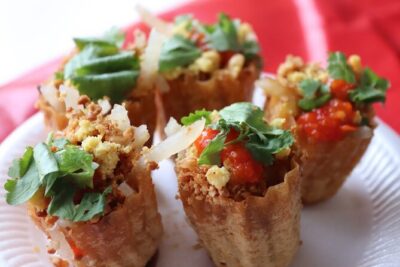
Chinatown Hawker Market Food Tour with 7 Food Tastings
Read our review →Chinatown, Little India, Arab Street Walking Tour
Read our review →
Kampong Glam, Little India & Chinatown with Local Street Food Tastings
Read our review →
Browse the lists this tour appears in