
Reviewed · CHINATOWN TOURS
Tasting Trails: Chinatown, Little India & Kampong Glam, Haji Lane
Singapore’s best introduction may be a plate at a hawker stall, followed by a story about the neighborhood around it. This private four-hour food and culture tour links Little India, Kampong Glam, Haji Lane, and Chinatown, giving you 8 to 10 tastings while your guide explains how each community shaped the city.
I like the private format, since your guide can adjust the pace and answer questions instead of herding a large group. I also like the broad route: you see colorful Tan Teng Niah House, Sultan Mosque, Chinatown’s temples, markets, and old coffee shops in one outing.
The trade-off is simple: this is a walking-heavy tour, with some bus or MRT travel along the way. Fourteen short stops in four hours means you get a lively overview, not long visits at each site. Come hungry, wear sensible shoes, and expect a busy schedule.
In This Review
- Key points at a glance
- Why this route works for a first look at Singapore
- Little India begins with color and old neighborhood stories
- Tekka Place brings the food into focus
- Kampong Glam shifts the mood
- Chinatown connects food, migration, and memory
- Coffee, temples, and the final food stop
- What the four-hour pace feels like
- Is the $100.89 price fair?
- Who should book this experience?
- Should you book the Chinatown, Little India, and Kampong Glam food tour?
- FAQ
- How long does the tour last?
- Where does the tour start?
- Where does the tour end?
- How many food tastings are included?
- Is the tour private?
- Is a guide included?
- Is public transport included in the price?
- Are admission tickets included?
- Can I cancel for a full refund?
Key points at a glance
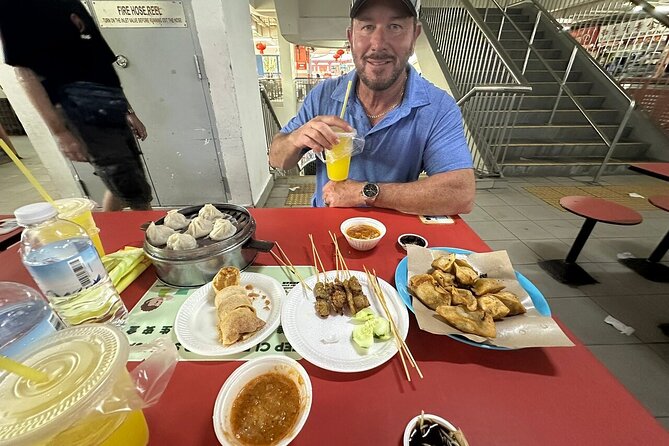
- Eight to 10 local tastings: Food is central, but the tour also explains the people, faiths, and trade that shaped each district.
- A private guide for your group: You do not share the experience with strangers, and the pace can respond to your interests.
- Four districts in one route: Little India, Kampong Glam, Haji Lane, and Chinatown offer sharply different sights and flavors.
- Useful cultural stops: Tan Teng Niah House, Sultan Mosque, Buddha Tooth Relic Temple, markets, murals, and historic shophouses break up the eating.
- Some public transport is part of the day: Bus and MRT help cover more ground, but fares are not included.
- Best for active eaters: You need to be comfortable walking, standing, and moving between several stops.
Why this route works for a first look at Singapore
I like the way this tour treats food as a key to the city rather than a separate activity. Singapore’s neighborhoods were shaped by Chinese, Indian, Malay, and Muslim communities, and the route lets you see those connections in streets, places of worship, shops, markets, and everyday cooking.
The private setup matters here. Guides such as Kelvin and Dawn have been praised for adjusting their explanations to the interests of the group, and the guide named in your booking may vary. You can ask about a dish, a building, or a custom when it comes up instead of waiting for a set lecture.
The timing is brisk. Each listed stop is planned for about 15 minutes, although transport and food service will shape the actual pace. You should think of this as a moving introduction to four districts, not a slow museum tour. The reward is range. You cover a great deal of central Singapore in a half-day.
More walks through Chinatown:
- Chinatown, Little India, Kampong Gelam City Highlights Tour
★ 5.0 · 224 reviews - Singapore: Chinatown Hawker Market Food Tour with 7 Food Tastings
★ 5.0 · 213 reviews - Singapore: Chinatown, Little India, Arab Street Walking Tour
★ 4.9 · 207 reviews
Little India begins with color and old neighborhood stories
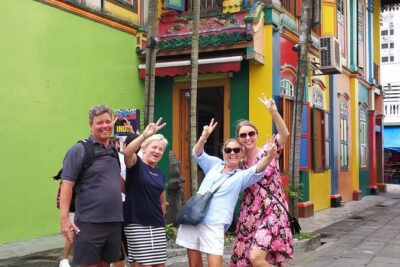
The tour starts in Little India at the former House of Tan Teng Niah. Built in 1900 by a local businessman, this colorful Chinese villa is a reminder that Little India was never shaped by only one community. Its painted façade makes an easy first photo, but the more useful point is the building’s setting. It reflects the mixed commercial and residential life that grew around the district.
You have about 15 minutes here, and admission is free. That is enough for a look and a few questions, but not a full architectural study.
Next comes Little India Arcade, a collection of restored 1913 shophouses. Traditional Indian goods, fabrics, and food fill the complex, so this is a good place to connect the neighborhood’s shopfronts with its older trade traditions. If textiles or religious objects interest you, ask your guide to explain what you are seeing rather than rushing through.
Buffalo Road offers a smaller but useful piece of local history. Its name comes from the former Kampong Kerbau, or buffalo village, where cattle were raised and traded. Today, the street helps you picture how different the area once looked. This stop is brief, so listen for the story rather than expecting a major attraction.
Tekka Place brings the food into focus
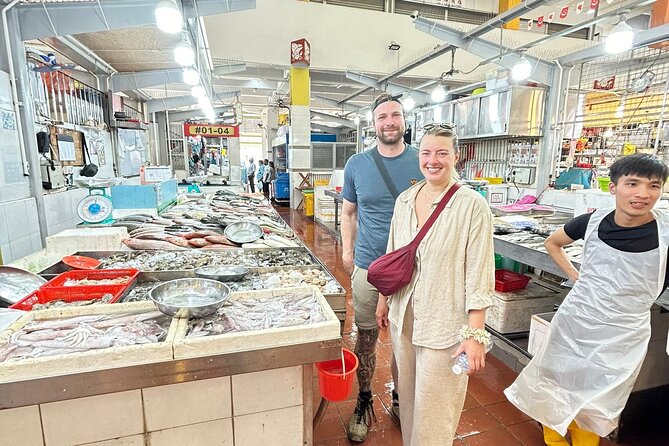
Tekka Market is one of the most practical stops on the route. Its fresh produce, meat, seafood, and hawker stalls show how food markets still support daily life in Singapore. This is where the tour’s tasting element should feel most grounded, since you are not simply sampling polished restaurant dishes. You are seeing the places where ingredients and meals connect.
The exact foods are not specified in advance, so your tastings may depend on availability and the guide’s choices. That can be a plus for curious eaters, but it also means you should not book expecting a fixed menu of named dishes.
The experience includes 8 to 10 food tastings overall. That is enough to make lunch unnecessary for many people, especially if you arrive hungry. If you have allergies, dietary restrictions, or foods you cannot eat, contact the operator before booking so the guide has a chance to advise you.
Kampong Glam shifts the mood
From Little India, the route moves toward Kampong Glam, the historic Malay-Muslim district. Sultan Mosque is the main landmark, with its golden dome and long religious history dating back to 1824. The exterior is free to view, while any admission listed for the mosque is not included. Dress and behavior should be respectful, as this remains an active place of worship.
Kampong Glam itself gives you a change of pace. Shophouses, cafés, Malay-Muslim cultural sites, and newer shops share the same streets. I like this section because it shows Singapore as a living city rather than a collection of preserved monuments. Old religious and commercial traditions sit beside modern businesses.
Arab Street is known for textiles, Middle Eastern cafés, and Islamic heritage. It is a good place to ask about the district’s trading links and the role of fabric shops. You have only a short stop, so do not count on browsing every store. If you see something you like, note where it is and return later on your own.
Haji Lane is narrower and more contemporary, with street art, boutiques, cafés, and unusual shops. It is visually different from the market streets and religious buildings earlier in the tour. The contrast is part of the appeal, though the lane can feel more commercial and less traditional than other parts of the route.
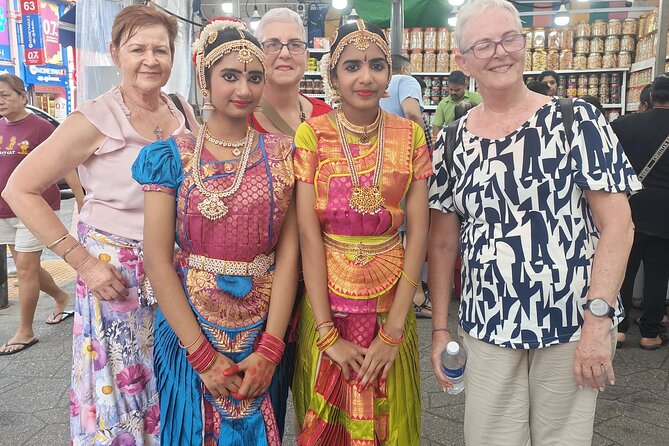
The food and cultural side may include extra experiences such as a henna tattoo or a perfume shop visit, depending on how your group’s time and interests develop. These details are worth asking about when you meet your guide, since they are not listed as guaranteed inclusions.
More of Little India to explore:
- Singapore: Chinatown and Little India Guided Walking Tour
★ 4.8 · 190 reviews - Kampong Glam, Little India & Chinatown with Local Street Food Tastings
★ 4.5 · 70 reviews - Tasting Trails: Chinatown OR with Kampong Glam, Little India
★ 5.0 · 59 reviews - 5 hours Little India, Kampong Glam, Chinatown with 9 Food Tasting
★ 5.0 · 58 reviews
Chinatown connects food, migration, and memory
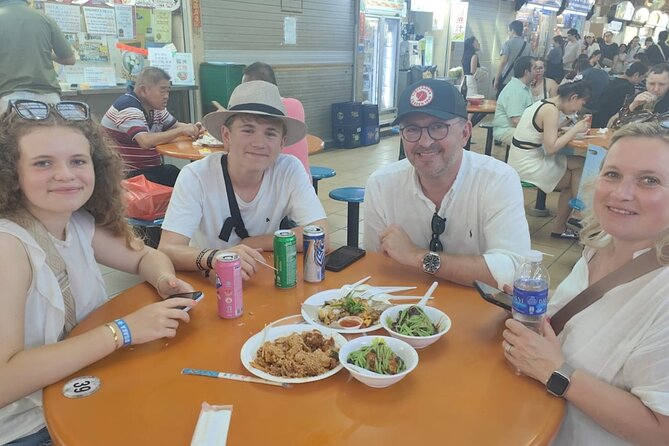
Chinatown comes later in the route, which works well. By then, you have already seen how several communities shaped Singapore, so the Chinese district becomes part of a larger story rather than an isolated attraction.
At the Chinatown Heritage Centre, your guide introduces the lives of early Chinese immigrants through recreated 1950s-style homes and accounts of migrant work, hardship, hope, and family life. Admission is not included. The planned stop is about 15 minutes, so you should view it as a short orientation rather than a complete museum visit.
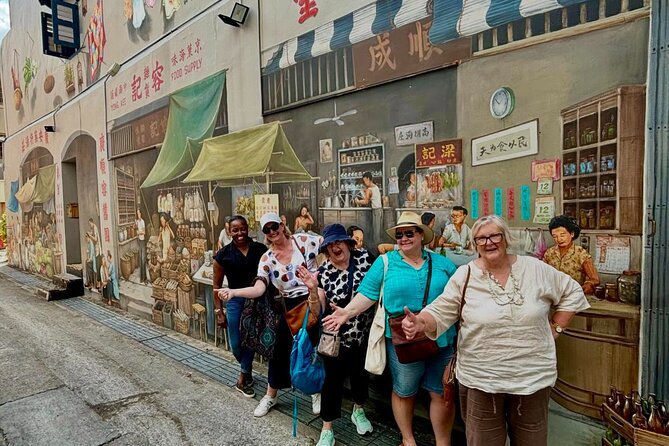
Smith Street adds outdoor history through murals by Yip Yew Chong. His scenes include traditional family life and neighborhood work, giving you a more personal view of old Chinatown. Murals are easy to miss if you walk too quickly, so stay close to the guide and ask for the stories behind the images.
Pagoda Street once served Chinese immigrants and included lodging houses, opium dens, and businesses connected with coolie labor. The street now serves a very different purpose, but its past helps explain the crowded conditions and hard work that shaped early Chinatown. This is one of the places where a local guide adds real value. A quick street view alone would not reveal much of that background.
Coffee, temples, and the final food stop
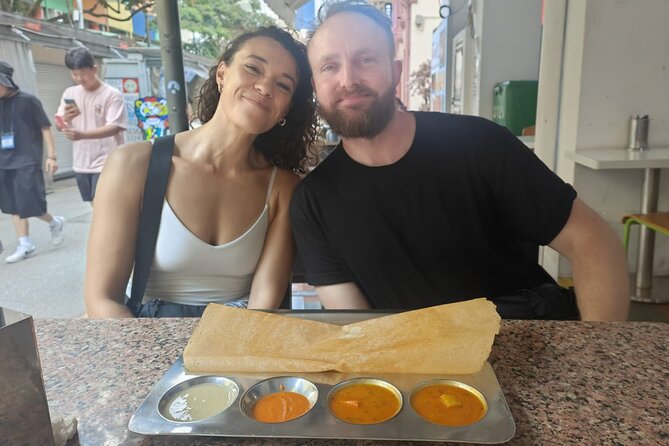
Nanyang Old Coffee offers a pause from the street. The red interior, old signs, and traditional décor create a look back at Singapore’s coffee-shop culture. A small museum on the second floor contains antique coffee-making equipment, adding an extra layer to what might otherwise be a quick drink stop.
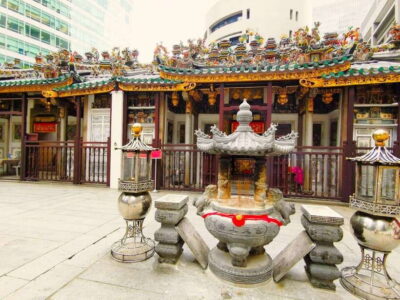
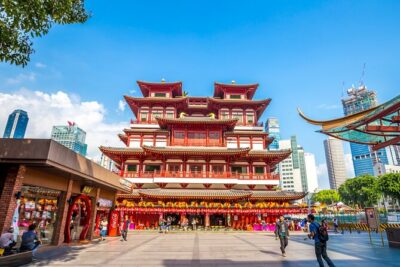
The Buddha Tooth Relic Temple is one of Chinatown’s major landmarks. Its Tang Dynasty-inspired design includes tiered roofs, carved wood, and symbolic dragons, phoenixes, and lotus flowers. You can enter without a listed admission charge, though the stop remains brief. Remember that it is a working religious site, so quiet and respectful behavior is appropriate.
The route finishes at Chinatown Complex, a large food and market center with fresh produce, meat, seafood, and hawker stalls. This is a fitting final stop because it brings together the tour’s main themes: food, commerce, migration, and daily life. It is also where your appetite will matter most. The tastings may be spread across the four districts, so do not assume the last stop alone provides a full meal.
The official end point is Maxwell MRT Station, TE18, at 321 South Bridge Road. That makes it easy to continue sightseeing in central Singapore after the tour, provided you have enough energy left.
What the four-hour pace feels like
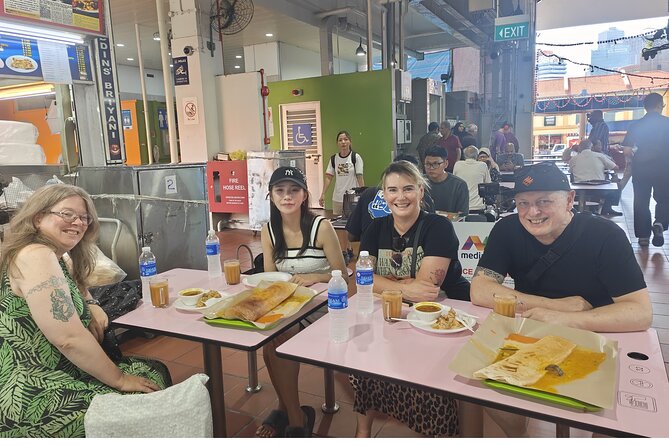
Fourteen listed stops at roughly 15 minutes each already fill much of the day. Add tasting time, walking, and public transport, and you can see why the schedule feels active. A guide has to keep an eye on the clock, especially when food stalls are busy.
I would not choose this tour if you want long museum visits, extended shopping, or a leisurely meal at every stop. I would choose it if you want to get your bearings quickly and learn what to return to later.
Bus and MRT travel help connect districts that are too far apart for a comfortable continuous walk. Public transport is not included in the price, so carry a payment method suitable for Singapore’s transit system and allow for those small extra costs. The exact amount is not provided, but transport is clearly part of the route.
Wear shoes that can handle several hours on pavement. The operator does not recommend the experience for people with walking challenges unless they contact the company for assistance in advance. Most people can take part, but the private format does not remove the physical demands of the route.
Is the $100.89 price fair?
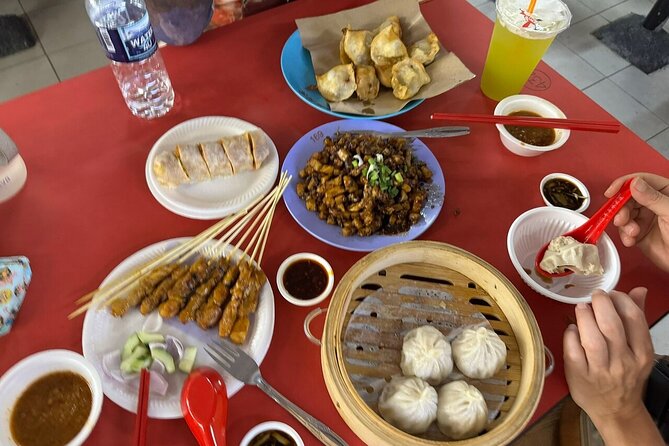
At $100.89 per person, this is not a cheap hawker meal. You are paying for a private English-speaking guide, route planning, cultural interpretation, and 8 to 10 tastings across several neighborhoods. One complimentary bottle of water is included.
The value is strongest for a couple, family, or small group that wants personal attention. Since only your group participates, you are not paying for a large shared coach experience while receiving a generic script. Group discounts are available, though the exact reduction is not provided, so larger private groups should check the final price before booking.
The value is weaker if you already know Singapore well, prefer to choose every dish yourself, or want a slow food crawl in one district. You could spend less by visiting Tekka Market, Chinatown Complex, and the surrounding streets independently. You would, however, need to provide your own historical context and work out the connections between the districts.
The current rating is 4.8 from seven posted ratings, with repeated praise for the combination of food, culture, and storytelling. The most specific compliment concerns the guides’ ability to explain both the dishes and the people behind them. That is the part of the price I would focus on, not the admission-free sights.
Who should book this experience?
I would recommend it to first-time visitors who want an efficient introduction to Singapore’s cultural districts. It also suits families, friends, solo visitors who prefer a private guide, and people who like trying unfamiliar foods without choosing every stop alone.
It is a good pick if you enjoy asking questions. The strongest moments are likely to come from explanations about merchants, migration, religious life, markets, and local customs. The route gives you plenty of prompts.
You should think twice if you have limited mobility, dislike walking, or want a quiet four-hour schedule. The tour also may not suit picky eaters unless you confirm food arrangements before paying. The tasting list is not specified, and the day is built around variety.
Free cancellation is available when you cancel at least 24 hours before the local start time. Changes or cancellations inside that window are not refunded, and the experience requires a minimum number of participants to operate.
Should you book the Chinatown, Little India, and Kampong Glam food tour?
Book it if you want a fast but meaningful introduction to Singapore, with food used to explain four very different districts. The private guide, broad route, and mix of markets, temples, mosques, murals, and shophouses give you more than a meal crawl.
Skip it if your priority is a relaxed lunch, detailed museum time, or a short walk. This tour covers ground. Come hungry, ask questions, budget for transit, and keep the next part of your day flexible. For an active half-day that links Singapore’s cultures through food and neighborhood stories, it offers solid value.
FAQ
How long does the tour last?
The experience lasts approximately four hours.
Where does the tour start?
It starts in Little India, Singapore. The exact meeting point details are provided at booking.
Where does the tour end?
The tour ends at Maxwell MRT Station, TE18, at 321 South Bridge Road, Singapore 058841.
How many food tastings are included?
The tour includes 8 to 10 food tastings.
Is the tour private?
Yes. Only your group participates in the activity.
Is a guide included?
Yes. An English-speaking guide is included.
Is public transport included in the price?
No. Bus, MRT, or taxi costs are not included.
Are admission tickets included?
Most listed stops are free. Admission for Sultan Mosque and the Chinatown Heritage Centre is not included.
Can I cancel for a full refund?
Yes, if you cancel at least 24 hours before the experience start time. Cancellations or changes made less than 24 hours before the start are not refunded or accepted.
More Kampong Glam Tours
- #instawalk: Bugis, Waterloo, Kampong Glam
★ 5.0 · 60 reviews - Singapore: Kampong Glam & Civic District Vespa Sidecar Ride
★ 4.9 · 49 reviews - 4-hour Chinatown, Little India, and Arab Street Walking Tour
★ 5.0 · 32 reviews - Singapore Chinatown, Kampong Glam, Little India Cultural Tour
★ 5.0 · 23 reviews
Just added around Singapore
- Skyline Luge and Sky Ride Ticket Sentosa Singapore★ 3.5 · 3 reviews
- Marina Bay Sands SkyPark Observation Deck ticket in Singapore★ 4.0 · 3 reviews
- Singapore Private Full-Day Sightseeing Tour★ 5.0 · 3 reviews
- Singapore: Food and Bike Tour – Downtown★ 4.6 · 3 reviews
- Singapore: Chinatown Street Food Tour★ 5.0 · 3 reviews
- Learn to cook authentic Peranakan food with local market tour★ 3.5 · 3 reviews
- Singapore Brompton Bike Tour from Rail Corridor, with food!★ 5.0 · 3 reviews
- Guided Walking Tour to the Historical Attractions in Farrer Park★ 5.0 · 3 reviews
Chinatown Tours, compared.
Chinatown, Little India, Kampong Gelam City Highlights Tour
Read our review →
Chinatown Hawker Market Food Tour with 7 Food Tastings
Read our review →Chinatown, Little India, Arab Street Walking Tour
Read our review →
Kampong Glam, Little India & Chinatown with Local Street Food Tastings
Read our review →
Browse the lists this tour appears in