
Reviewed · CHINATOWN TOURS
Singapore’s Historic Chinatown Walking Tour with Lunch
Singapore’s Chinatown is easiest to understand from street level, where temples, old shop houses, food stalls, and faded signs reveal how the district changed over time. This tour connects those details into one walking route, from the Sky Garden at CapitaSpring to century-old shops and the former Street of the Dead.
I like the small maximum group of 15, which gives you a better chance to ask questions, and I like that lunch is a real local meal rather than a generic restaurant stop. The guide, often Ping, brings social history into the walk with stories about schools, wealthy clubs, coolies, opera houses, and family businesses.
The main drawback is pace. You cover a lot of ground in three and a half hours, with roughly 8,000 steps, so photo stops can feel brief. Wear good walking shoes and expect a steady morning rather than a lazy wander.
In This Review
- Key points to know before you book
- Why this Chinatown walk feels different
- From CapitaSpring to Yueh Hai Ching Temple
- Temples, schools, and early community life
- Millionaire clubs and Chinatown’s changing streets
- A simple lunch at Chiew Kee Noodle House
- Old hotels, theaters, shops, and sweets
- Murals, kitchenware, and the Street of the Dead
- Finishing at Fong Moon Kee
- Pace, group size, and practical planning
- Who should book this tour?
- FAQ
- How long does the Singapore Chinatown walking tour last?
- What time and where does the tour begin?
- Where does the tour finish?
- Is lunch included?
- Who guides the tour?
- How many people can join the tour?
- Should you book it?
Key points to know before you book
- See Chinatown from above first: CapitaSpring’s Sky Garden gives you a useful bird’s-eye view before the street-level history begins.
- Ping is a major strength: She is praised for clear explanations, an easy manner, local food tips, and careful answers to questions.
- The route reaches lesser-seen corners: Yueh Hai Ching Temple, Pekin Street, old clubs, Sago Street, and traditional shops add more depth than a quick Chinatown stroll.
- Lunch is part of the experience: Chiew Kee Noodle House serves soya sauce chicken with noodles or rice, along with snacks during the walk.
- Expect an active half-day: The route includes 19 stops, about 3.5 hours, and roughly 8,000 steps.
- Rain is manageable: A disposable poncho is supplied if needed, though the tour remains an outdoor walking experience.
Why this Chinatown walk feels different
Many Chinatown visits focus on the most obvious sights: the Buddha Tooth Relic Temple, Chinatown Street Market, and a quick meal. This route takes a wider view. It explains how the area worked as a place to live, worship, trade, learn, eat, and sometimes die.
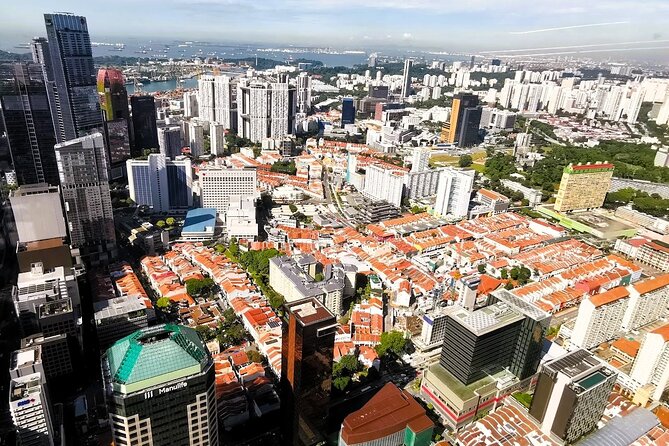
I like that the walk begins with a view rather than a museum lecture. From the Sky Garden at CapitaSpring, you can see the Historic District laid out below you. That opening helps you place the temples, streets, hills, and old commercial buildings before you walk among them.
The tour is led by a licensed guide, and Ping receives especially strong praise for making Singapore’s social history easy to follow. She has also led private or nearly private departures when only one person booked, and she is known for answering questions rather than rushing past them.
Still, this is not a slow photography tour. The route has many short stops, including several of only two to five minutes. I would choose it for context and storytelling first, pictures second.
More walks through Chinatown:
- Chinatown, Little India, Kampong Gelam City Highlights Tour
★ 5.0 · 224 reviews - Singapore: Chinatown Hawker Market Food Tour with 7 Food Tastings
★ 5.0 · 213 reviews - Singapore: Chinatown, Little India, Arab Street Walking Tour
★ 4.9 · 207 reviews
From CapitaSpring to Yueh Hai Ching Temple
The meeting point is The Whisky Distillery at Raffles Place, where the tour begins at 10:00 a.m. The first stop is the Sky Garden at CapitaSpring, Singapore’s second-tallest skyscraper. You get about 20 minutes here to look over Chinatown from above.
This is a smart start because Singapore can feel like a collection of polished towers, old streets, and isolated landmarks. The view begins to show how those pieces fit together. You are not simply looking at a skyline. You are preparing to read the streets below.
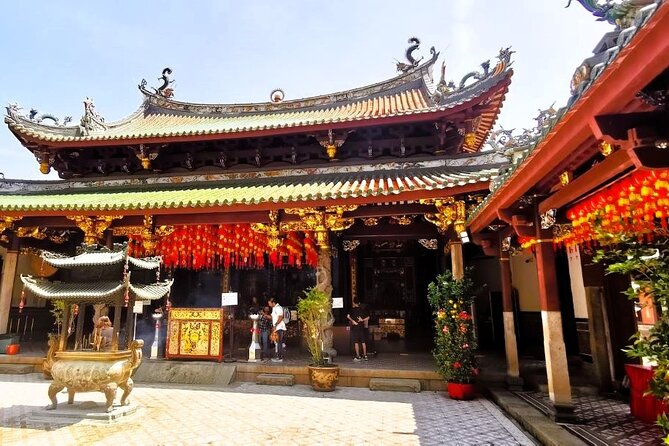
Next comes Yueh Hai Ching Temple, possibly founded as early as 1819. It is older than Thian Hock Keng Temple and often receives less attention, which makes the visit feel less predictable than a standard Chinatown checklist.
The temple offers a quiet change of mood after the city view. The guide explains its place in Singapore’s Chinese religious life, while the building itself gives you time to notice the details. The scheduled stop is about 15 minutes, so listen closely and keep your camera ready.
At Pekin Street, you step into the courtyard of a Chinese boys’ school founded in 1854. The guide uses the site to help you picture boys learning to read and write, then playing traditional games such as chapteh after class.
That story matters because it turns an old building into a working neighborhood. Chinatown was not only a district of merchants and temples. It was also a place where children studied and families built ordinary routines.
Temples, schools, and early community life
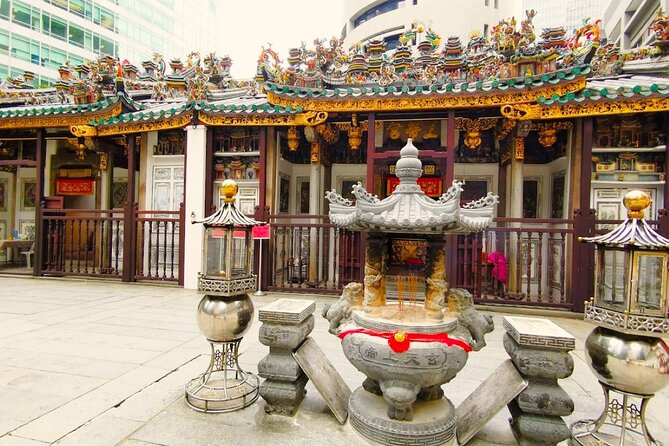
The Fuk Tak Chi Museum occupies a former temple built by Cantonese and Hakka worshippers of Tua Pek Kong, the God of Prosperity, in the 1820s. The stop lasts about 10 minutes, enough for a focused look at displays about life in the old neighborhood.
I find this kind of stop especially useful because objects often explain daily life better than grand monuments do. A museum in a compact former temple can show you how worship and community business once shared the same streets.
Thian Hock Keng Temple gets the longest temple visit, about 25 minutes. Established in 1821, it is the oldest Hokkien temple and likely the second-oldest Chinese temple in Singapore. Its architecture is a major reason to pay attention here.
The temple was built without nails, and the guide explains its connection with the sea and the people who arrived from China. Look up at the roof work and study the carvings before moving on. The short schedule means you will not have unlimited time, but it is long enough to appreciate the structure without turning the tour into a full temple study.
At Ann Siang Hill, the route shifts from worship to land and commerce. You learn about the hills and plantations that once occupied this part of town, see if you can spot Chinatown’s last water well, and hear how the hill got its name.
This is one of the places where a guide adds real value. Without explanation, Ann Siang Hill can look like a stylish street of restaurants and bars. With context, you start to see the older ground beneath the modern storefronts.
Millionaire clubs and Chinatown’s changing streets
The Chinese Weekly Entertainment Club helps explain how Club Street got its name. The stop also brings in the high-society parties once held at this millionaire’s club.
You then make a very brief visit to the Goh Loo Club, another club linked to wealthy Chinese merchants. The interesting detail here is the story behind its window grills. It is a small architectural clue, but that is the point of this tour: old Chinatown often reveals itself through details you might walk past.
At Mohamed Ali Lane, you encounter a mural by Singapore artist Yip Yew Chong. His heritage scenes bring old Chinatown to life through colorful, often interactive street art. The route includes several of his murals, so this first meeting gives you a way to read the later ones.
The murals are not just decoration. They connect personal memory with public history, showing shops, streets, work, homes, and customs that have changed or disappeared. I like the balance here. The tour does not treat the past as something locked inside temples and museums. It also appears on walls and in working businesses.
A few more Singapore days out worth weighing up
- Singapore: Chinatown Historic Walking Tour with Lunch
★ 5.0 · 134 reviews - Splendour of Colonial Singapore Walking Tour with Lunch
★ 5.0 · 82 reviews - Splendour of Colonial Singapore Walking Tour with Lunch
★ 5.0 · 59 reviews - SMALL GROUP: Batam day tour with Ferry, 1-hour Massage, and Lunch from Singapore
★ 4.0 · 29 reviews
A simple lunch at Chiew Kee Noodle House
About halfway through the route, you stop at Chiew Kee Noodle House for lunch. The shop dates to 1949 and serves traditional soya sauce chicken with either noodles or rice. Snacks are also included during the walk.
This is a modest meal, not a grand dining event, and that is part of its appeal. The food gives you a direct taste of a long-running Chinatown business while keeping the tour moving. If you prefer an elaborate food tour with many full portions, this will feel restrained. If you want one genuine local lunch folded into a history walk, it fits well.
The price is $55.51 per person. I see reasonable value in that figure because it covers a licensed guide, the lunch, snacks, and a tightly organized route through many sites. You are also paying for interpretation, which is the part you cannot reproduce easily by walking the same streets alone.
You should not judge the price by the amount of food. Lunch is only one piece of a 3.5-hour cultural tour. The better question is whether you want a guide to connect 19 stops into one story. For me, the answer is yes if you have limited time in Singapore and want more than a self-guided circuit of famous buildings.
Old hotels, theaters, shops, and sweets
After lunch, the route continues to Yue Hwa Chinese Products. The building once had a reputation as the Raffles Hotel of Chinatown, and the guide explains its earlier role before it became a Chinese emporium.
The Majestic is next, with a short stop to hear how the theater began and which wealthy Chinese merchant helped make it possible. The two-minute visit is more of a street-side story than an interior tour, so set your expectations accordingly.
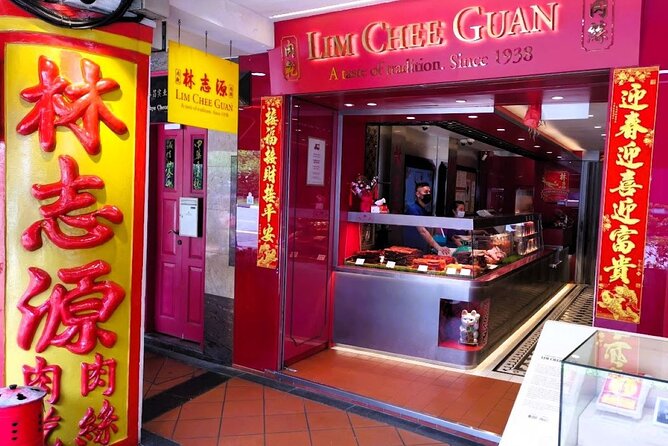
At Lim Chee Guan’s New Bridge Road store, you learn about a business founded in 1938 that survived the Second World War and remains one of Singapore’s best-loved brands. This gives the walk a useful commercial thread. Chinatown’s story is not only about buildings that disappeared. Some family businesses endured.
Pek Sin Choon dates to 1925 and is known for its Nanyang tea blends. The 10-minute stop lets you consider how tea shops served a particular local taste shaped by Singapore’s Chinese communities.
Tai Thong Cake Shop, founded in 1950, supplies a sweet break. It sells Cantonese-style mooncakes and other treats throughout the year, and the tour includes a taste. This is one of the small inclusions that makes the route feel more personal than a succession of exterior photo stops.
The shops are valuable because they show continuity. Temples may be centuries old, but a tea merchant, bakery, or food brand can also carry history through recipes, customers, and family trade.
Murals, kitchenware, and the Street of the Dead
Lau Choy Seng, founded in 1948, is a traditional kitchenware shop on Temple Street. You will find practical household goods rather than polished tourist displays, along with three more Yip Yew Chong murals nearby.
The shop gives you a glimpse of Chinatown as a place where people still buy things for daily use. I would pay attention to the contrast between the old merchandise and the newer businesses around it. That contrast is one of the clearest signs of how the area has changed.
On Smith Street, another mural depicts Yip Yew Chong’s own home in Sago Lane more than five decades ago. The tour also points out Lai Chun Yuen Opera House. Again, the stop is short, but the guide supplies the detail that gives the street meaning.
Sago Street, once known as the Street of the Dead, brings the route into more difficult territory. You learn why Sago Lane acquired that name and what became of it. This is a useful reminder that old Chinatown held funeral homes, death houses, lodging, shops, temples, and workplaces close together.
The subject may be sobering, but it is important. A polished historic district can hide the hardships of earlier residents. This tour makes room for those stories instead of presenting Chinatown as a backdrop of pretty facades and good food.
Finishing at Fong Moon Kee
The walk ends at Fong Moon Kee on Sago Street. Established in 1908, the ointment shop is 115 years old and still trades in traditional remedies for aches and pains.
The final stop is a fitting one. After temples, food shops, clubs, murals, and working stores, you finish with a business tied to everyday health and old neighborhood habits. The tour does not end at a major attraction. It ends at a small shop with a long memory.
From the start at Raffles Place to the end at Sago Street, the route moves through several versions of Singapore. You see the modern city from above, then walk through religious buildings, schoolyards, commercial streets, old entertainment venues, and family businesses.
Pace, group size, and practical planning
The tour lasts about three hours and 30 minutes and is limited to 15 people. That size is helpful in narrow streets and small shops, and it makes it easier to hear the guide. It also keeps the experience more personal than a large coach excursion.
Plan for steady walking and about 8,000 steps. The schedule includes many short stops, so you need to be ready to move on after a quick explanation. If you take lots of photos, you may feel pressed for time. A phone with a mobile ticket is sufficient for entry details.
The tour operates near public transportation, and most people can participate. A disposable poncho is provided in case of rain, but you should still dress for Singapore’s warm, wet conditions and bring comfortable shoes.
Gratuities are not included. Free cancellation is available up to 24 hours before the 10:00 a.m. start time. Changes or cancellations made later do not qualify for a refund.
Who should book this tour?
I would choose this walk if you want Chinatown explained through people, businesses, beliefs, and old neighborhoods rather than only through famous attractions. It suits first-time visitors who want a strong introduction, as well as repeat visitors who have already seen the main temples and want more local detail.
It is also a good choice for anyone who likes food as part of cultural history but does not need a full food crawl. The soya sauce chicken lunch and included snacks add flavor without taking over the morning.
I would think twice if you need a slow pace, long photography stops, or a tour built around extensive indoor visits. Several stops last only a few minutes, and the route covers a lot of ground.
FAQ
How long does the Singapore Chinatown walking tour last?
The tour lasts approximately three hours and 30 minutes.
What time and where does the tour begin?
It begins at 10:00 a.m. at The Whisky Distillery, 1 Raffles Place, #01-07/08, Singapore 048616.
Where does the tour finish?
The tour ends at Fong Moon Kee, 16 Sago Street, Singapore 059016.
Is lunch included?
Yes. Lunch includes traditional soya sauce chicken served with noodles or rice at Chiew Kee Noodle House. Snacks are also provided.
Who guides the tour?
A licensed tourist guide leads the walk. Ping is the guide associated with the highly praised departures described for this experience.
How many people can join the tour?
The maximum group size is 15 people.
Should you book it?
Book this tour if you want Singapore’s Chinatown to make sense as a living neighborhood, not just a row of photogenic temples. The mix of Sky Garden views, early temples, old clubs, murals, traditional shops, and a simple local lunch gives you a broad picture in one morning.
The strongest reason to book is the guide, especially if Ping leads your departure. The main caution is pace. Bring comfortable shoes, keep your camera ready, and accept that the stories matter more than lingering at every stop. For $55.51, I consider it a solid value for an active, history-focused introduction to Chinatown.
More Walking Tours in Singapore
- Singapore: Private Walking Tour with a Local
★ 4.7 · 410 reviews - Private Customised Singapore Walking Tour
★ 5.0 · 370 reviews - Singapore: Chinatown and Little India Guided Walking Tour
★ 4.8 · 190 reviews - Singapore: Customized Private Tours (Car/Bus/Walking)
★ 5.0 · 181 reviews
More History and Heritage in Singapore
- Historical Singapore Bike Tour on Full-Sized Bicycles
★ 5.0 · 1,421 reviews - Singapore: Historical Half-Day Bike Tour
★ 4.8 · 399 reviews - Singapore Private Food, Culture and Heritage Tour with 9 tastings
★ 5.0 · 394 reviews - Singapore Group History & Culture Walking Tour
★ 5.0 · 160 reviews
Just added around Singapore
- Skyline Luge and Sky Ride Ticket Sentosa Singapore★ 3.5 · 3 reviews
- Marina Bay Sands SkyPark Observation Deck ticket in Singapore★ 4.0 · 3 reviews
- Singapore Private Full-Day Sightseeing Tour★ 5.0 · 3 reviews
- Singapore: Food and Bike Tour – Downtown★ 4.6 · 3 reviews
- Singapore: Chinatown Street Food Tour★ 5.0 · 3 reviews
- Learn to cook authentic Peranakan food with local market tour★ 3.5 · 3 reviews
- Singapore Brompton Bike Tour from Rail Corridor, with food!★ 5.0 · 3 reviews
- Guided Walking Tour to the Historical Attractions in Farrer Park★ 5.0 · 3 reviews
Chinatown Tours, compared.
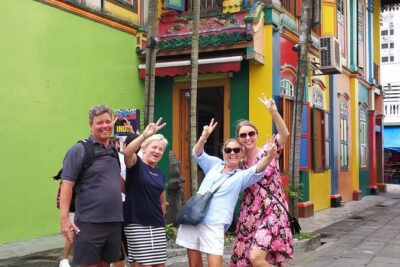
Chinatown, Little India, Kampong Gelam City Highlights Tour
Read our review →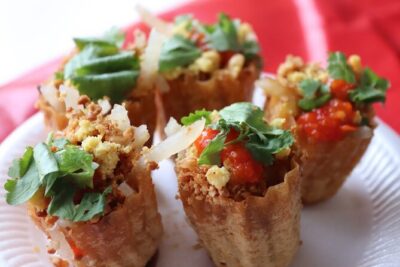
Chinatown Hawker Market Food Tour with 7 Food Tastings
Read our review →Chinatown, Little India, Arab Street Walking Tour
Read our review →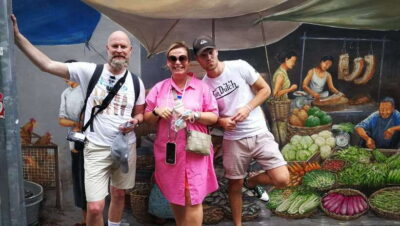
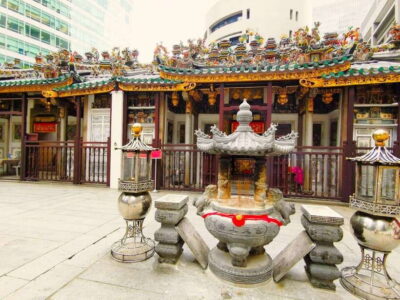
Kampong Glam, Little India & Chinatown with Local Street Food Tastings
Read our review →
Browse the lists this tour appears in