
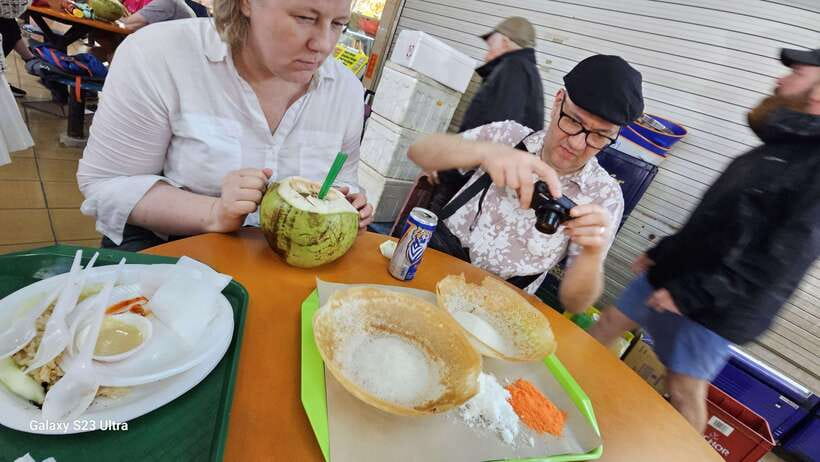
Reviewed · CHINATOWN TOURS
UNESCO Hawker Culture: Chinatown Food Tasting Tour
Singapore’s hawker culture is easiest to understand with a plate in front of you. This small-group Chinatown tour links up to 10 local dishes and drinks with temples, shophouses, murals, and the stories of the people who shaped the city’s food traditions.
I like the smart route, which moves from Sri Mariamman Temple and Ann Siang Hill to Maxwell Food Centre, Chinatown Complex, and Smith Street. I also like the guides’ personal touch. Jeanette, Ronnie, Liang, Kelvin, and others have been praised for explaining not just what you are eating, but how Singapore’s history, politics, migration, and daily life connect to it.
The main consideration is pace. You will walk between several stops, eat a substantial amount in three hours, and share the experience with a group of up to 10 people unless you choose the private option. Some food choices may also be unfamiliar, so this suits curious eaters more than cautious ones.
In This Review
- Key points to know before booking
- Why this is more than a meal in Chinatown
- Sri Mariamman Temple begins the cultural story
- Ann Siang Hill and the people behind the shophouses
- Maxwell Food Centre and the famous chicken rice
- Buddha Tooth Relic Temple adds a quiet pause
- Chinatown Complex and the practical side of hawker culture
- Smith Street murals and a traditional coffeehouse
- The guides make the difference
- Is the $88.81 price good value?
- Timing, walking, and practical details
- Who should book the Chinatown food tour?
- Should you book it?
- FAQ
- How long does the UNESCO Hawker Culture Chinatown Food Tasting Tour last?
- How much does the tour cost?
- How many people can join the group?
- What food is included?
- Is chicken rice included?
- Is a drink included?
- Where does the tour begin?
- Where does the tour end?
- Does the tour visit temples and historic areas?
- Can I cancel for a full refund?
Key points to know before booking
- Up to 10 tastings in three hours: Expect a broad sampling of Singaporean, Chinese, Malay, and Indian flavors rather than one long meal.
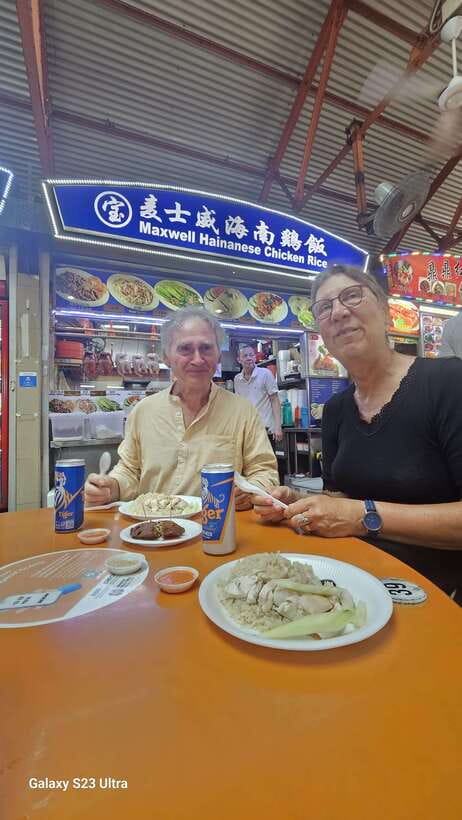
- Maxwell Food Centre is a major food stop: The route includes famous Hainanese chicken rice, Fuzhou pancakes, and other hawker dishes, including food from Michelin Bib Gourmand-recognized vendors.
- The food comes with context: Your guide explains Chinatown’s immigrant communities, temples, architecture, and changing neighborhoods.
- Several guides receive strong praise: Jeanette, Ronnie, Liang, Kelvin, Pauline, Silvia, Edwin, and others are described as warm, attentive, and engaging.
- The route ends at Chinatown Complex: The official endpoint is 335 Smith Street, near Maxwell MRT Station.
- Small groups help: The maximum is 10 people, and a private upgrade offers more flexible timing and a more personal format.
Why this is more than a meal in Chinatown
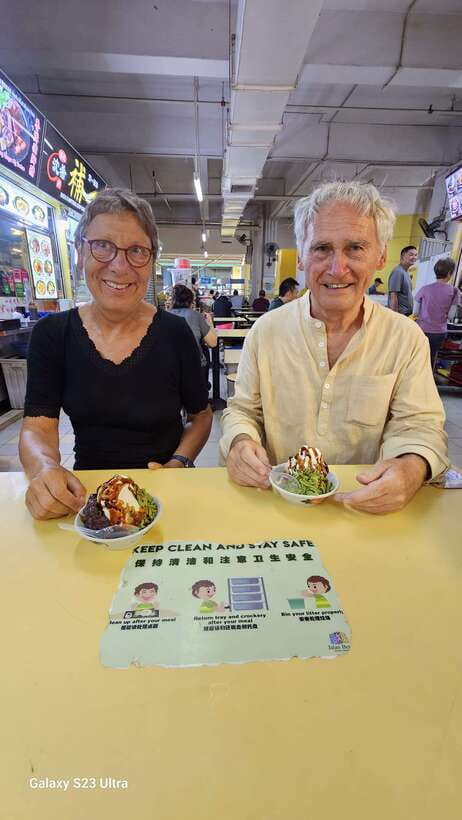
Singapore’s hawker centers can feel wonderfully democratic: simple stalls, shared tables, fast service, and food that ranges from humble snacks to dishes with serious culinary reputations. The trouble is choice. One food center can contain dozens of stalls and hundreds of dishes, and a first-time visitor has little way to know what deserves attention.
This tour solves that problem by giving you a guide and a planned tasting list. You sample 9 to 10 hand-picked foods and drinks instead of spending your whole afternoon guessing at menus. That matters most at the beginning of a Singapore visit, when you want a useful introduction rather than a single restaurant meal.
The route also gives the food a sense of place. Chinatown is not just a backdrop for eating. Its temples, clan associations, shophouses, murals, and former immigrant districts help explain why Singapore’s cuisine is a blend of Chinese, Malay, Indian, and other influences.
I see the tour as two experiences joined together. The first half is a walking introduction to Chinatown’s buildings and communities. The second half is a guided lesson in how Singapore eats today.
More walks through Chinatown:
- Chinatown, Little India, Kampong Gelam City Highlights Tour
★ 5.0 · 224 reviews - Singapore: Chinatown Hawker Market Food Tour with 7 Food Tastings
★ 5.0 · 213 reviews - Singapore: Chinatown, Little India, Arab Street Walking Tour
★ 4.9 · 207 reviews
Sri Mariamman Temple begins the cultural story
The first stop is Sri Mariamman Temple on South Bridge Road. Founded in 1827 by Naraina Pillai, an important figure in Singapore’s Indian community, it is the city’s oldest Hindu temple and a National Monument.
You have about 10 minutes here, with no admission fee. That is enough for an introduction to the temple’s place in Singapore’s Indian community and its architectural importance, though it is not a long temple visit.
This opening stop is useful because it immediately complicates the idea that Chinatown is only Chinese. Singapore’s neighborhoods have long overlapped, and the presence of a Hindu temple at the start of a Chinatown food tour makes that point clearly.
Dress and behave respectfully at the temple. The stop is brief, so listen closely while your guide explains what you are seeing. If you expect a long visit inside every attraction, this tour may feel quick. If you want a well-planned overview, the short stop keeps the route moving.
Ann Siang Hill and the people behind the shophouses
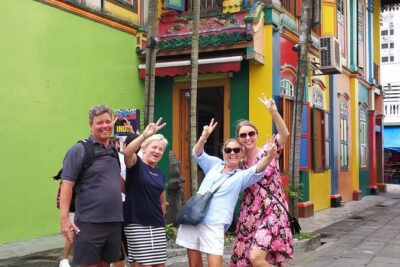
From the temple, the tour continues toward Ann Siang Hill, once an important business area for Chinese immigrants. You spend about 15 minutes here, looking at restored shophouses and learning how the district developed.
The appeal is visual, but the value is historical. The narrow buildings, decorative facades, and compact streets show a Chinatown shaped by trade, migration, and crowded urban life. The tour uses this setting to explain the experiences of early arrivals, including difficult working and living conditions.
One especially good feature is the chance to hear personal connections to the area. Liang, for example, has shared stories about his own grandparents while discussing Chinatown’s early settlers. That kind of detail can make a short walking stop feel less like a list of dates and more like a conversation about real families.
Ann Siang Hill is also one of the better places for photographs. The restored shophouses provide colorful architectural details, though the tour is not built around extended photography time. Keep your camera ready and listen while walking.
Maxwell Food Centre and the famous chicken rice
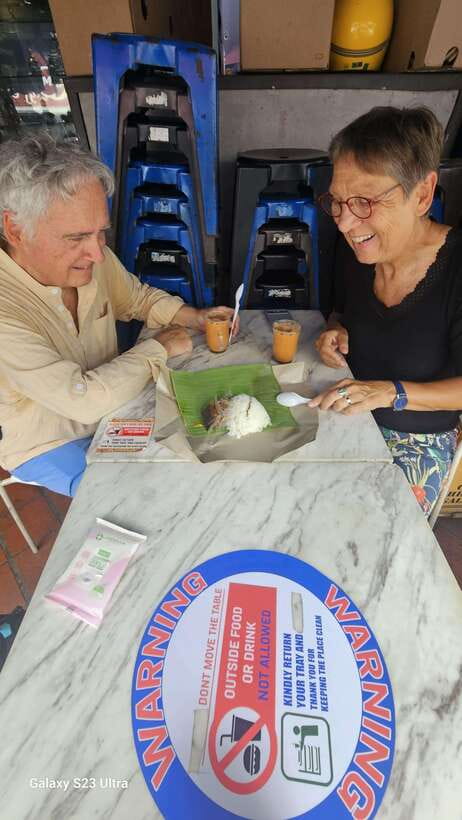
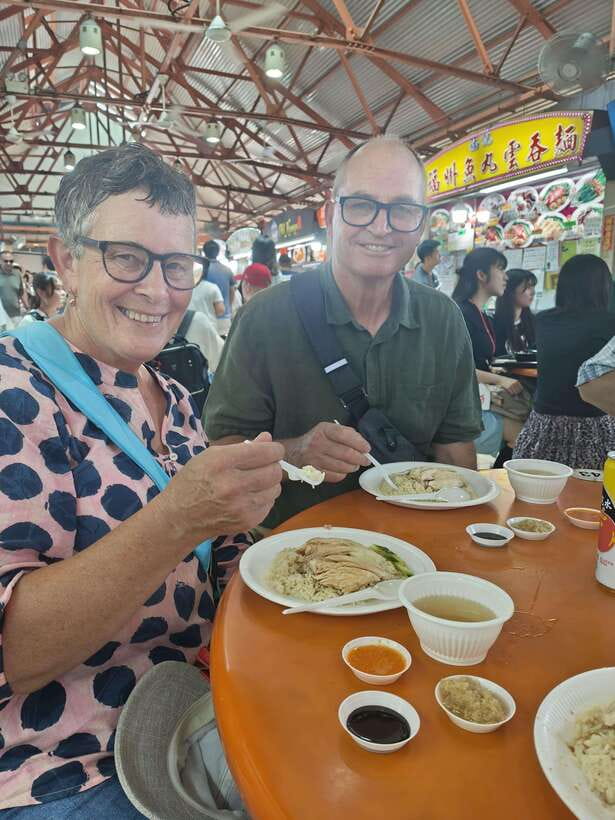
The central food stop is Maxwell Food Centre, where you spend roughly 35 minutes. This is where the tour becomes a proper tasting experience, with Singaporean hawker classics and dishes chosen by the guide.
Hainanese chicken rice is the headline dish. It is simple on the plate, with poached chicken, seasoned rice, sauces, and accompaniments, but it is one of Singapore’s signature foods. Having it at a major hawker center gives you a useful reference point for the rest of your food exploration.
You may also taste Fuzhou pancakes and other local specialties. The full food list is not fixed in the information provided, so the exact dishes can vary. The description promises 9 to 10 hand-picked foods and drinks across famous hawker centers, including dishes from Michelin Bib Gourmand-recognized vendors.
That flexibility can work in your favor. A local guide can steer you toward food that fits the day’s availability and the group’s interests. It also means you should not book this expecting a guaranteed menu beyond the named chicken rice and general tasting promise.
The 35-minute timing is efficient. You get several samples, but you are not left to wander the food center for an hour. The drawback is that a large number of tastings can feel rushed if you want to study every stall or eat full portions. Think of this as a guided sampler, not a leisurely three-course lunch.
Bring an appetite. The tour provides one bottle of mineral water, but it does not mention additional drinks beyond the included tastings and traditional coffeehouse stop. Singapore’s heat can also make walking and eating feel more demanding than the clock suggests.
More hawker centres and street food walks:
- Small Group: Michelin and Local Hawker Food Tour with 9 tastings
★ 5.0 · 1,890 reviews - Small Group: Singapore Street Food & Night Tour with 9 tastings
★ 5.0 · 1,240 reviews - The Award-Winning PRIVATE Food Tour: 10 Tastings of 3 Cultures
★ 4.5 · 1,017 reviews - Singapore: Chinese, Indian & Arabic Quarters, Culture & Food Tour
★ 5.0 · 789 reviews
Buddha Tooth Relic Temple adds a quiet pause
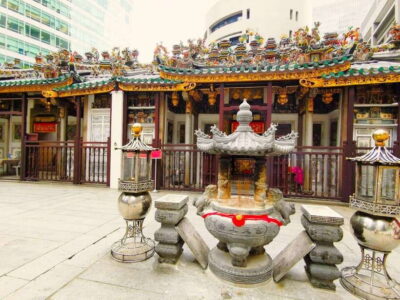
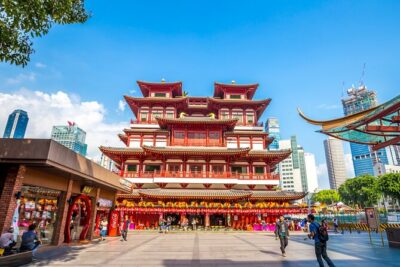
After the food center, the route visits the Buddha Tooth Relic Temple and Museum for about 10 minutes. This Tang-style Chinese Buddhist temple is known for ornate interiors and exhibits related to Buddhist art and history. It houses a relic believed to be a tooth of the Buddha.
The stop provides a useful change of mood. After the noise and movement of the food center, the temple offers a more reflective look at the Chinese religious traditions connected to Chinatown.
Again, the visit is short. You will receive an introduction rather than a detailed museum tour. The building is worth seeing even if you are primarily interested in food, but travelers who want extended time for prayer, photography, or reading the exhibits may want to return independently.
Chinatown Complex and the practical side of hawker culture
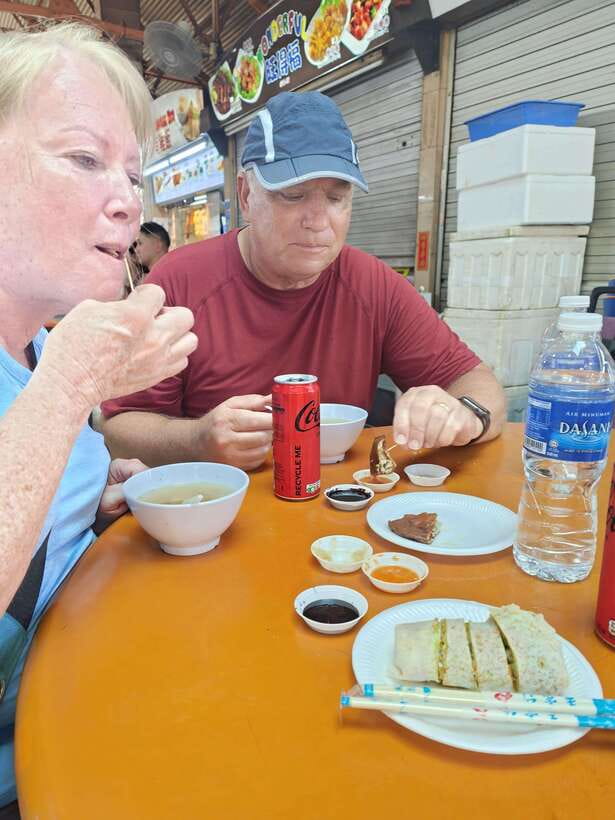
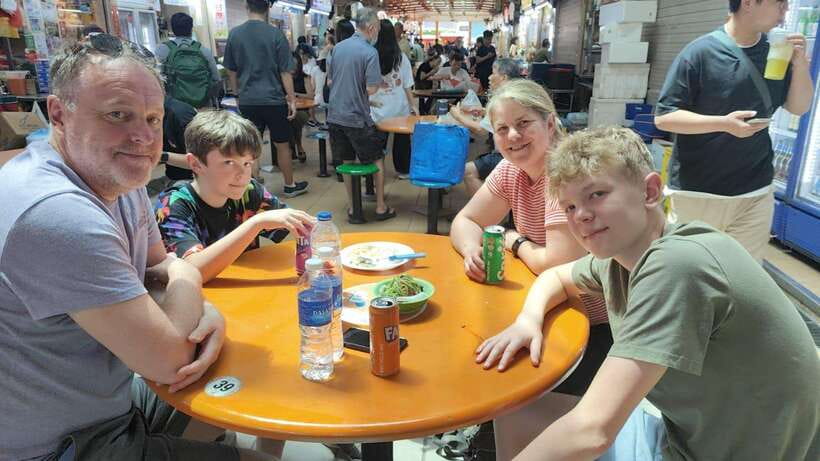
The route continues through Chinatown Complex, a large hawker and market area at 335 Smith Street. This is also the official end point of the tour, close to Maxwell MRT Station.
The complex helps show how hawker food functions as part of ordinary city life. These are not simply restaurants arranged for tourists. They are everyday places where people choose inexpensive meals, meet friends, and return to familiar stalls.
Singapore’s hawker culture has been recognized by UNESCO as intangible food heritage. That recognition is not only about recipes. It also reflects the skills of hawkers, the social role of shared food centers, and the way different culinary traditions live side by side.
Your guide helps make sense of a setting that can otherwise be confusing. Menus, stall names, queues, and unfamiliar ingredients can be a lot to process when you are hungry and short on time. A guide’s recommendations save you from ordering at random.
The tour information calls out Michelin Bib Gourmand dishes. This is useful if you want to sample food with a strong local reputation, but do not mistake the mention for a promise of fine dining. Hawker food is casual, communal, and often served quickly. That is part of the point.
Smith Street murals and a traditional coffeehouse
The final walking portion takes about 30 minutes around Smith Street and nearby alleys. You see ethnic shophouses, local murals by artist Yip Yew Chong, and scenes designed for photographs.
Yip Yew Chong’s murals depict aspects of Singaporean Chinese life and family traditions. They give the tour a visual link to the stories your guide has been telling. The murals also provide a modern counterpoint to the older temples and restored buildings.
This is the part of the route that connects especially well with the tour’s Crazy Rich Asians angle. You can recreate or photograph scenes in the Chinatown streets, though the emphasis is on seeing the neighborhood rather than visiting a film attraction.
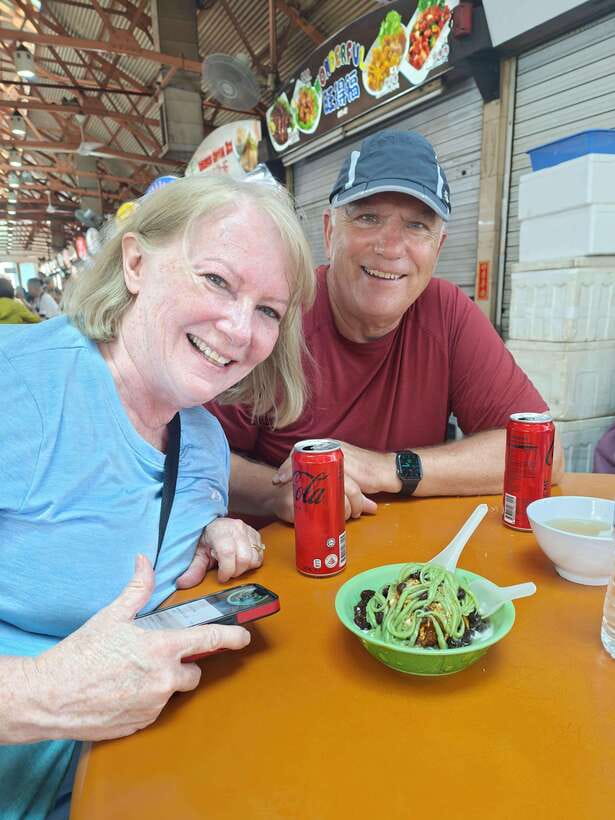
The stop ends with time at a traditional Singapore coffeehouse. You sit down for a hot drink and learn about local coffee traditions. The coffeehouse pause is a small but important detail. It gives you a chance to rest, digest, and watch daily life instead of rushing from one sight to the next.
The exact drink is not specified, so do not book this expecting a particular coffee order. The point is the setting and the tradition: roasted beans, familiar preparation methods, and a slower finish after several food samples.
The guides make the difference
The strongest part of this experience is the guide-led connection between food and culture. Jeanette is repeatedly described as warm, engaging, and especially helpful for solo visitors or anyone hesitant to try unfamiliar dishes. She has also been praised for adapting to a group’s interests.
Ronnie is noted for clear explanations of Singapore’s background and food culture. One account also describes him helping a disabled friend throughout the day, which suggests a caring approach, though the tour does not provide a formal accessibility statement.
Liang brings personal family stories into the Chinatown walk. Kelvin has been praised for combining food, history, and culture in a way that works well for families. Silvia, Pauline, Edwin, and other named guides are also described as friendly, attentive, and well prepared.
The guide matters because the route covers several subjects in a short time: immigration, religion, food, architecture, politics, the economy, and modern Singapore. You can ask questions along the way, and the best guides make the experience feel like a conversation rather than a lecture.
Guide assignments can vary. If you have a strong preference for Jeanette, Ronnie, Liang, or another guide, ask the operator before booking, but do not assume a specific person is guaranteed.
Is the $88.81 price good value?
At $88.81 per person, this is more expensive than simply visiting a hawker center on your own. You are paying for the guide, planning, multiple tastings, cultural interpretation, a bottle of water, and the convenience of knowing what to order.
The value is strongest if you are new to Singapore. You receive a quick orientation to Chinatown and a list of dishes to look for later. You also avoid wasting a meal on choices that do not suit you, which can matter when a food center offers far more options than you can reasonably sample.
The price is less compelling if you already know Singapore’s hawker scene, prefer to eat at your own pace, or want full portions of a few dishes rather than small samples of many. Independent diners can spend less, but they will not get the same guided route or cultural explanation.
Group discounts may reduce the cost for larger bookings. The tour is capped at 10 people, which keeps it smaller than a large coach excursion. A private upgrade is available for a more personal experience and flexible timing, though the base price listed is for the standard format.
Timing, walking, and practical details
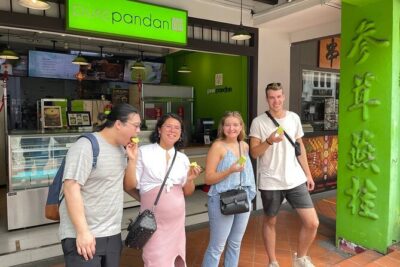
The experience lasts about three hours. It begins at Bee Cheng Hiang, 69 Pagoda Street, and ends at Chinatown Complex, 335 Smith Street. The end point is near Maxwell MRT Station, making it easy to continue sightseeing or return by public transportation.
You should arrive ready to walk and eat. The route includes several outdoor sections, temple visits, food-center stops, alleys, murals, and a seated coffeehouse break. Comfortable shoes and a light approach to breakfast or lunch make sense, though those clothing and meal suggestions are practical advice rather than stated tour requirements.
Most people can participate, and the tour is near public transportation. The operator states that unexpected closures, including weather-related closures, may lead to a substitute attraction of similar value. No refund or compensation is provided for such substitutions.
Children are subject to a specific ticket rule: one adult may purchase a maximum of one child ticket, two adults may purchase two child tickets, and so on. Additional children must pay the full adult price.
The tour requires a minimum number of participants. If that minimum is not met, you are offered another date or experience, or a full refund. Free cancellation is available up to 24 hours before the start time. Changes or cancellations inside that window are not accepted for a refund.
Who should book the Chinatown food tour?
I would choose this for a first or early visit to Singapore, especially if you want food and cultural orientation in one outing. It also suits solo visitors, families with adventurous eaters, and couples who want a planned route through Chinatown without spending time researching stalls.
It is a good fit if you like asking questions. The guides have been praised for discussing Singapore’s government, economy, culture, and history as well as food. That wider conversation is one of the main reasons to choose this tour over a simple tasting itinerary.
You may want another format if you have mobility concerns, strict dietary restrictions, or a very particular list of dishes you want to eat. The supplied information does not specify dietary substitutions, a guaranteed menu, or a detailed accessibility plan, so contact LC Travel Planners before booking if any of those issues affect your decision.
Should you book it?
Book this tour if you want a friendly introduction to Singapore through small tastings, Chinatown landmarks, and local stories. The strongest reasons are the carefully planned food stops, the small maximum group size, and guides who add personal detail rather than simply pointing at buildings.
Skip it if you already know the hawker centers well or prefer a slow, self-directed meal. For most first-time visitors, though, the $88.81 fee buys more than food. It buys a practical map of Chinatown, a useful list of dishes, and a clearer understanding of why Singapore’s hawker culture matters.
FAQ
How long does the UNESCO Hawker Culture Chinatown Food Tasting Tour last?
The tour lasts approximately three hours.
How much does the tour cost?
The listed price is $88.81 per person. Group discounts may be available.
How many people can join the group?
The tour has a maximum of 10 travelers.
What food is included?
You receive 9 to 10 hand-picked foods and drinks at famous hawker centers or from Michelin Bib Gourmand-recognized vendors. Chicken rice and Fuzhou pancakes are among the named food examples.
Is chicken rice included?
The tour specifically includes Singapore’s signature chicken rice as one of its hawker highlights.
Is a drink included?
Yes. The experience includes food and drinks, a traditional coffeehouse stop, and one bottle of mineral water. The exact drinks are not specified.
Where does the tour begin?
The meeting point is Bee Cheng Hiang, 69 Pagoda Street, Singapore 059228.
Where does the tour end?
The tour ends at Chinatown Complex, 335 Smith Street, Singapore 050335. The nearest MRT station to the end point is Maxwell Station.
Does the tour visit temples and historic areas?
Yes. The route includes Sri Mariamman Temple, Buddha Tooth Relic Temple and Museum, Ann Siang Hill, Chinatown, Smith Street, shophouses, and murals.
Can I cancel for a full refund?
You can cancel at least 24 hours before the experience start time for a full refund. Cancellations and changes made less than 24 hours before the start time are not accepted for a refund.
More Food Tasting Experiences
- Singapore Market to Table Culinary Experience (Wet Market Tour included)
★ 5.0 · 479 reviews - Singapore Private Food, Culture and Heritage Tour with 9 tastings
★ 5.0 · 394 reviews - Singapore: Foodie Experience Guided Tour with 5 Tastings
★ 4.7 · 291 reviews - Singapore: Private Food Tour – 10 Tastings with Locals
★ 4.7 · 194 reviews
Just added around Singapore
- Skyline Luge and Sky Ride Ticket Sentosa Singapore★ 3.5 · 3 reviews
- Marina Bay Sands SkyPark Observation Deck ticket in Singapore★ 4.0 · 3 reviews
- Singapore Private Full-Day Sightseeing Tour★ 5.0 · 3 reviews
- Singapore: Food and Bike Tour – Downtown★ 4.6 · 3 reviews
- Singapore: Chinatown Street Food Tour★ 5.0 · 3 reviews
- Learn to cook authentic Peranakan food with local market tour★ 3.5 · 3 reviews
- Singapore Brompton Bike Tour from Rail Corridor, with food!★ 5.0 · 3 reviews
- Guided Walking Tour to the Historical Attractions in Farrer Park★ 5.0 · 3 reviews
Chinatown Tours, compared.
Chinatown, Little India, Kampong Gelam City Highlights Tour
Read our review →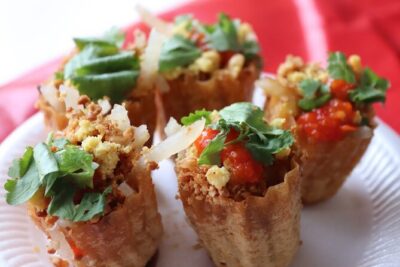
Chinatown Hawker Market Food Tour with 7 Food Tastings
Read our review →Chinatown, Little India, Arab Street Walking Tour
Read our review →
Kampong Glam, Little India & Chinatown with Local Street Food Tastings
Read our review →
Browse the lists this tour appears in