
Reviewed · HAWKER & STREET FOOD TOURS
Ultimate Food Journey
Singapore’s food culture makes the most sense when you see the ingredients before they reach the plate. This three-hour morning walk starts at Geylang Serai New Market, moves through Katong and Joo Chiat, and mixes market browsing with hawker samples and hands-on cooking.
I like the tiny group of five, which gives your guide room to explain unfamiliar spices, dishes, and eating customs. I also like the practical focus: you do not just taste popiah, you make one, and you may see how curry puffs and popiah skins are prepared.
The main consideration is the short length. Three hours gives you a useful introduction, not a full tour of Singapore’s food scene, and the exact dishes or guide may vary. The price is $104.91 per person, so this makes the most sense if you value personal attention and instruction.
In This Review
- Key points at a glance
- Why this food tour works better than a standard tasting
- Starting at Geylang Serai New Market
- Walking through Katong and Joo Chiat
- Sampling Singapore at hawker centers
- Making popiah and kueh pie tees
- What makes the guide important
- Is $104.91 a fair price?
- Timing, meeting point, and practical details
- Who should book the Ultimate Food Journey?
- Final verdict: book for context, not just bites
- FAQ
- Where does the Ultimate Food Journey start?
- What time does the tour begin?
- How long does the experience last?
- Where does the tour end?
- How many people can join?
- What foods or cooking activities are included?
- Can I cancel for a full refund?
Key points at a glance
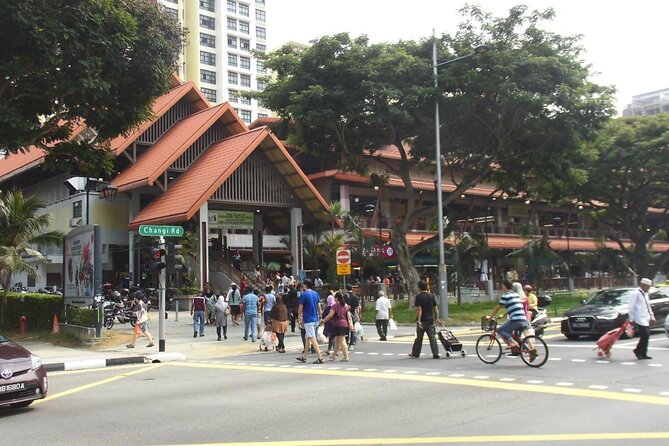
- Geylang Serai New Market: Begin with wet and dry market stalls, where your guide explains produce, spices, and Malay food traditions.
- Katong and Joo Chiat: Walk through two connected areas known here for food, family-run shops, and local cultural context.
- Hands-on popiah making: Prepare your own fresh spring roll, one of the most useful and memorable parts of the morning.
- Local tasting stops: Sample dishes such as putu piring and hawker food rather than relying on a single restaurant meal.
- Very small group: A maximum of five people makes it easier to ask questions and keep the pace personal.
- Morning schedule: Meet at Geylang Serai at 9:00 am and finish back at the meeting point after about three hours.
Why this food tour works better than a standard tasting
Many food tours take you from stall to stall, hand you a bite, and move on. This experience adds the part that is often missing: you learn what the ingredients are, how the food fits into Singapore’s different communities, and how at least some of it is made.
That matters in Singapore, where a dish can carry Malay, Chinese, Indian, or Peranakan influences. A market gives you a clearer picture than a restaurant menu. You can look at unfamiliar herbs and spices, hear how they are used, and connect them to food you taste later.
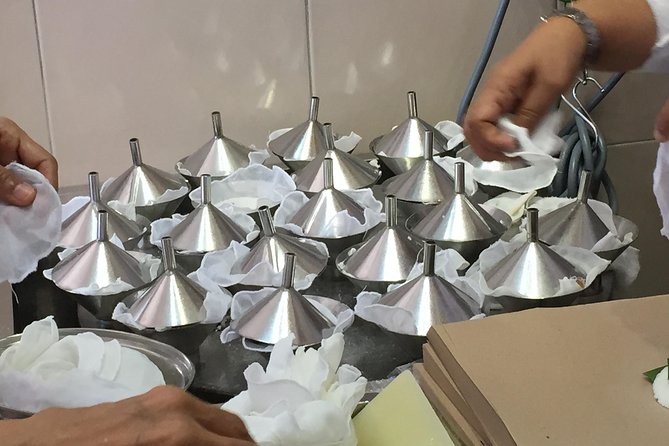
I especially like the combination of watching, eating, and making. You may see the preparation of curry puffs and popiah skins, then work with popiah yourself. That sequence turns the meal into something you can remember and perhaps recreate.
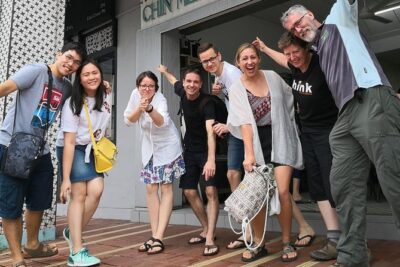
The group cap of five is a real benefit. In a larger group, a market explanation can become hard to hear and hands-on work can feel rushed. Here, you have a better chance to ask why an ingredient matters or how a local dish is eaten.
The tour is also friendly to first-time visitors. You do not need a detailed understanding of Singaporean food before you arrive. The guide’s job is to provide the missing context, and past guide assignments have included Veronica, Kenneth, and Anthony. Veronica has been especially associated with explanations of traditional foods and popiah making, while Kenneth has shared Malay language and cultural background.
More hawker centres and street food walks:
- Small Group: Michelin and Local Hawker Food Tour with 9 tastings
★ 5.0 · 1,890 reviews - Small Group: Singapore Street Food & Night Tour with 9 tastings
★ 5.0 · 1,240 reviews - The Award-Winning PRIVATE Food Tour: 10 Tastings of 3 Cultures
★ 4.5 · 1,017 reviews
Starting at Geylang Serai New Market
Meet at Geylang Serai at 9:00 am. The first stop is the New Market, where the morning begins with both wet and dry market areas.
A wet market is useful for understanding food at its source. You might see fresh produce, seafood, meat, herbs, and other ingredients used in daily cooking. The dry market adds spices, preserved goods, and pantry items. Together, they show you much more than a row of finished dishes.
Your guide explains the ingredients and the food traditions connected with them. The focus is not simply on naming an item. You learn how different communities use it and why the market matters to local cooking.
Geylang Serai is especially important for the Malay side of Singapore’s food culture. Kenneth, one of the guides mentioned for this experience, speaks English and Malay and has shared background about Malay culture at the market. If you are curious about how food and identity overlap in Singapore, this is likely to be one of the strongest parts of the morning.
Putu piring is one of the named foods you may sample. This sweet rice flour snack is prepared with palm sugar and is best understood in the context of traditional snacks, not as a generic dessert. The tour also introduces other local foods as you move through the market and hawker stops.
Keep your expectations flexible here. The supplied schedule names the market but does not provide a fixed list of every dish, stall, or ingredient. That can be a plus, since market food is more interesting when the guide responds to what is available, but it means you should not book expecting a precise tasting menu.
Walking through Katong and Joo Chiat
The next part takes you into Katong and Joo Chiat. The two areas are listed as separate stops, but the supplied details do not specify a precise walking route or the exact order of each visit.
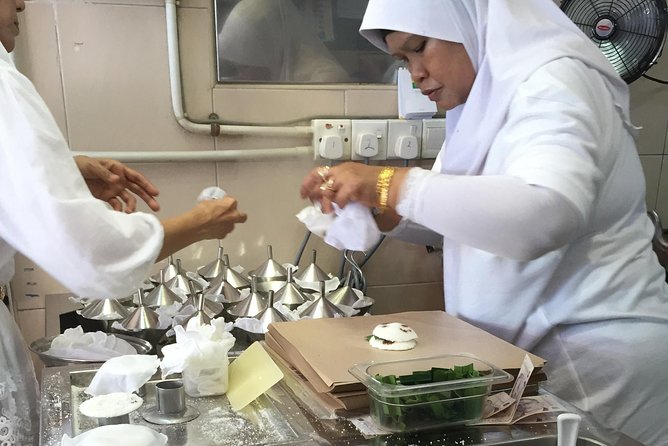
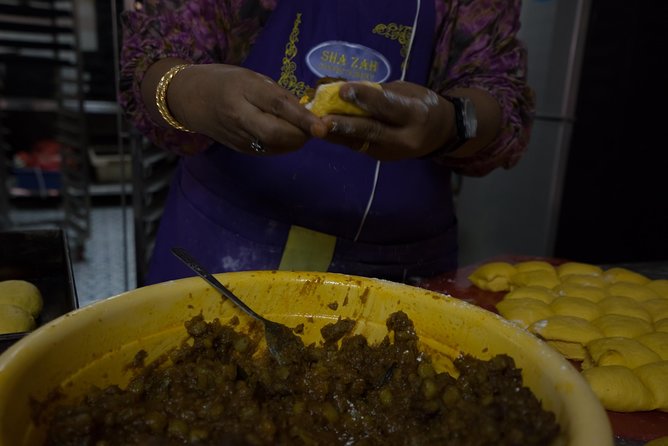
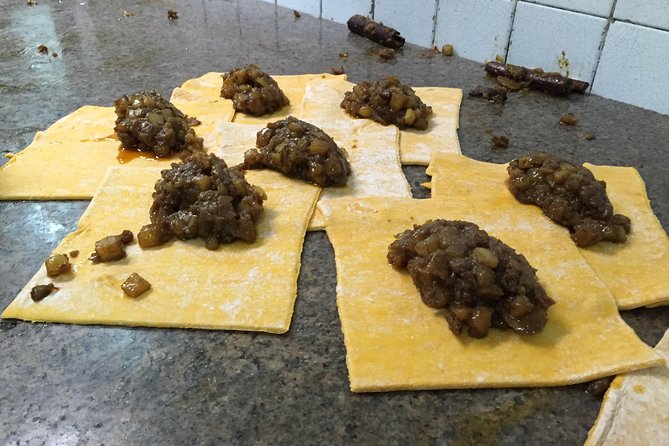
What you can expect is a neighborhood-based look at local food culture. The tour includes visits to shops and family-run businesses, along with food preparation that is easy to miss if you only follow a sightseeing route. One particularly useful detail is the chance to go behind the scenes and see curry puffs and popiah skins being made.
That kind of stop gives you a better sense of labor and technique. A curry puff may look like a simple snack, but the pastry and filling require preparation. Popiah skin is also more than a wrapper. Seeing how it is produced helps explain why a fresh popiah has a different character from a packaged spring roll.
Katong and Joo Chiat also add cultural variety to the experience. You are not eating in an isolated food court with no connection to the surrounding area. You are walking through places where food shops, markets, and local traditions meet.
The drawback is that the tour is not designed as a broad sightseeing walk. The main subject is food, so you should not expect a detailed architectural or historical tour of every street. The neighborhood visits are valuable because they support the food story.
Sampling Singapore at hawker centers
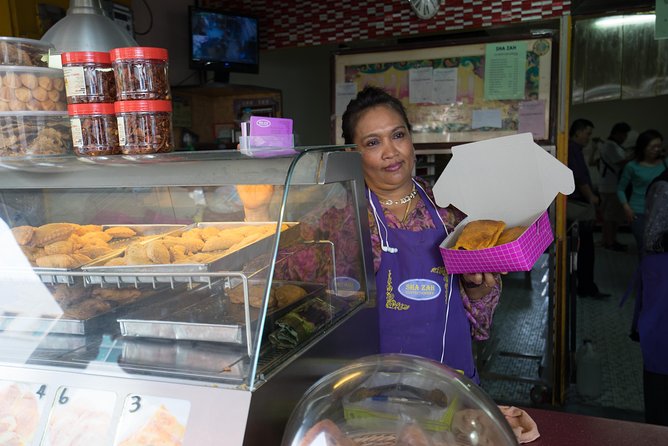
Hawker food is central to the experience. You sample local dishes at a hawker center rather than sitting down for one long restaurant meal.
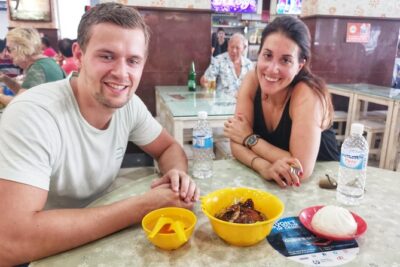
That format lets you try several flavors and textures in a short time. It also gives your guide a chance to explain what you are eating and how local people approach these meals. The food is not presented as a formal tasting course. It is part of the everyday eating culture the tour is designed to show you.
The Chinatown Complex is also associated with this experience in some departures or arrangements, although the stated route begins at Geylang Serai and continues through Katong and Joo Chiat. The available details do not confirm that every departure visits Chinatown, so I would not count on it unless the operator confirms it for your date.
This is one area where the small group helps. Hawker centers can feel confusing when you do not know which stalls matter, how dishes are ordered, or what unfamiliar names mean. A guide can help turn a crowded food hall into an understandable meal.
You should arrive ready to sample several items, but do not assume every possible Singaporean specialty is included. The advertised food examples include putu piring, popiah, kueh pie tees, and hawker dishes. The exact selection can depend on the route and available vendors.
A different sort of day out, same city:
- Lion City Bike Tour of Singapore
★ 5.0 · 6,211 reviews - Singapore: Gardens by the Bay Bundle Entry Ticket
★ 4.3 · 3,726 reviews - Singapore: Big Bus Hop-On Hop-Off Tour by Open-Top Bus
★ 4.5 · 3,261 reviews - Singapore: Lion City Highlights Bike Tour
★ 4.9 · 2,010 reviews
Making popiah and kueh pie tees
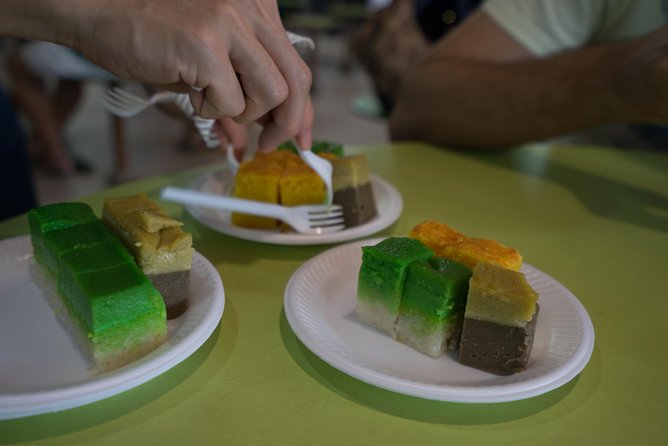
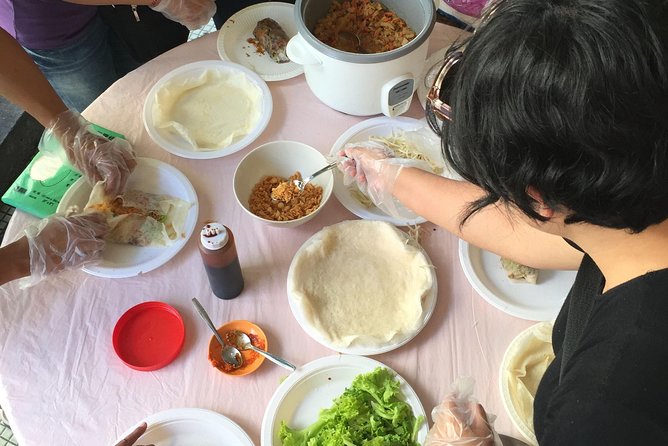
The hands-on section is the tour’s clearest point of difference. You learn to make your own popiah, a fresh spring roll often filled with vegetables and other ingredients, rather than merely eating one prepared for you.
The process gives you a better feel for how the dish comes together. You handle the wrapper, add the filling, and assemble the roll yourself. It is simple enough to enjoy during a short tour, yet practical enough to give you a new appreciation for the dish.
You also learn to make kueh pie tees, savory tart shells filled with a mixture of ingredients. The experience presents these foods as part of Singapore’s broader Asian food culture, with attention to tradition and preparation.
This portion is likely to appeal most to people who enjoy food demonstrations but want more than a passive show. You are not signing up for a full cooking course, however. The activity lasts about three hours in total, so the cooking element is an introduction rather than an extended lesson with multiple recipes.
If you want detailed written recipes, ingredient weights, or a long kitchen session, ask the provider before booking. Those details are not included in the available tour information. If your goal is to handle the food, learn the basic method, and eat what you make, the format should fit well.
What makes the guide important
The guide shapes this tour more than a fixed monument would. Market stalls and hawker centers do not explain themselves, especially when you are looking at ingredients you have never used.
Veronica is one guide associated with the experience. Her focus has included the history of traditional food, the location, and the way local ingredients are used. Kenneth has shared Malay culture and speaks English and Malay, while Anthony has led a food-focused morning around Chinatown Complex.
The different names suggest that your exact experience depends on who leads your departure. That is worth keeping in mind. The core activities remain the same, but the stories, pacing, and favorite food stops may differ from one guide to another.
I would use the small group to your advantage. Ask about a spice you do not recognize. Ask how popiah differs from other spring rolls. Ask why certain foods belong to a particular community or celebration. The value of the tour comes from these exchanges as much as from the food itself.
Is $104.91 a fair price?
At $104.91 per person, this is not a cheap way to eat breakfast in Singapore. You could spend far less at a hawker center if your only goal were calories.
The price is easier to justify when you count the whole package: a three-hour guided walk, market interpretation, visits to shops and hawker centers, several tastings, and hands-on preparation of popiah and kueh pie tees. You are paying for access, explanations, and structure, not just food portions.
The maximum of five also matters. A private guide is not listed, but a group this small can feel close to private instruction. For a first morning in Singapore, that can save you time and uncertainty, especially if local dishes and market customs are new to you.
I would book it if you want a guided introduction and place a high value on context. I would skip it if you already know Singapore’s hawker scene well or prefer to explore food stalls on your own.
Timing, meeting point, and practical details
The tour starts at 9:00 am at Geylang Serai and ends back at the meeting point. It lasts approximately three hours, so you still have much of the day available for other plans.
The morning timing is useful for markets and food preparation. It also means you should plan around an early start rather than treating this as an afternoon food crawl. The listing does not specify hotel pickup, transportation between stops, or the exact distance walked, so arrange your own way to Geylang Serai and be ready for a walking-based outing.
A mobile ticket is provided, and confirmation is received at booking. Most people can participate, but the available information does not give detailed accessibility guidance. If you have mobility needs, contact Tribe Tours before booking and ask about the walking route and market access.
Free cancellation is available if you cancel at least 24 hours before the 9:00 am start time. Changes or cancellations made inside that window are not accepted for a refund. The tour also depends on good weather and a minimum group size. If the operator cancels for either reason, you are offered another date or experience, or a full refund.
Who should book the Ultimate Food Journey?
I would recommend this for first-time visitors who want a quick, guided introduction to Singaporean food. It also suits people who enjoy asking questions, trying unfamiliar snacks, and taking part in a simple cooking activity.
It is a particularly good match for food-focused couples, small families, and friends who want more structure than a self-guided hawker visit. The five-person limit keeps the experience personal without requiring a private booking.
You may want another option if you need a full meal with guaranteed dishes, a long cooking class, or a detailed city sightseeing tour. The exact food stops can vary, and three hours cannot cover every side of Singapore’s food culture.
Final verdict: book for context, not just bites
The Ultimate Food Journey is worth booking when you want Singaporean food explained as you eat it. Geylang Serai gives you market context, Katong and Joo Chiat add neighborhood flavor, and the popiah and kueh pie tees activities give you something to do with your hands.
The $104.91 price asks you to value the guide and the small group. If you do, this is a focused and useful morning. If you only want the cheapest hawker food, explore independently instead.
FAQ
Where does the Ultimate Food Journey start?
The tour starts at Geylang Serai in Singapore.
What time does the tour begin?
The start time is 9:00 am.
How long does the experience last?
The tour lasts approximately three hours.
Where does the tour end?
The activity ends back at the meeting point.
How many people can join?
The tour has a maximum of five participants.
What foods or cooking activities are included?
You may sample local dishes such as putu piring and hawker food. The experience includes learning to make popiah and kueh pie tees.
Can I cancel for a full refund?
Yes. You can cancel at least 24 hours before the experience start time for a full refund. Cancellations made less than 24 hours in advance are not refunded.
Just added around Singapore
- Skyline Luge and Sky Ride Ticket Sentosa Singapore★ 3.5 · 3 reviews
- Marina Bay Sands SkyPark Observation Deck ticket in Singapore★ 4.0 · 3 reviews
- Singapore Private Full-Day Sightseeing Tour★ 5.0 · 3 reviews
- Singapore: Food and Bike Tour – Downtown★ 4.6 · 3 reviews
- Singapore: Chinatown Street Food Tour★ 5.0 · 3 reviews
- Learn to cook authentic Peranakan food with local market tour★ 3.5 · 3 reviews
- Singapore Brompton Bike Tour from Rail Corridor, with food!★ 5.0 · 3 reviews
- Guided Walking Tour to the Historical Attractions in Farrer Park★ 5.0 · 3 reviews
Hawker & Street Food Tours, compared.
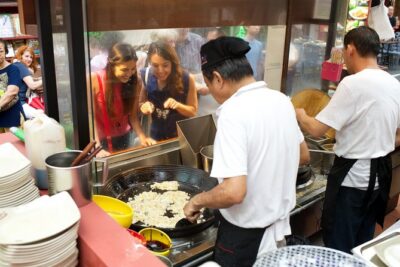
Small Group: Michelin and Local Hawker Food Tour with 9 tastings
Read our review →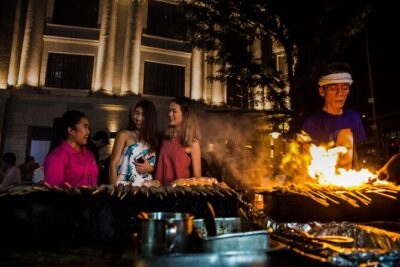
Small Group: Singapore Street Food & Night Tour with 9 tastings
Read our review →
The Award-Winning PRIVATE Food Tour: 10 Tastings of 3 Cultures
Read our review →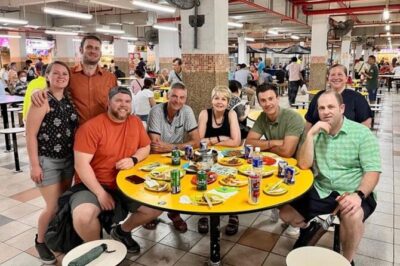
Chinese, Indian & Arabic Quarters, Culture & Food Tour
Read our review →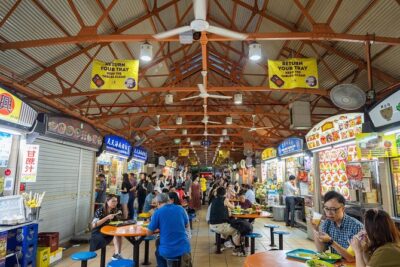
Small-Group Food Tour With Hawker Center: Eat Like A Local
Read our review →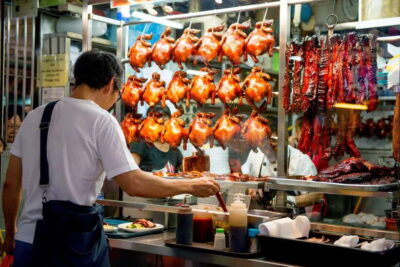
Browse the lists this tour appears in