
Reviewed · CHINATOWN TOURS
Singapore’s Chinatown “Off The Beaten Track” Foodie Tour
Singapore’s Chinatown is best understood one bite at a time. This three-hour walk takes you from a wet market to a hawker center, then on to a Chinese specialty shop and a traditional tea house. Along the way, you sample local breakfast food, Singaporean favorites, fruit desserts, and tea rather than simply looking at menus.
I like the small group of no more than 10 because it gives you room to ask questions and watch the guide explain unfamiliar ingredients. I also like the range: this is not just a hawker-center lunch, but a morning of market shopping, street food, Chinese herbs, tea, and dessert.
The main consideration is the price, $137.19 per person, which is high for a three-hour food walk in Singapore. You are paying for a guided introduction and many tastings, but visitors with a tight budget may prefer to visit a hawker center on their own.
In This Review
- Key points to know before booking
- Starting at 62 Smith Street in Chinatown
- A local breakfast before the main feast
- Hawker-center classics from chicken rice to laksa
- Dessert with shaved ice and Southeast Asian fruit
- The Chinese delicacy shop and its banquet ingredients
- A quiet tea ceremony after the food stops
- How much food do you actually get?
- Is $137.19 a fair price?
- Timing, group size, and practical comfort
- Who should book this Chinatown food walk?
- Should you book it?
- FAQ
- Where does the Singapore Chinatown food tour begin?
- What time does the tour start?
- How long does the tour last?
- Where does the tour finish?
- How many people can join the tour?
- Is food included?
- Can I cancel for a refund?
Key points to know before booking
- Meet at 9:30 am at 62 Smith Street: The tour begins in the heart of Chinatown and finishes back at the same meeting point.
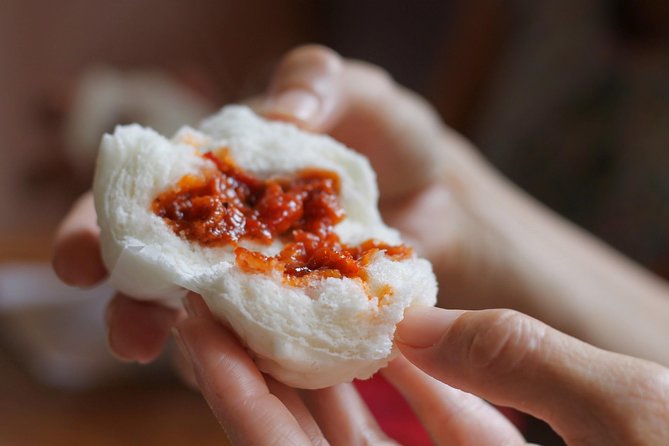
- Food covers three parts of the day: Expect a local breakfast snack, savory hawker dishes and drinks, then dessert with shaved ice and Southeast Asian fruit.
- The wet market adds useful context: You learn how herbs, spices, seafood, and other ingredients shape Singaporean cooking.
- Tea is part of the cultural experience: A traditional tea house provides a quiet Zen-style pause after the market and food stops.
- Guides make a difference: Angel, Kim, and Jan have led this experience, with a strong focus on food, culture, and practical eating advice.
- Durian may appear: It has featured on some departures, giving you a chance to try one of Southeast Asia’s most debated fruits.
Starting at 62 Smith Street in Chinatown
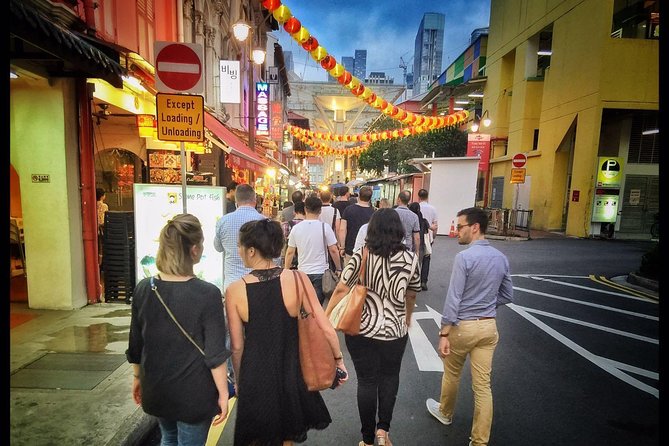
Your morning starts at 62 Smith Street at 9:30 am. That early start matters because Chinatown is already active, yet the day has not reached its hottest or most crowded stretch.
The first stop is the wet market. This is not a polished food hall designed for sightseeing. It is a working market where you can see the kinds of seafood, herbs, spices, and less familiar ingredients used in local kitchens.
A guide can make a market like this much easier to understand. Instead of walking past trays and stalls without context, you can ask what an ingredient is, how it is used, and which dishes depend on it. That is especially useful if you have never cooked with Chinese herbs or encountered some of the seafood and specialty produce sold here.
I like this opening because it gives the later tastings a frame. When you sample noodles, dumplings, chicken rice, or laksa, you have already seen some of the building blocks of Singaporean food.
The market is also one of the less predictable parts of the morning. The exact sights and smells depend on what is being sold that day. If you prefer neat, controlled attractions, this stop may feel rough around the edges. That is also its value.
More walks through Chinatown:
- Chinatown, Little India, Kampong Gelam City Highlights Tour
★ 5.0 · 224 reviews - Singapore: Chinatown Hawker Market Food Tour with 7 Food Tastings
★ 5.0 · 213 reviews - Singapore: Chinatown, Little India, Arab Street Walking Tour
★ 4.9 · 207 reviews
A local breakfast before the main feast
After the market, you stop for a local breakfast snack. The exact item is not specified, so you should arrive ready to try something unfamiliar rather than expecting a standard Western breakfast.
This small tasting helps you understand how food fits into daily life in Singapore. Breakfast here is not treated as a ceremonial meal. It is practical, quick, and often built around familiar local flavors. Your guide can explain what you are eating and point out other breakfast choices to try later in your stay.
The portions are designed as tastings, not full restaurant meals. That is good news because the tour continues with more food. It also means you should not expect one large plate at each stop.
Dietary needs should be provided when you book. The operator includes food and drink tastings, snacks, and bottled water, but the supplied details do not promise that every dietary request can be accommodated. If you avoid meat, seafood, dairy, gluten, or specific ingredients, contact the operator in advance and be clear.
Hawker-center classics from chicken rice to laksa
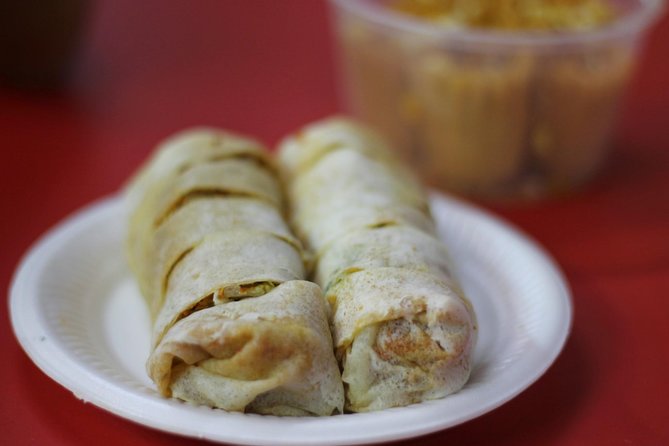
The central food stop is a hawker center, where you sample signature dishes and drinks from Singapore’s broad food culture. The guide can point you toward local favorites such as chicken rice, laksa, dumplings, popiah, and noodle dishes.
You may not taste every dish named above. They are examples of the foods the guides discuss, not a fixed menu. The actual tastings can vary, so think of this as a guided introduction to hawker cooking rather than a guaranteed checklist.
This is where the tour earns much of its appeal. A hawker center can be confusing on your first visit. There may be many stalls, unfamiliar names, different queues, and dishes that look similar until you know what to notice. A food-focused guide gives you a starting point and helps you understand what makes each dish different.
The guides associated with this walk include Angel, Kim, and Jan. Angel has been singled out for making the food easy to understand and for offering suggestions about where to find chicken rice, laksa, dumplings, popiah, and noodles. Kim has led an especially engaging version of the walk, and Jan has also guided groups through the food and cultural stops.
I would use the hawker-center advice beyond the tour. Write down the dish names you like, then return later for a larger portion. The morning tastings let you sample several styles without committing to one meal.
There is a practical drawback. Hawker centers are working food spaces, not quiet dining rooms. You may be standing, sharing tables, waiting briefly, or eating in a busy setting. If you want a slow, formal meal, this is not the right format. If you want to understand how local people eat, it is a much better fit.
Dessert with shaved ice and Southeast Asian fruit
The sweet course focuses on shaved ice and fruits from Southeast Asia. This gives the tour a welcome change of pace after savory dishes and market smells.
Shaved ice desserts can be more varied than their simple name suggests. The appeal is the contrast between cold ice, fruit, and other toppings or flavors. Since the precise dessert is not stated, you should treat this as a chance to sample a local style rather than expect one named specialty.
Fruit can also be a small cultural lesson. Southeast Asian produce may include flavors you rarely see at home, and the guide can help you decide how to approach them. Durian has appeared on some versions of the experience. If you have always wondered if it is as strong as its reputation, this may be your chance to try it in a supportive group setting.
Durian is not guaranteed, and it is not a required part of the tour. You should also tell the guide if you have allergies or strong food restrictions. The goal is exploration, not forcing yourself to eat something you cannot safely have.
More hawker centres and street food walks:
- Small Group: Michelin and Local Hawker Food Tour with 9 tastings
★ 5.0 · 1,890 reviews - Small Group: Singapore Street Food & Night Tour with 9 tastings
★ 5.0 · 1,240 reviews - The Award-Winning PRIVATE Food Tour: 10 Tastings of 3 Cultures
★ 4.5 · 1,017 reviews - Singapore: Chinese, Indian & Arabic Quarters, Culture & Food Tour
★ 5.0 · 789 reviews
The Chinese delicacy shop and its banquet ingredients
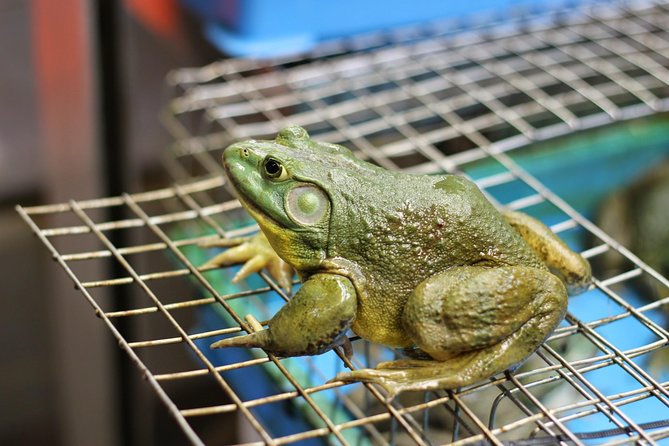
The route includes a Chinese delicacy shop that sells ingredients for Chinese banquets as well as herbs used in traditional Chinese medicine. This is one of the more unusual stops because it shifts the focus from ready-to-eat food to the ingredients behind formal cooking and traditional remedies.
You may see products that are unfamiliar, difficult to identify, or sold in forms you do not expect. That can be useful even if you have no plan to buy anything. The guide can explain how these ingredients are used and why they matter in Chinese food culture.
This stop also helps correct a common mistake about Chinatown. The neighborhood is not only about restaurants and decorative streets. Its food culture includes markets, specialty stores, tea, herbs, seafood, dried goods, and ingredients selected for large family or banquet meals.
Do not assume shopping is included. The experience includes tastings, snacks, bottled water, a local guide, and tea-related activities, but it does not state that purchases are covered. If something catches your eye, treat it as a separate expense.
A quiet tea ceremony after the food stops
The final cultural note is a tea appreciation session at a traditional tea house. The experience is described as a Zen tea ceremony, giving the morning a calmer finish after the market and hawker center.
This is more than another drink tasting. Tea preparation can be slow and deliberate, with attention to the leaves, water, brewing, and serving. A guide can explain how to taste the tea and what separates ordinary tea drinking from a more formal appreciation.
I like the balance here. The tour does not race from one snack to another for three straight hours. The tea stop gives you a chance to sit, listen, and connect the food experience with Chinese customs.
Still, you should know what this is and is not. It is a tea appreciation experience, not a full religious ceremony or a long meditation session. The word Zen points to the quiet tone and careful preparation. Expect an introduction to tea culture within the food walk.
How much food do you actually get?
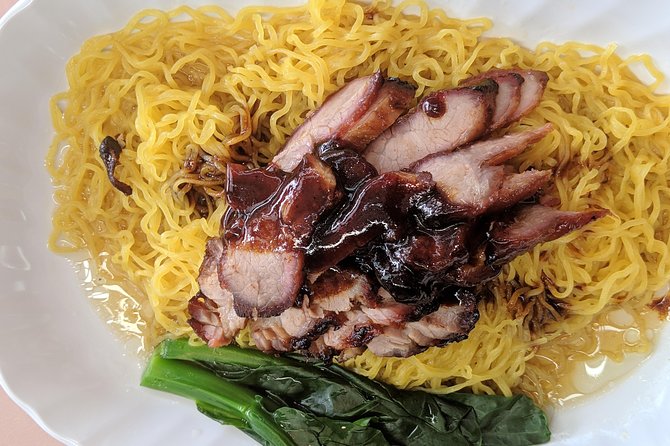
The tour includes breakfast, savory food, drinks, dessert, snacks, and bottled water. It is designed to keep you tasting throughout the morning, but the portions are samples rather than full meals.
For most people, that means you should not eat a heavy breakfast before arriving. At the same time, do not expect one tour to replace every meal of the day. The food is spread across several stops, and your guide may encourage you to focus on variety.
The range is the strongest part of the food program. You move from a morning snack to hawker classics, then to shaved ice and fruit. You also get to see the raw ingredients and specialty products that support the dishes.
If your main goal is one famous Singapore dish in a large portion, you can spend less by ordering it independently. If you want help choosing several foods and understanding what you are eating, the tastings offer more value.
Is $137.19 a fair price?
At $137.19 per person, this is not a budget food walk. The cost covers a local guide, food and drink tastings, snacks, bottled water, the market visit, the specialty shop, and the tea experience. A maximum of 10 people also keeps the group relatively small.
The value depends on how you travel. A first-time visitor who feels unsure about hawker centers, unfamiliar ingredients, or local food names may find the guidance worth paying for. You are buying structure, explanation, and access to a range of tastings in one morning.
A confident eater who already knows Singapore’s hawker centers may see the price differently. You can eat cheaply in Chinatown without a guide, and you can visit food shops and tea houses independently. The tour becomes worthwhile when you value interpretation and want to cover several types of food without planning every stop yourself.
Group discounts are listed as a feature, so check the current booking terms if you are coming with several people. A mobile ticket is also available, which is useful if you do not want to print confirmation details.
Timing, group size, and practical comfort
The walk lasts about three hours and starts at 9:30 am. It ends at the original meeting point, so you can plan another Chinatown activity afterward without arranging transport back from a distant neighborhood.
The group limit is 10 people. That is small enough for questions and conversation, though the experience remains a group tour rather than a private walk. If you want a fully personal food plan, ask about private options separately, since this booking is described as a small-group activity.
Most people can participate, according to the supplied details. The walk includes a wet market, hawker center, shops, and a tea house, but no detailed information is provided about step-free access or seating at every stop. If you have mobility concerns, ask the operator before booking.
Free cancellation is available if you cancel at least 24 hours before the local start time. Changes or cancellations made less than 24 hours ahead are not accepted for a refund.
Who should book this Chinatown food walk?
I would recommend it to first-time visitors who want a quick introduction to Singaporean food without spending days researching dishes and markets. It also suits curious eaters who want to try several small portions and ask questions along the way.
Families can benefit from the format, especially if older children or teenagers are open to unfamiliar foods. The experience gives them a guided way to try things such as durian, local desserts, or dishes they might skip when ordering alone.
It is also a good choice for anyone interested in the connection between food and culture. The wet market, Chinese medicine herbs, banquet ingredients, hawker cooking, and tea ceremony give you more than a restaurant meal.
I would hesitate to book it if you need a quiet, private experience, dislike group tastings, or have strict dietary restrictions that cannot be handled. The cost is also difficult to justify if your only aim is to eat one inexpensive hawker dish.
Should you book it?
Book this tour if you want a well-rounded first taste of Chinatown and appreciate having Angel, Kim, Jan, or another food-focused guide explain what you are seeing and eating. The strongest reasons are the small group, the mix of market and hawker food, and the peaceful tea session at the end.
Skip it if you already know Singapore’s food scene or prefer to choose every dish yourself. At $137.19, the tour is a planned food education rather than a cheap meal. For a first morning in Singapore, that structure can be a smart way to get your bearings and build a personal list of foods to try next.
FAQ
Where does the Singapore Chinatown food tour begin?
The tour begins at 62 Smith Street, Singapore 058964.
What time does the tour start?
The start time is 9:30 am.
How long does the tour last?
The experience lasts approximately three hours.
Where does the tour finish?
The activity ends back at the meeting point on Smith Street.
How many people can join the tour?
The group has a maximum of 10 participants.
Is food included?
Yes. Food and drink tastings, snacks, and bottled water are included.
Can I cancel for a refund?
Yes. You can cancel for a full refund if you do so at least 24 hours before the local start time. Cancellations or changes made less than 24 hours before the start are not accepted for a refund.
More Hidden Gems Walks
- Private Singapore Tour with a Local, Highlights & Hidden Gems 100% Personalised
★ 5.0 · 475 reviews - Singapore PRIVATE TOUR: Highlights & Hidden Gems by CAR or Foot
★ 5.0 · 227 reviews - Private Singapore Walking Tour: City Highlights & Hidden Gems
★ 5.0 · 84 reviews - Off the Beaten Track in Singapore: Private City Tour
★ 5.0 · 56 reviews
Just added around Singapore
- Skyline Luge and Sky Ride Ticket Sentosa Singapore★ 3.5 · 3 reviews
- Marina Bay Sands SkyPark Observation Deck ticket in Singapore★ 4.0 · 3 reviews
- Singapore Private Full-Day Sightseeing Tour★ 5.0 · 3 reviews
- Singapore: Food and Bike Tour – Downtown★ 4.6 · 3 reviews
- Singapore: Chinatown Street Food Tour★ 5.0 · 3 reviews
- Learn to cook authentic Peranakan food with local market tour★ 3.5 · 3 reviews
- Singapore Brompton Bike Tour from Rail Corridor, with food!★ 5.0 · 3 reviews
- Guided Walking Tour to the Historical Attractions in Farrer Park★ 5.0 · 3 reviews
Chinatown Tours, compared.
Chinatown, Little India, Kampong Gelam City Highlights Tour
Read our review →
Chinatown Hawker Market Food Tour with 7 Food Tastings
Read our review →Chinatown, Little India, Arab Street Walking Tour
Read our review →
Kampong Glam, Little India & Chinatown with Local Street Food Tastings
Read our review →
Browse the lists this tour appears in