
Reviewed · HAWKER & STREET FOOD TOURS
Singapore Street Food and Ethnic Quarters Kick Scooter Tour
Singapore’s best feature is on the plate, and this 3.5-hour kick scooter tour gives you seven vegetarian-friendly tastes while crossing several of the city’s old cultural districts. You’ll eat dosai, popiah, chwee kway, muah chee, black glutinous rice dessert, banana fritters, and masala tea as the route moves from Little India to Kampong Glam.
I like the way the scooter links places that feel far apart on foot, and I like the mix of temples, shophouses, markets, churches, and food stalls. The guide, including Ms Ping on some departures, also keeps an eye on riders who need help finding their balance. The main drawback is simple: you need to be comfortable on a kick scooter, and the tour is not open to children aged 7 or below or anyone weighing more than 100 kilograms.
In This Review
- Key points at a glance
- Seven tastes that give the tour its purpose
- Little India begins with color and faith
- Albert Mall shows Singapore’s food culture in miniature
- Bugis connects markets, churches, and former nightlife
- Kampong Glam finishes with food and an easy walk
- What riding a kick scooter adds
- Is $55.43 a fair price?
- Practical details before you reserve
- Who should book this Singapore evening?
- Should you book the kick scooter food tour?
- FAQ
- How long does the Singapore Street Food and Ethnic Quarters Kick Scooter Tour last?
- What food and drinks are included?
- Where does the tour start and finish?
- How many people can join the tour?
- Are young children and people over 100 kilograms allowed to participate?
- What happens if the weather is poor or I need to cancel?
Key points at a glance
- Seven vegetarian-friendly tastes: Try a giant dosai cone, masala tea, popiah, chwee kway, muah chee, bubur pulut hitam, and pisang goreng.
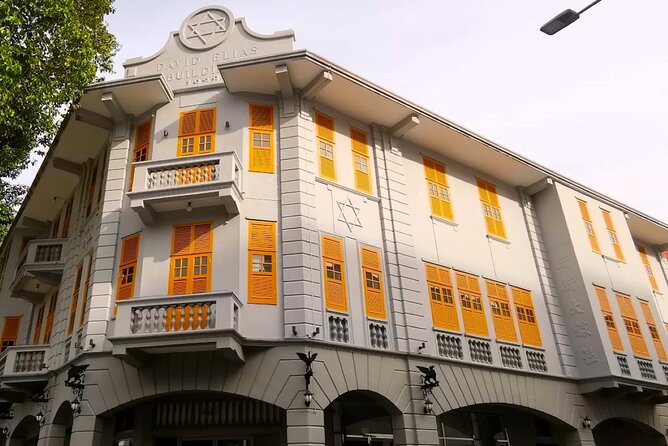
- A fast route through many quarters: Cover Little India, Albert Mall, old Jewish and Japanese areas, the old European quarter, Bugis, and Kampong Glam.
- A 5 pm start: The evening timing suits Singapore’s food culture, with the route ending around 8:30 pm at 73 Dunlop Street.
- Small group size: A maximum of 15 people makes street riding and guide support easier to manage.
- Scooter skills matter: One rider needed time to stop wobbling, so allow yourself a little patience if this is not a familiar way to get around.
- Strong value for a food-and-sightseeing outing: At $55.43 per person, the price includes the listed food stops, scooter touring, and a guide across several central districts.
Seven tastes that give the tour its purpose
This is not a tour where food is added as a token snack. Eating is the route’s main thread. You move from one neighborhood to another, and each stop gives you a small clue about the people and traditions that shaped Singapore.
At Komala Vilas Restaurant in Little India, the featured dish is a giant dosai cone. Dosai is a thin South Indian crepe, but the cone presentation makes this stop more playful than a standard restaurant meal. You also have masala tea, which gives you a warm, spiced drink alongside the crisp, savory dish.
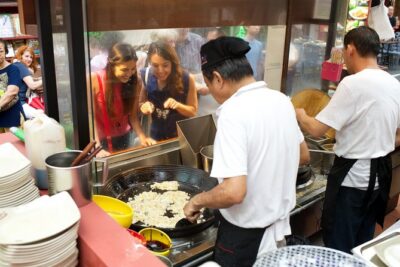
At the Albert Mall hawker centre, the tasting becomes more varied. You’ll try a freshly made popiah, a Chinese spring roll; chwee kway, steamed rice pudding topped with radish and sambal; and muah chee, soft glutinous rice morsels coated with nuts and sugar. The fourth hawker-centre taste is bubur pulut hitam, a black glutinous rice dessert finished with coconut cream.
The final food stop is in Kampong Glam, where you try pisang goreng, Malay-style banana fritters. This spread is useful for first-time visitors because it shows how different food traditions sit close together in Singapore. It also means you should arrive hungry. A full meal immediately before the 5 pm start would make the evening less enjoyable.
All the listed food and drink are vegetarian-friendly. That does not mean every possible dietary need is automatically covered, so tell the guide what you need. The guide can adapt to food requirements where possible, and the group’s direct support is one reason the experience works better than simply following a printed food list.
More hawker centres and street food walks:
- Small Group: Michelin and Local Hawker Food Tour with 9 tastings
★ 5.0 · 1,890 reviews - Small Group: Singapore Street Food & Night Tour with 9 tastings
★ 5.0 · 1,240 reviews - The Award-Winning PRIVATE Food Tour: 10 Tastings of 3 Cultures
★ 4.5 · 1,017 reviews
Little India begins with color and faith
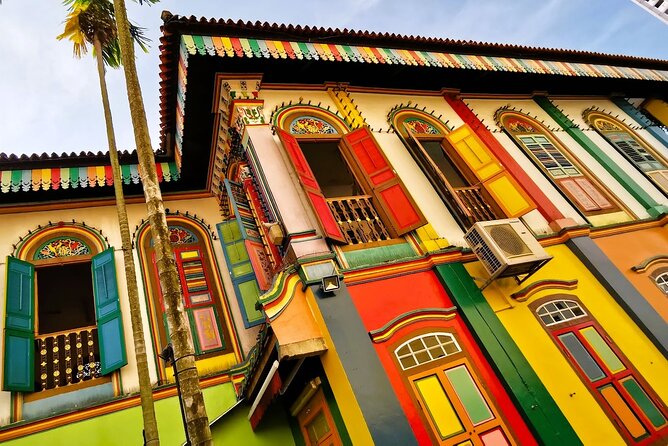
The tour starts in Little India, a good choice for an introduction because the district puts several cultures close together. The first photo stop is the House of Tan Teng Niah, a brightly painted Chinese villa built in 1900 by a Chinese merchant for his wife.
It is the only Chinese villa left in Little India, and the short two-minute visit is mainly about seeing the building from outside and getting your bearings. Do not expect an extended architectural tour here. The value is in the contrast: a Chinese home in a district best known for Indian culture.
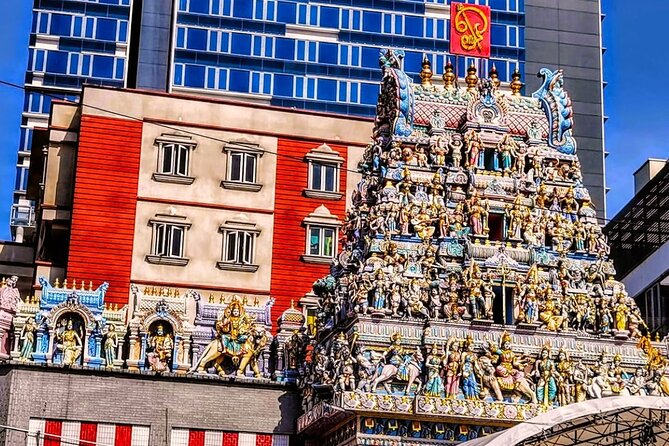
Next comes Sri Veeramakaliamman Temple, a Hindu temple dedicated to Kali and established in 1855. You have about 10 minutes here, enough for a brief look at the temple setting and a little explanation from the guide.
The route then reaches Campbell Lane, where traditional Indian trades include sweetmeat shops and flower sellers. This is a short stop, but it helps connect the temple visit with everyday commerce. I like this part of the route because it avoids making Little India only a collection of famous buildings. You get food, worship, color, and working shops in one compact section.
The food stop at Komala Vilas lasts about 40 minutes and is the longest early stop. That extra time matters. You can eat without rushing, and the guide can explain what you are trying rather than handing you a snack and moving on.
Albert Mall shows Singapore’s food culture in miniature
From Little India, the scooter takes you toward Selegie and Albert Mall. The ride is the practical heart of the experience. Walking between all these districts would take much longer, while the scooter lets you cover more ground during the cooler evening hours.
At Selegie, the guide points out remnants of Singapore’s former Jewish Quarter and Little Japan. These references are easy to miss if you only visit the city’s major sights. The stop lasts about 10 minutes, so think of it as a short history lesson tied to the streets around you, not a full museum visit.
You then pass two important religious sites. Sri Krishnan Temple, built in 1870 and dedicated to Lord Vishnu, is unusual because Buddhist and Taoist followers also worship there. Nearby, Kuan Yin Thong Hood Cho Temple dates from 1884 and is dedicated to the Goddess of Mercy. It is known for fortune telling and is one of Singapore’s busiest temples.
The listed time at each temple is only two minutes. That tells you how to approach the route. You will see the outside and receive context, but this is not a temple-focused walk with long visits inside. If you want extended time at either site, plan to return on your own.
Albert Mall is described as today’s Chinatown, and here you stop for the largest cluster of tastes outside Little India. The 30-minute hawker-centre visit gives you a chance to sample several foods in one place. I see this as the tour’s best food value because one stop covers contrasting textures and flavors: soft rice pudding, crisp or fresh spring roll filling, chewy sweet rice, and coconut cream dessert.
The hawker centre also gives you a more ordinary view of Singapore than a polished restaurant. You are eating the sort of affordable food that makes the city’s dining culture so appealing. At the same time, sampling several dishes means portions may be modest rather than meal-sized. The tour is designed for variety, not for sitting down to one large plate.
Bugis connects markets, churches, and former nightlife
After Albert Mall, the route passes Bugis Street. The area was once an infamous red-light district and is now a busy marketplace. The stop lasts only five minutes, so you will get a quick sense of the area rather than a detailed account of its past.
Bugis Junction follows, with a look at streets where Japanese-owned businesses, including brothels and photography studios, once operated before World War II. The guide helps you picture how much the district has changed. The short timing again keeps the tour moving, but it gives the route a useful historical layer.
The old European quarter comes next. St Joseph’s Church was established by a Portuguese mission in 1853 and is described as one of Singapore’s most striking Catholic churches. The tour also identifies it as the oldest Catholic church in Singapore.
The stop is only two minutes, so you should not expect a full church visit. Still, it adds another religious tradition to a route that has already included Hindu, Buddhist, Taoist, Islamic, and Chinese sites. Chijmes offers a longer 10-minute pause. The former Catholic girls’ school and orphanage is now a food, entertainment, and lifestyle complex, so you see a place that has changed use while keeping its older character.
The route then reaches Raffles Hotel Arcade for about 20 minutes. Raffles Hotel is linked with figures such as Charlie Chaplin, Elizabeth Taylor, and Michael Jackson, and it is known as the birthplace of the Singapore Sling. This is the most polished stop of the evening, a contrast to the hawker centre and market streets.
You may want to keep your expectations in check. The tour does not include a Singapore Sling, and the listed visit is to the arcade rather than a full hotel experience. The stop is still worthwhile for the famous setting and for seeing how Singapore’s colonial-era image fits into the wider city.
A few more Singapore days out worth weighing up
- Singapore: Kampong Glam & Civic District Vespa Sidecar Ride
★ 4.9 · 49 reviews - Singapore: Sunset City Tour by Kick Scooter
★ 4.9 · 23 reviews - Secrets of Singapore Kick Scooter Tour with Dinner
★ 5.0 · 11 reviews - Secrets of Singapore Kick Scooter Tour with Dinner
★ 5.0 · 11 reviews
Kampong Glam finishes with food and an easy walk
The last part of the route moves into Kampong Glam, once the seat of Malay royalty. Haji Lane is a 10-minute stop and one of the liveliest evening streets in the city, with shops, street art, and nightlife. This is one of the more photogenic sections, but it can also feel busier than the quieter heritage stops earlier in the tour.
Sultan Mosque provides the district’s main historical anchor. It was originally built in 1824 and named for Sultan Hussein Shah, who signed the 1819 treaty that allowed the British to establish a trading post in Singapore. The stop lasts about five minutes, enough to view the mosque and hear why it matters.
Bussorah Street is a short final look at the area. Its pedestrian setting, royal palms, halal restaurants, and perfume shops make it a pleasant lead-in to the food finish. At Kampong Glam, you try pisang goreng, banana fritters in the Malay style.
The official end is at the tour office at 73 Dunlop Street. That location is within walking distance of Rochor, Jalan Besar, Bugis, and Little India MRT stations. This is handy after an evening of eating because you have several ways to continue your night or return to your hotel.
What riding a kick scooter adds
The scooter is not just a novelty. It makes the route possible within three and a half hours. The tour crosses enough districts that a walking version would either need to cut out many stops or spend much of the time on foot between them.
There is a learning curve. One rider needed time to get steady, then found the scooter easier to handle. If you are wobbly at first, do not panic, but do take the safety issue seriously. The route uses public streets and busy central areas, so you need basic balance, attention, and the ability to follow the guide.
The group limit of 15 is helpful. A smaller group is easier to keep together, especially when stopping near temples, market streets, and food centres. It also gives the guide a better chance to notice when someone needs help.
I would choose this tour only if the scooter itself sounds appealing. If you prefer a slow, detailed walking tour, the pace may feel too quick. If you want to connect many central neighborhoods in one evening, the scooter is the reason to book it.
Is $55.43 a fair price?
At $55.43 per person, this is a solid value if you want food, transport between districts, and a guide in one booking. You are not paying only for seven samples. You are also paying for the scooter route, neighborhood explanations, temple and church stops, and the planning needed to connect Little India with Kampong Glam.
The value is strongest for a first or second visit to Singapore. You can get a broad introduction in one evening, then return later to the places that catch your interest. The tour also saves you from having to work out how to sample several vegetarian dishes across different food centres.
It is less compelling if you already know these districts well or mainly want a large dinner. The portions are built around tasting several things, and many stops are brief. I would treat this as an orientation with dinner-sized sampling, not a restaurant crawl.
The experience is generally booked about 20 days ahead, so I would reserve early if your Singapore schedule is tight. It has a maximum of 15 people, and its evening start limits the number of available departures.
Practical details before you reserve
The tour starts in Little India at 5 pm and lasts about three hours and 30 minutes. You finish at 73 Dunlop Street, not back at the starting point, though four MRT stations are within walking distance of the office.
Mobile tickets are provided, and confirmation arrives when you book. The activity is near public transportation, and most people can participate, but the stated limits matter: children aged 7 or below cannot join, and people weighing more than 100 kilograms cannot participate.
Good weather is required. If poor weather cancels the outing, you are offered another date or a full refund. The same choice applies if the minimum number of participants is not reached.
You can cancel free of charge up to 24 hours before the local start time. Cancellations or changes inside that 24-hour window are not accepted for a refund, so keep that cut-off in mind when planning around flights and evening reservations.
Who should book this Singapore evening?
I would recommend it to you if you want a lively first look at Singapore, enjoy trying small portions, and are happy to trade a little comfort for a faster route through the city. It is especially useful for vegetarians, food-curious visitors, and anyone who wants more than the usual hotel-and-shopping view of Singapore.
It also suits you if you like cultural contrasts. In one evening, you see a Chinese villa in Little India, Hindu temples, a Buddhist and Taoist worship connection, Catholic churches, a former girls’ school, a famous colonial hotel, an Islamic mosque, and Malay food traditions.
I would skip it if you dislike riding, need long visits at religious sites, or want complete control over what and when you eat. The route is packed, and its strength is variety rather than depth at any single stop.
Should you book the kick scooter food tour?
Book it if you want seven vegetarian-friendly tastes and a clever way to cover several central quarters before bedtime. The guide support, small group cap, and scooter transport give the evening real value, while Ms Ping’s careful help is reassuring if you need a little coaching on the ride.
Skip it if balancing on a scooter sounds stressful or if you would rather spend an entire evening at one hawker centre. For most first-time visitors who want food and context in equal measure, this is an efficient, good-value introduction to Singapore’s many food and faith traditions.
FAQ
How long does the Singapore Street Food and Ethnic Quarters Kick Scooter Tour last?
The tour lasts approximately three hours and 30 minutes. It starts at 5 pm in Little India and ends at 73 Dunlop Street.
What food and drinks are included?
The experience includes seven vegetarian-friendly types of street food and drink: a dosai cone, masala tea, popiah, chwee kway, muah chee, bubur pulut hitam, and pisang goreng.
Where does the tour start and finish?
It starts in Little India, Singapore. It finishes at the tour office at 73 Dunlop Street, which is within walking distance of Rochor, Jalan Besar, Bugis, and Little India MRT stations.
How many people can join the tour?
The maximum group size is 15 participants.
Are young children and people over 100 kilograms allowed to participate?
Children aged 7 or below are not allowed to join. People weighing more than 100 kilograms are also not allowed to participate.
What happens if the weather is poor or I need to cancel?
You can cancel up to 24 hours before the local start time for a full refund. The tour may be rescheduled or fully refunded if poor weather cancels it or if the minimum number of participants is not reached.
Just added around Singapore
- Skyline Luge and Sky Ride Ticket Sentosa Singapore★ 3.5 · 3 reviews
- Marina Bay Sands SkyPark Observation Deck ticket in Singapore★ 4.0 · 3 reviews
- Singapore Private Full-Day Sightseeing Tour★ 5.0 · 3 reviews
- Singapore: Food and Bike Tour – Downtown★ 4.6 · 3 reviews
- Singapore: Chinatown Street Food Tour★ 5.0 · 3 reviews
- Learn to cook authentic Peranakan food with local market tour★ 3.5 · 3 reviews
- Singapore Brompton Bike Tour from Rail Corridor, with food!★ 5.0 · 3 reviews
- Guided Walking Tour to the Historical Attractions in Farrer Park★ 5.0 · 3 reviews
Hawker & Street Food Tours, compared.
Small Group: Michelin and Local Hawker Food Tour with 9 tastings
Read our review →
Small Group: Singapore Street Food & Night Tour with 9 tastings
Read our review →
The Award-Winning PRIVATE Food Tour: 10 Tastings of 3 Cultures
Read our review →
Chinese, Indian & Arabic Quarters, Culture & Food Tour
Read our review →
Small-Group Food Tour With Hawker Center: Eat Like A Local
Read our review →
Browse the lists this tour appears in