
Reviewed · HAWKER & STREET FOOD TOURS
Singapore Full-Day Bike & Food Tour ( Private Tour )
Singapore is easiest to understand when you connect its polished skyline with its everyday food. This private tour does just that: you pedal past Marina Bay, old housing blocks, temples, and colonial landmarks, then sit down to try chicken rice, chwee kueh, popiah, sugarcane juice, and other local bites.
I like the bike route through Tiong Bahru and the Singapore River, which gives you a quick feel for several very different parts of town. I also like the food portion, especially the help ordering at Chinatown hawker centers. The main consideration is pace: seven to eight hours of cycling, walking, sightseeing, and eating calls for moderate fitness and a hearty appetite.
In This Review
- Key points to know before booking
- A city tour built around two wheels and a hungry afternoon
- Getting ready beside the Singapore River
- Along the river toward Chinatown
- Tiong Bahru, Singapore’s early public housing district
- Robertson Quay and Fort Canning
- Coffee and toast near the Central Fire Station
- Raffles Hotel, Haji Lane, and Marina Bay
- Boat Quay and the Raffles landing site
- Chinatown begins at the hawker center
- The dishes you are likely to try
- Buddha Tooth Relic Temple and Pagoda Street
- Singapore City Gallery and Maxwell Food Centre
- What the private format is worth
- Who should book this day
- Should you book the Singapore Bike and Food Tour?
- FAQ
- How long does the Singapore Bike and Food Tour last?
- Is this a private tour?
- Where does the tour begin?
- What is included in the price?
- Are alcoholic drinks included?
- What level of fitness is needed?
Key points to know before booking
- Private guiding with Rene: Your group has the guide to itself, with room for questions and a flexible conversation about Singapore.
- Two-part city tour: The morning uses bicycles for broad coverage, while the afternoon slows down for food and Chinatown.
- Tiong Bahru adds local context: You see an early public housing district, not just Singapore’s modern towers.
- Hawker food is central: Lunch includes dishes such as Hainanese chicken rice, chwee kueh, popiah, and sugarcane juice.
- A useful first-day overview: The route covers riverfront sights, colonial landmarks, cultural quarters, and Marina Bay in one long outing.
- Plan for an active day: The tour includes a bicycle, helmet, bottled water, lunch, and food tastings, but alcohol costs extra.
A city tour built around two wheels and a hungry afternoon
The best idea here is the change of pace. In the morning, you cover ground by bicycle, moving from the Singapore River toward Chinatown, Tiong Bahru, Haji Lane, Marina Bay, and Boat Quay. In the afternoon, you walk and eat around Chinatown, where food stalls and temples give you a more ordinary view of the city.
That combination matters in Singapore. A sightseeing drive can show you the skyline, but it does not explain how the river shaped the city, why Tiong Bahru looks different from newer housing estates, or how hawker food fits into daily life. Cycling keeps you close to the streets. Food gives the day a practical focus.
The price is listed at $209.41 per person, which is a serious outlay for Singapore. The value depends on how much help you want. You are paying for a full-day private activity, a bicycle and helmet, a local guide, bottled water, lunch, and multiple tastings. If you would rather explore alone or only want a short food stop, it may feel expensive. If you have limited time and want one person to connect the city’s sights and food, the cost is easier to justify.
The tour begins at 10:30 a.m. and lasts about seven to eight hours. It is booked, on average, 33 days ahead, so you should reserve early if your dates are fixed. The activity ends back at the meeting point, and the afternoon portion begins at Chinatown MRT Station, Exit A.
More hawker centres and street food walks:
- Small Group: Michelin and Local Hawker Food Tour with 9 tastings
★ 5.0 · 1,890 reviews - Small Group: Singapore Street Food & Night Tour with 9 tastings
★ 5.0 · 1,240 reviews - The Award-Winning PRIVATE Food Tour: 10 Tastings of 3 Cultures
★ 4.5 · 1,017 reviews
Getting ready beside the Singapore River
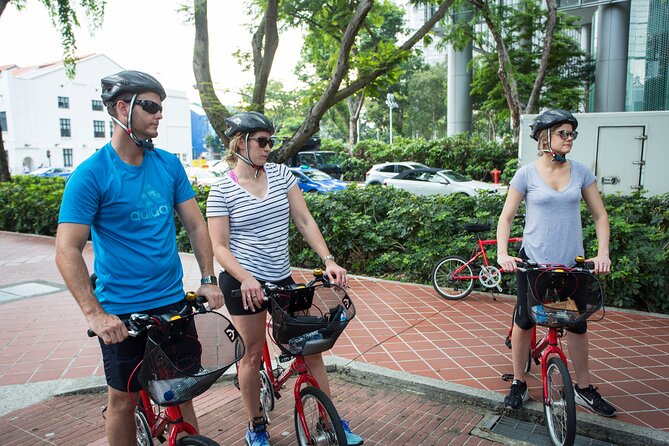
The morning starts at the operator’s office along the Singapore River. Before setting off, you receive a safety briefing covering cycling rules in Singapore. You get about 15 minutes to inspect the bicycle and equipment and take a test ride.
This is a useful opening rather than wasted time. Singapore streets can feel orderly but busy, and a short test ride lets you check the bicycle before the longer route begins. You also have a chance to ask about the pace and make sure the helmet fits.
The bicycle section lasts roughly four hours. You should wear light clothing and comfortable shoes, and bring sun protection. Bottled water is included, but the combination of heat, cycling, and walking still makes hydration important.
Along the river toward Chinatown
The first ride follows the Singapore River toward Chinatown. The route introduces Speakers’ Corner and Parkroyal Collection Pickering, known for its extensive greenery. These early stops show two sides of the city: public civic space and a modern hotel designed around planted terraces.
Singapore’s riverfront is a good place to hear how the city developed. The waterway is not simply a photo backdrop. It links older commercial areas with the modern center, and the tour uses that connection to put later stops in context.
You will also get time for photographs. That sounds minor, but it matters on a bicycle tour. You see more than you would on foot, yet you are still able to pause at selected places instead of racing past every sight.
Tiong Bahru, Singapore’s early public housing district
Tiong Bahru is one of the most worthwhile stops because it changes the usual Singapore story. The district contains about 30 two-storey housing blocks built under the Singapore Improvement Trust, a British-era public housing program.
Here, the guide talks about local life and the way the district developed. The low-rise blocks feel very different from the tall apartment towers commonly associated with Singapore. That contrast helps you understand that the city’s housing story did not begin with modern high-rise estates.
The stop lasts about 40 minutes. It is long enough to look around and listen, but not so long that the day loses momentum. If you have an interest in architecture, planning, or ordinary residential life, this may be one of the strongest parts of the cycling route.
More Cycling Tours in Singapore:
- Lion City Bike Tour of Singapore
★ 5.0 · 6,211 reviews - Singapore: Lion City Highlights Bike Tour
★ 4.9 · 2,010 reviews - Historical Singapore Bike Tour on Full-Sized Bicycles
★ 5.0 · 1,421 reviews - Marina Bay Night Cycling Tour
★ 5.0 · 577 reviews
Robertson Quay and Fort Canning
The ride continues along the Singapore River from Robertson Quay. This area is described as an enclave for foreign residents, with places to live, work, and spend time close to the city center. It gives you another change of scene after Tiong Bahru’s older housing blocks.
The route then reaches the foot of Fort Canning, also called Forbidden Hill. The hill is tied to Singapore’s royal past and includes the Battlebox, an underground historical site. This tour does not list an interior visit to the Battlebox, so treat the stop as an introduction rather than a full museum visit.
That distinction is worth noting. The cycling tour offers a broad survey, not long admissions at each attraction. You will hear why Fort Canning matters, but you should not expect a detailed visit inside every site along the route.
Coffee and toast near the Central Fire Station
At the Central Fire Station, the group takes a break at a walkway café. The planned tasting includes local coffee and toast or another local snack.
This is a small stop with real value. Singapore’s coffee culture is easier to appreciate when you try it in an everyday setting rather than only ordering a modern café drink. The pause also breaks up the cycling before the route moves through more central districts.
The stop is scheduled for about 30 minutes. That gives you time to rest, eat something modest, and listen without trying to pedal and take in information at the same time.
Raffles Hotel, Haji Lane, and Marina Bay
The bicycle route passes Raffles Hotel, one of Singapore’s best-known hotels and the place associated with the Singapore Sling. The tour does not include the cocktail, and alcoholic drinks are not included, but the stop gives you a look at one of the city’s most famous colonial-era addresses.
Next comes Haji Lane, known for colorful shopfronts and painted murals. The guide connects the area with Singapore’s indigenous Malay community. It is a compact cultural district, and the visual change from the grand hotel to the narrow lane is part of the appeal.
The route then moves toward Marina Bay. Here, the mood shifts again, this time to Singapore’s modern skyline, including Marina Bay Sands and its famous rooftop infinity pool. You will have time to take in the view and photograph the city’s newest architectural symbols.
The scheduled stop at Marina Bay lasts about 30 minutes. That is enough for orientation and pictures, but not enough for a visit to the hotel or its pool. You see the attraction from outside as part of the wider city route.
Boat Quay and the Raffles landing site
The final cycling stop is Boat Quay, near the Raffles landing site. This is associated with Sir Stamford Raffles, the British founder linked with modern Singapore. The area faces the city’s commercial center, described during the tour as Singapore’s Wall Street.
Boat Quay works well as the end of the bike section because it brings together the river, old commercial activity, colonial connections, and the modern business district. You finish the morning with a sense of how close Singapore’s different eras sit to one another.
The bike portion concludes around Marina Bay, with about an hour to relax in the Singapore sun before the food tour. Since the second part begins at Chinatown MRT Station, confirm the exact transition with the operator when you book. The supplied details give both the Marina Bay break and the Chinatown meeting point, but do not spell out the transfer between them.
Chinatown begins at the hawker center
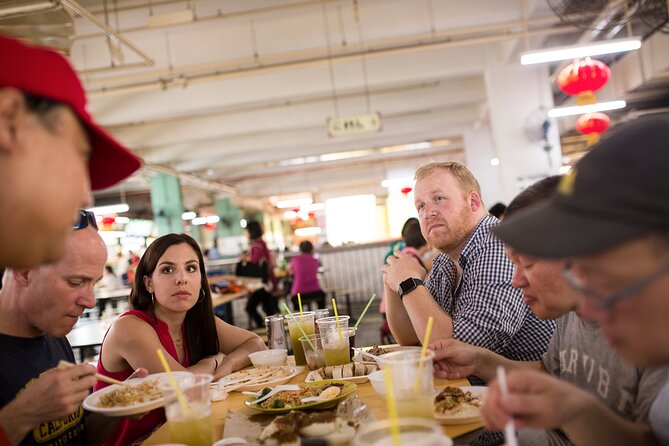
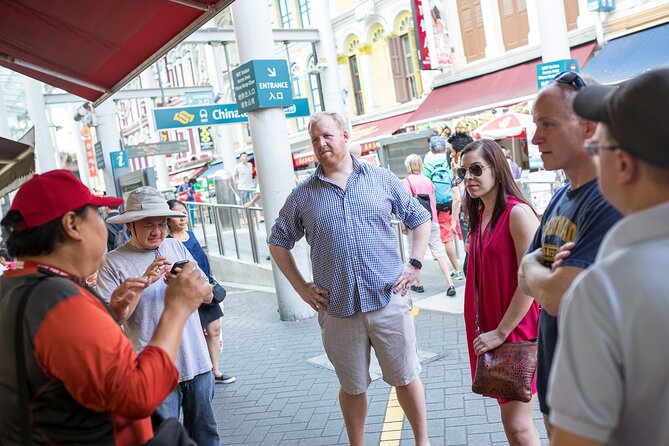
The food portion starts at Chinatown MRT Station, Exit A. You then head into Chinatown Hawker Centre, where the focus turns from landmarks to lunch.
This is where a private guide can make a real difference. Hawker centers can feel confusing if you do not know what to order, how much to share, or which dishes are worth trying first. Guide Rene is described as entertaining and well informed about Singapore’s past, present, and future, with obvious pride in the city. His role is not just to point out stalls. It is to help you use the food center with confidence.
The planned stop lasts about an hour. Come hungry. The food is not a token tasting added at the end of a sightseeing day. Lunch is one of the main reasons to choose this tour.
The dishes you are likely to try
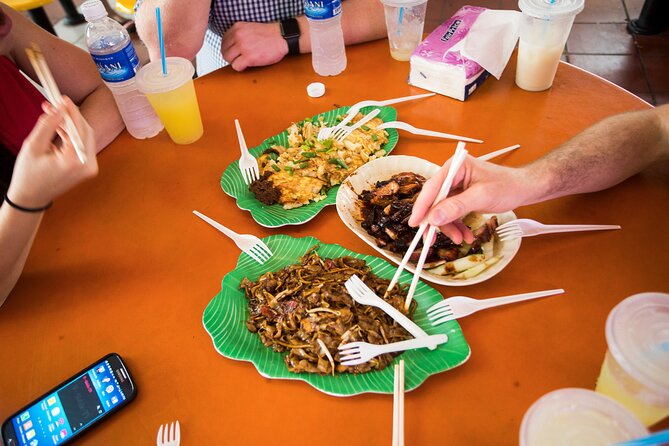
The food selection includes Hainanese chicken rice, chwee kueh, popiah, sugarcane juice, calamansi lime juice, Singapore-style coffee, and other savory and sweet snacks.
Hainanese chicken rice is an especially useful introduction because it is one of Singapore’s best-known everyday dishes. Chwee kueh is a steamed rice cake, while popiah is a fresh spring roll. Together, they give you different textures and flavors instead of repeating one kind of meal.
Sugarcane juice provides a cool drink during the food walk. Calamansi juice adds a sharp citrus note, and Singapore-style coffee gives you another taste of local café culture. The precise dishes can vary, so you should treat the list as a guide to the food style rather than a fixed tasting menu.
Lunch and food tastings are included. Alcohol is not, though you can buy it separately. The private format should also help if someone in your group has strong dislikes, but no dietary arrangements are specified, so raise those needs before booking.
Buddha Tooth Relic Temple and Pagoda Street
After the hawker center, the walk continues to the Buddha Tooth Relic Temple and Museum. The stop is scheduled for about 40 minutes. This gives you time to see the building and hear about its place in Chinatown without turning the day into a long museum visit.
Pagoda Street follows later, with about 25 minutes in the area. The street provides a closer look at Chinatown’s shops and pedestrian lanes. You can expect a mix of cultural sightseeing and time to look around, rather than a formal shopping session.
The food tour also includes a stop at a local wet market, where you can see where residents buy produce and have time to purchase some yourself. This is a useful addition because it shows the supply side of local eating. Hawker dishes do not appear by magic, and a market visit gives you a glimpse of the ingredients and daily shopping that support the food culture.
Singapore City Gallery and Maxwell Food Centre
Singapore City Gallery receives about 45 minutes. The gallery is a natural fit for this tour because Singapore’s city planning explains so much of what you see during the bicycle ride: compact districts, carefully managed development, housing, and the dramatic shift from old river neighborhoods to Marina Bay.
The final major food stop is Maxwell Food Centre, with about 40 minutes scheduled. This is another chance to sample local dishes and ask questions about what you are eating. The tour then returns toward Chinatown MRT Station, ending there after about 10 minutes.
The second half is not simply lunch followed by a few sights. It ties food to place. Chinatown’s temple, market, hawker centers, and city-planning displays all help explain how Singapore works as a city.
What the private format is worth
This is a private activity, so only your group participates. That can be valuable on a long day. You can ask why a neighborhood matters, pause for a photograph, or spend more time on a dish without worrying about a large group.
The guide’s personal style also matters. Rene has been described as entertaining, proud of Singapore, and especially good at explaining both old and present-day Singapore. One useful strength is his help with hawker food, particularly if you would not normally know how to order at a local food center.
The trade-off is cost. At $209.41 per person, the tour is not the cheapest way to see Singapore. Its value is strongest for first-time visitors with only a short stay, families or friends who want their own guide, and anyone who prefers a planned day with food, bicycles, and sightseeing bundled together.
Who should book this day
You should consider it if you want:
- A broad first look at Singapore rather than one narrow neighborhood
- A private guide who can explain local food and city development
- A mix of cycling, walking, landmarks, and meals
- Help ordering at hawker centers
- A full day that includes both famous sights and ordinary residential areas
You may want a different activity if you dislike long active outings, need a slow schedule, or prefer deep visits inside museums and attractions. The cycling portion alone takes about four hours, and the food walk adds several more hours on foot.
The tour requires moderate physical fitness. You should also be comfortable cycling in a city setting and spending time outdoors. The included bicycle, helmet, and water remove some practical hassles, but they do not make the day easygoing.
Should you book the Singapore Bike and Food Tour?
Book it if you want Singapore explained through movement and meals. Tiong Bahru, Fort Canning, Haji Lane, Marina Bay, Boat Quay, Chinatown, and Maxwell Food Centre are a lot to fit into one day, but the route gives each place a clear role.
The strongest reason to choose it is the combination of Rene’s local guidance and hawker-food help. You get more than a list of photo stops, and you are less likely to pass through Singapore without trying the dishes that make the city memorable.
Skip it if the price feels high for a private tour or if four hours on a bicycle sounds tiring. For an active first day, though, this is a useful and flavorful overview, especially if you come ready to eat.
FAQ
How long does the Singapore Bike and Food Tour last?
The activity lasts approximately seven to eight hours. It begins at 10:30 a.m.
Is this a private tour?
Yes. Only your group participates in the activity.
Where does the tour begin?
The bicycle portion begins at the operator’s office along the Singapore River in Singapore. The food portion begins at Chinatown MRT Station, Exit A.
What is included in the price?
The price includes food tastings, lunch, a local guide, use of a bicycle and helmet, and bottled water.
Are alcoholic drinks included?
No. Alcoholic drinks are not included, but they are available to purchase.
What level of fitness is needed?
The tour advises a moderate level of physical fitness. The day includes about four hours of cycling, walking between food and sightseeing stops, and time outdoors.
More Full-Day in Singapore
- Private Singapore Full Day Round Island Tour with River Cruise
★ 5.0 · 221 reviews - Half Day or Full Day Private Custom Walking Tour of Singapore
★ 5.0 · 143 reviews - Private Singapore City Highlights Tour By Car – Half Day or Full Day
★ 5.0 · 140 reviews - Private Customized Singapore Car Tour (Half Day or Full Day)
★ 5.0 · 94 reviews
Just added around Singapore
- Skyline Luge and Sky Ride Ticket Sentosa Singapore★ 3.5 · 3 reviews
- Marina Bay Sands SkyPark Observation Deck ticket in Singapore★ 4.0 · 3 reviews
- Singapore Private Full-Day Sightseeing Tour★ 5.0 · 3 reviews
- Singapore: Food and Bike Tour – Downtown★ 4.6 · 3 reviews
- Singapore: Chinatown Street Food Tour★ 5.0 · 3 reviews
- Learn to cook authentic Peranakan food with local market tour★ 3.5 · 3 reviews
- Singapore Brompton Bike Tour from Rail Corridor, with food!★ 5.0 · 3 reviews
- Guided Walking Tour to the Historical Attractions in Farrer Park★ 5.0 · 3 reviews
Hawker & Street Food Tours, compared.
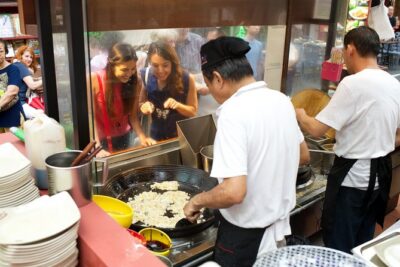
Small Group: Michelin and Local Hawker Food Tour with 9 tastings
Read our review →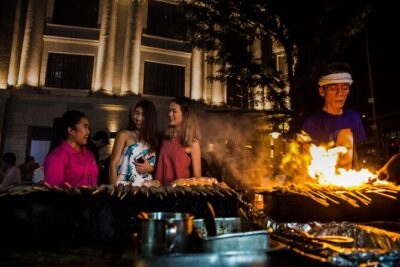
Small Group: Singapore Street Food & Night Tour with 9 tastings
Read our review →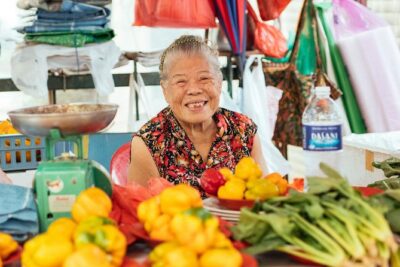
The Award-Winning PRIVATE Food Tour: 10 Tastings of 3 Cultures
Read our review →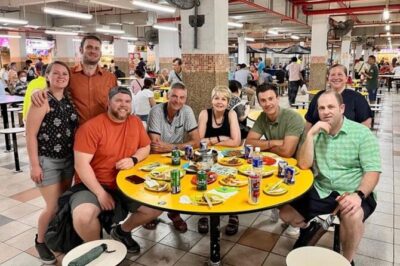
Chinese, Indian & Arabic Quarters, Culture & Food Tour
Read our review →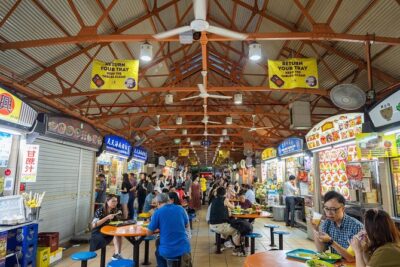
Small-Group Food Tour With Hawker Center: Eat Like A Local
Read our review →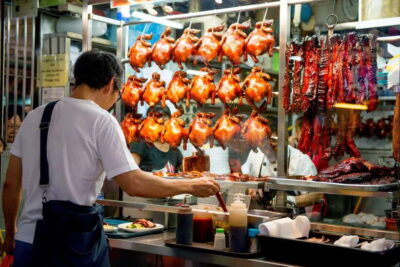
Browse the lists this tour appears in