
Reviewed · CHINATOWN TOURS
Singapore: Chinatown Hawkers Food Tour with 7 Food Tastings
Singapore’s food story is easiest to understand one bite at a time. This Chinatown hawker tour takes you from smoky bak kwa and kaya toast to chicken rice, prata, chwee kueh, chendol, and a final secret dish. I like the mix of famous staples and less familiar local snacks, plus the way food is tied to architecture, family habits, and Singapore’s Chinese, Malay, Indian, and Peranakan roots.
I also like that the tour uses real hawker centers rather than treating Singapore’s food culture as a restaurant show. Guides including Tang, Jeanette, Edwin, Lee, and Angel have been praised for explaining the city clearly and answering questions. The main drawback is the group size: one group of nine found that table seating sometimes split people up and left less time for stories. Bring tissues, too, since hand-cleaning supplies may not be provided.
In This Review
- Key points at a glance
- Starting at Chinatown MRT with an appetite
- Bak kwa, coffee, and the first taste of Singapore
- Popiah oyster cake and the value of small bites
- Chicken rice, Singapore’s essential plate
- Prata or thosai, with a South Indian turn
- Chwee kueh and the everyday hawker table
- Chendol, coconut milk, and a cool finish
- The secret dish and the best reason to leave room
- Stories between the stalls
- Is $87 a fair price?
- Practical details that affect your day
- Who will enjoy this Chinatown food walk?
- Should you book this Singapore food tour?
- FAQ
- Where does the Singapore food tour meet?
- How long does the tour last?
- What language is the tour in?
- Which foods are included?
- Is the final dish known in advance?
- Should I bring anything?
- Can dietary requirements be accommodated?
- Is the tour suitable for wheelchair users?
Key points at a glance
- Seven food moments in 210 minutes: Expect six or more named dishes, drinks, and a secret specialty at the end.
- Chinatown meeting point: Meet at Chinatown MRT Exit A, outside Bee Cheng Hiang, and look for the orange umbrella.
- Singapore beyond chicken rice: The menu covers Chinese, South Indian, Malay, and local sweet specialties.
- A guide-led food lesson: You get stories about Singapore’s culture, architecture, traditions, and everyday eating places.
- A walking tour with real legwork: Comfortable shoes matter, and the activity is not suitable for wheelchair users or people with mobility impairments.
Starting at Chinatown MRT with an appetite
The tour begins outside Chinatown MRT at Exit A, near Bee Cheng Hiang. Find the orange umbrella, which should make the meeting point easy to spot in a busy part of town.
This is a useful location for a food walk because Chinatown gives you more than one narrow slice of Singapore. The tour moves through hawker centers, markets, modern shopping areas, and streets framed by newer skyscrapers. Your guide uses those changes in scenery to explain how old neighborhoods and modern Singapore fit together.
The walk lasts three and a half hours. That is long enough for a proper meal-sized tasting route, but it also means you should arrive hungry and wear shoes you can comfortably walk in. The food comes in several portions rather than one large sit-down meal, so the pace is closer to a guided grazing session than a standard restaurant lunch.
Guides such as Tang, Jeanette, Edwin, Lee, and Angel have received especially strong praise for their explanations of Chinatown and Singaporean culture. The experience is in English, and the guide’s role matters here. Hawker food is easy to sample on your own, but it is harder to understand why certain dishes matter, how they are eaten, or how they fit into Singapore’s mixed cultural background.
More walks through Chinatown:
- Chinatown, Little India, Kampong Gelam City Highlights Tour
★ 5.0 · 224 reviews - Singapore: Chinatown Hawker Market Food Tour with 7 Food Tastings
★ 5.0 · 213 reviews - Singapore: Chinatown, Little India, Arab Street Walking Tour
★ 4.9 · 207 reviews
Bak kwa, coffee, and the first taste of Singapore
One early stop includes bak kwa, smoky barbecued pork with a savory-sweet flavor. It is a familiar Singaporean snack and a good introduction to the city’s fondness for bold seasoning, grilling, and foods that work well as gifts or casual bites.
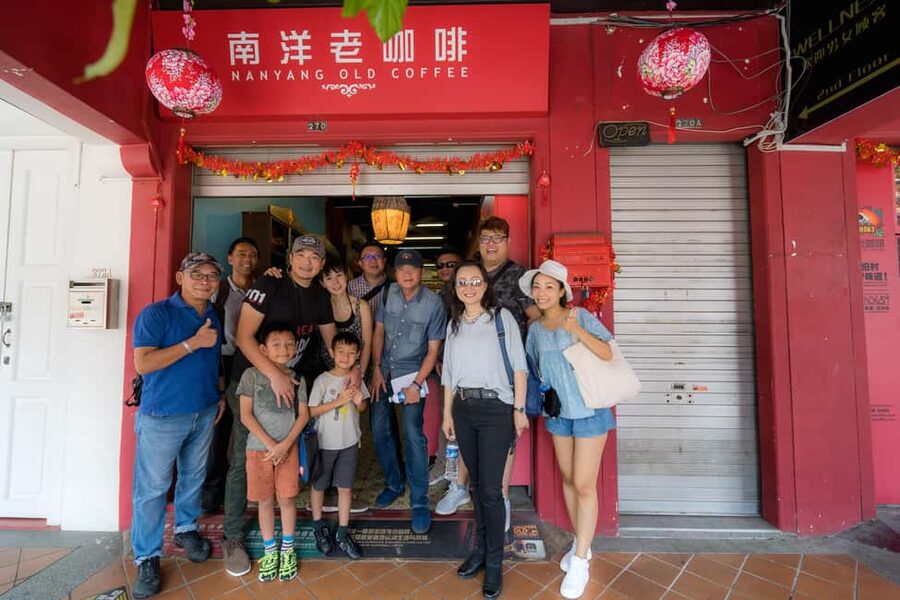
You also get Nanyang coffee with traditional kaya toast. The coffee is strong and aromatic, while the toast brings a sweeter note through kaya, a coconut and egg spread. This pairing is not just a caffeine stop. It gives you a look at an everyday Singaporean breakfast tradition and shows how simple items can carry a strong sense of place.
The coffee and toast portion is likely to appeal to anyone who enjoys breakfast foods, though visitors who prefer mild coffee should know that Nanyang coffee is not designed to be timid. I like that this stop gives the tour a relaxed opening before the heavier savory dishes arrive.
Popiah oyster cake and the value of small bites
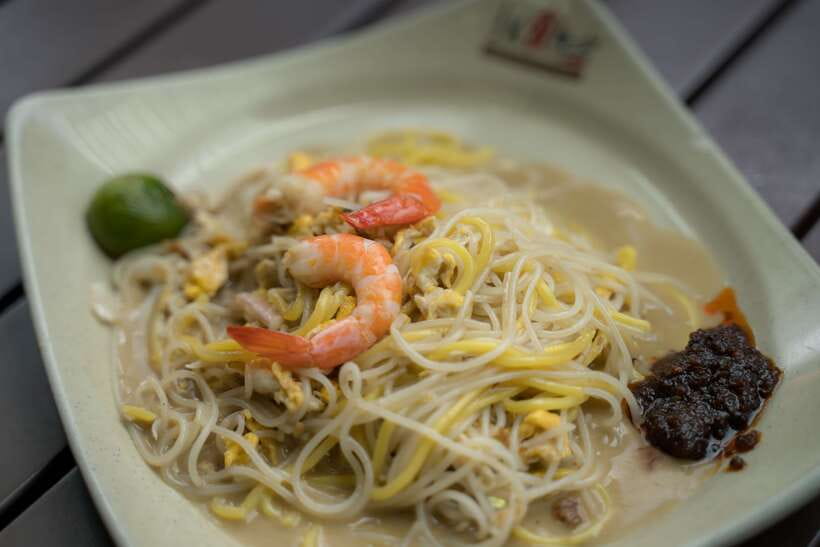
The menu also includes a popiah oyster cake, described as a crisp, golden fried bite with fresh fillings. Small tastings like this are useful on a food tour because they let you try a local specialty without giving up too much room for the next stop.
This part of the route helps show the range of Singaporean snack food. You are not simply ticking off the city’s most famous dish. You are trying fried, toasted, steamed, savory, and sweet foods across the afternoon.
The exact menu and order can change because stalls may be unavailable, weather can affect the route, and other local conditions can require adjustments. That flexibility is worth keeping in mind. You should book this for the general food experience rather than expecting every item to appear in an absolutely fixed sequence.
Chicken rice, Singapore’s essential plate
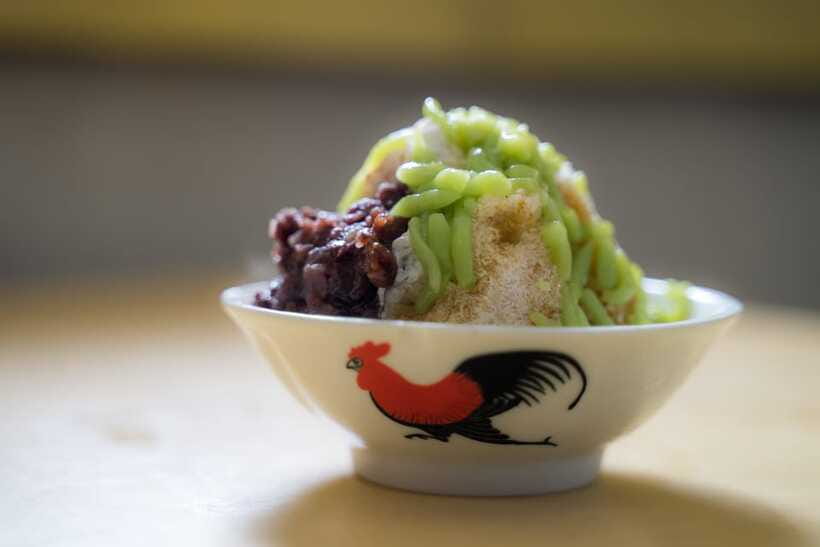
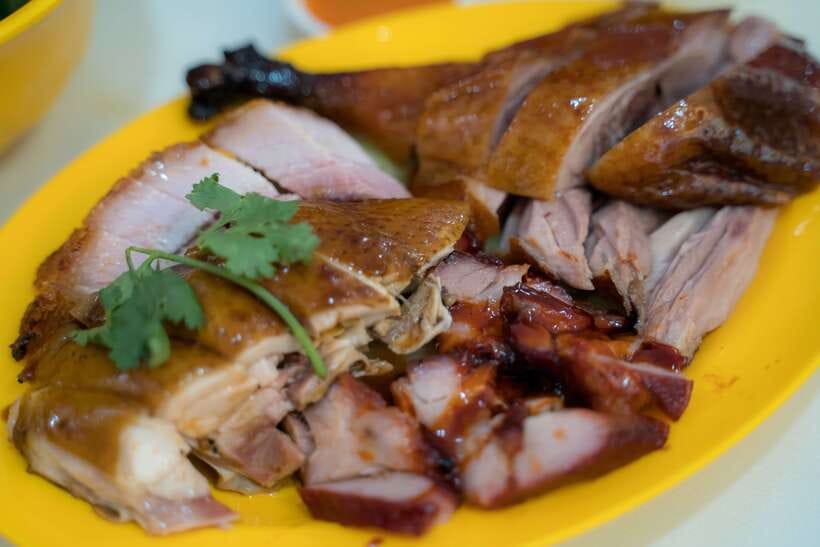
Chicken rice is the most recognizable main dish on the tour. It sounds plain, but the pleasure comes from the details: tender chicken, fragrant rice, and the sauces and accompaniments that give the plate its character.
A guide can make this familiar dish more useful to you by explaining what to notice. Pay attention to the rice as well as the chicken. The dish represents the Chinese influence in Singapore’s food culture, but it has become part of the city’s shared food identity far beyond one community.
This is also where appetite becomes important. With bak kwa, toast, fried bites, flatbread, rice, steamed cakes, dessert, and a final specialty still ahead, you should avoid eating a large meal before meeting the group. The tour promises 6 or more tastings, not tiny decorative samples, and the food adds up.
More hawker centres and street food walks:
- Small Group: Michelin and Local Hawker Food Tour with 9 tastings
★ 5.0 · 1,890 reviews - Small Group: Singapore Street Food & Night Tour with 9 tastings
★ 5.0 · 1,240 reviews - The Award-Winning PRIVATE Food Tour: 10 Tastings of 3 Cultures
★ 4.5 · 1,017 reviews - Singapore: Chinese, Indian & Arabic Quarters, Culture & Food Tour
★ 5.0 · 789 reviews
Prata or thosai, with a South Indian turn
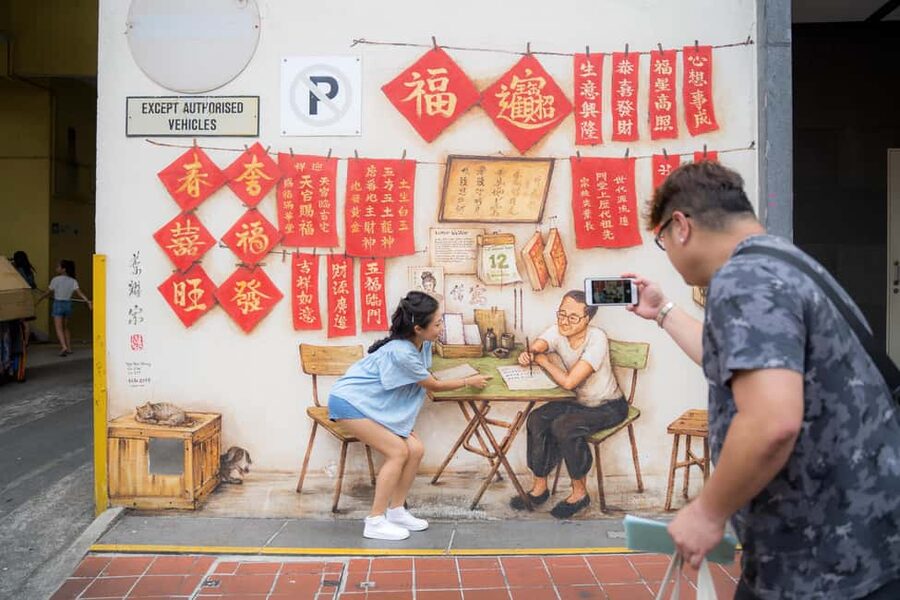
The South Indian portion offers either prata or thosai, depending on the day. Prata is a flatbread that can be soft or crisp, while thosai is also a flatbread with its own texture and preparation. Both are served with rich dips.
This stop widens the food story beyond Chinatown’s Chinese associations. Singapore’s dining culture is built from several communities sharing one city, and the inclusion of South Indian food makes that point in a direct, tasty way.
The choice between prata and thosai also illustrates why the itinerary cannot be treated as a fixed restaurant menu. Availability and local conditions affect what you receive. If you have a preference or a dietary concern, contact the provider before the tour so the guide can assess what can be accommodated.
Chwee kueh and the everyday hawker table
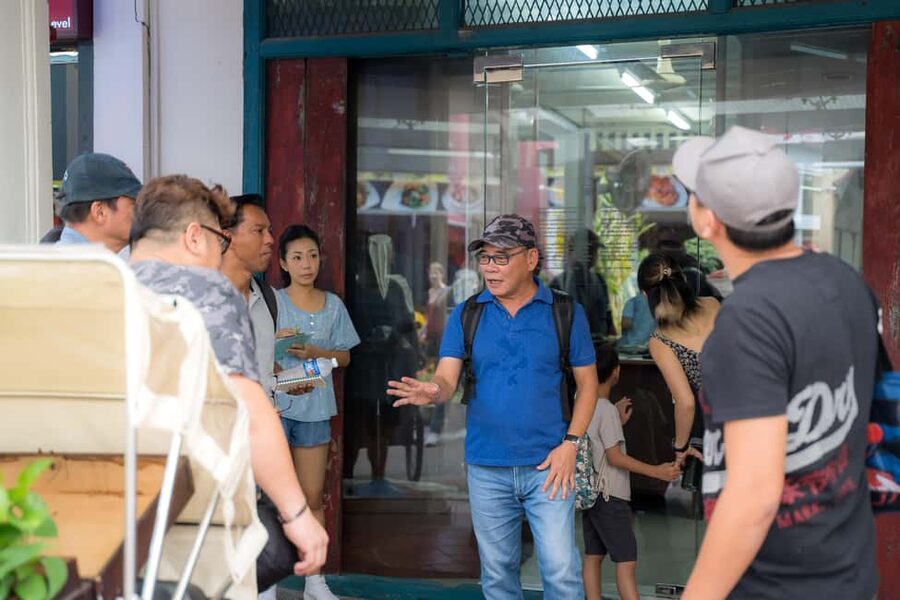
Chwee kueh consists of steamed rice cakes topped with savory preserved radish. It is a softer, plainer-looking dish than some of the fried foods on the route, but that is part of its appeal. You get a sense of the steamed snacks that make up a regular hawker meal, not only the items most often photographed.
This is the kind of tasting that benefits from context. Without a guide, you might pass it by because it looks modest. With an explanation of its ingredients and place in local food habits, it becomes a better window into everyday eating.
I appreciate that the route includes this sort of dish. A food tour that only serves famous items can leave you with a list of names but little understanding of how people actually eat. Chwee kueh helps fill that gap.
Chendol, coconut milk, and a cool finish
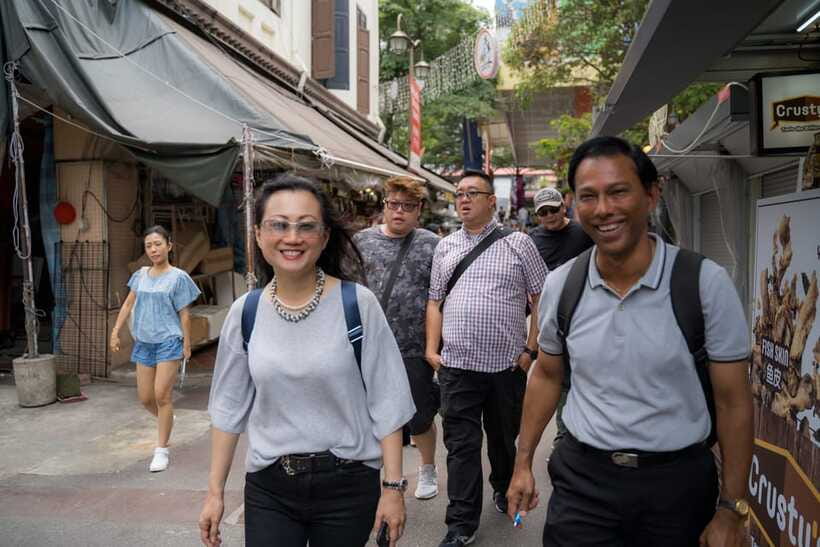
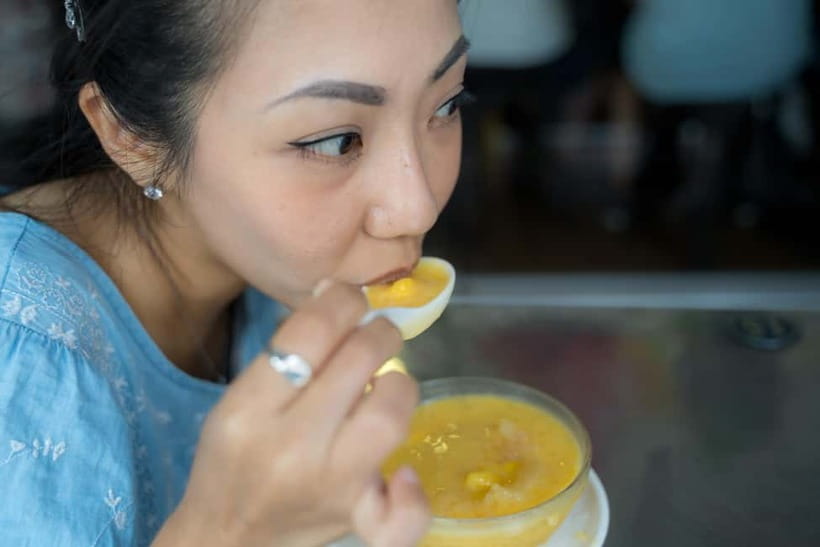
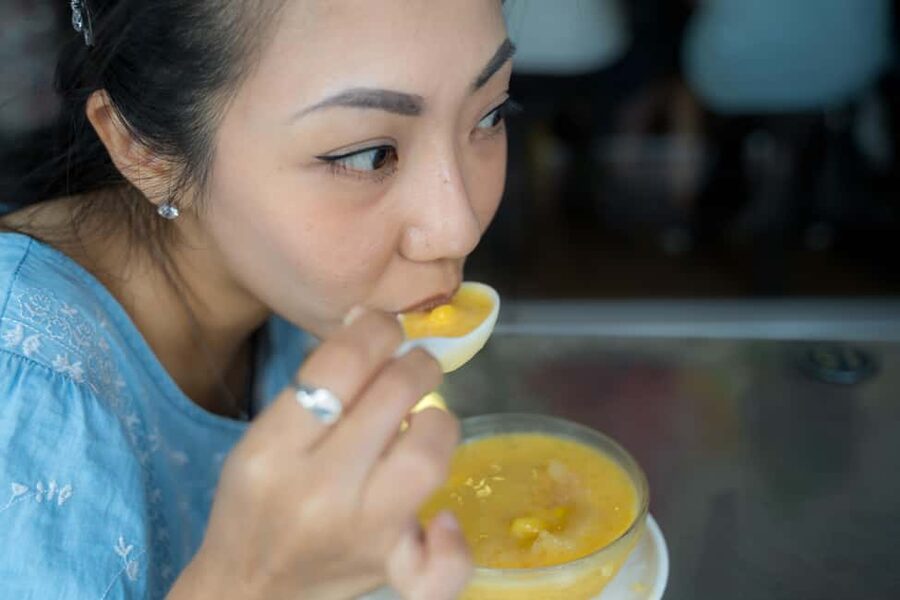
Chendol provides the sweet course. It includes coconut milk, gula melaka, and pandan jelly, creating a dessert that is cool, sweet, creamy, and fragrant.
After several savory tastings, this is a sensible change of pace. Gula melaka brings a deep palm sugar flavor, while pandan adds a distinctive local aroma. If you have not tried Southeast Asian desserts before, chendol may be one of the more memorable stops because its ingredients taste quite different from familiar Western puddings or ice creams.
The tour also includes a locally made ice-cold beer or a soft drink, along with mineral water. The beer option adds a relaxed local touch, but a soft drink is available if you do not drink alcohol. Water is useful in Singapore’s warm conditions, though you should still expect the walking portion to feel active.
The secret dish and the best reason to leave room
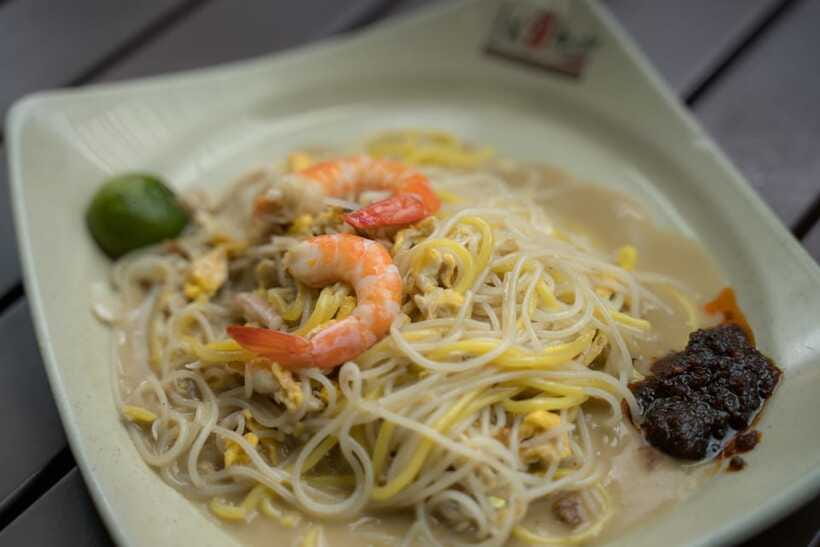
The route ends with a surprise Secret Dish, revealed only on the day. The final item is described as a truly authentic local specialty enjoyed in a hawker center.
Because the dish is not named in advance, this is the one part you cannot assess from the menu. That uncertainty works well for people who enjoy trying something outside their usual order. It may be less appealing if you need to know every ingredient in advance, which is another reason to discuss dietary needs before booking.
The secret dish also gives the tour a sense of progression. You begin with recognizable snacks and breakfast items, move through major savory dishes and regional influences, then finish with something intended to reward curiosity. It is a small gimmick, but a useful one when it encourages you to try a food you would not have chosen alone.
Stories between the stalls
Food is the main attraction, but the tour is also a walking lesson in Singapore. Your guide talks about history, culture, architecture, and local traditions while leading you through Chinatown, markets, hawker centers, shopping areas, and streets lined by skyscrapers.
The strongest part of the experience depends on how well the guide balances food service with conversation. Jeanette was praised for her cultural explanations, while Tang, Edwin, Lee, and Angel were also singled out for clear storytelling and helpful answers. Those comments suggest that the guide can add real value, especially if you ask questions rather than simply follow from stall to stall.
Group size can affect that balance. A larger party may need to split between tables, and the guide may spend time arranging food instead of speaking to everyone equally. If you prefer a quiet, personal food lesson, keep this possibility in mind. If you are happy with a social group and plenty of food, the tradeoff may not bother you.
The tour also involves practical movement through public food spaces. You may not always sit together, and the surroundings are part of the experience rather than a polished private dining room. That is exactly what makes a hawker tour feel more connected to daily life, but it requires a little patience.
Is $87 a fair price?
At $87 per person, this is not the cheapest way to eat in Chinatown. You could buy individual hawker dishes for much less if you already know where to go, what to order, and how to find the stalls.
The value is in the guidance and range. You receive at least six food tastings, drinks, water, a secret dish, and three and a half hours of explanation and walking. You are paying to connect the dishes, neighborhoods, and cultural influences, not just to fill your stomach.
I would consider the price reasonable for a first visit, especially if you want an organized introduction to Singaporean food and do not want to spend your first day guessing at menus. It is less compelling for repeat visitors who already know Chinatown’s hawker centers or for people who mainly want a cheap meal.
The food portions also matter. This is designed as a substantial tasting route, so the price includes variety rather than one premium dish. If you value trying many local specialties in one outing, the cost makes more sense.
Practical details that affect your day
The activity is 210 minutes and runs with a live English-speaking guide. Pickup and drop-off are not included, so you make your own way to Chinatown MRT Exit A and leave from the tour area afterward.
Wear comfortable shoes. The walk is described as a fair amount of walking, and the experience is not suitable for wheelchair users or people with mobility impairments.
Bring tissues or paper towels. One party found there were no towels or tissues available for cleaning hands, and that is a sensible precaution at a food-focused tour. Singapore’s hawker centers are casual public eating places, not formal restaurants with table service at every stop.
Tell the provider about dietary requirements before the tour. The menu and route may change based on stall availability, weather, and other circumstances, so advance notice gives the team the best chance to help.
Free cancellation is available up to 24 hours before the experience for a full refund. You can also reserve now and pay later, which helps if your Singapore schedule is still shifting.
Who will enjoy this Chinatown food walk?
I would recommend it most to first-time visitors who want a quick but substantial introduction to Singaporean food. You get the famous chicken rice, but you also try bak kwa, chwee kueh, South Indian flatbread, chendol, and a surprise specialty.
It is also a good fit if you enjoy learning the story behind a dish. The cultural and architectural commentary gives the walk more purpose than a simple list of tastings.
Families with older children may appreciate the variety, though the walking and several-course format may be tiring for very young children. People with mobility limitations should choose another activity because the tour is not suitable for wheelchair users or those with mobility impairments.
You may want to skip it if you need a fully fixed menu, a private group, guaranteed table seating, or a short route. The group can be sizeable, the menu can change, and the tour asks you to move through public eating spaces.
Should you book this Singapore food tour?
Book it if you want a guided first taste of Singapore and enjoy sampling several dishes instead of choosing one meal. The strongest reasons are the broad menu, the Chinatown setting, and the chance to hear useful local context from guides such as Tang, Jeanette, Edwin, Lee, and Angel.
Think twice if you are very price-sensitive or already confident ordering at hawker centers. You can eat more cheaply on your own, and a larger group may limit the amount of direct conversation you get.
For most first-time visitors with a healthy appetite, the tour offers a practical introduction to Singapore’s food culture. Arrive hungry, wear good shoes, bring tissues, and leave room for the secret dish.
FAQ
Where does the Singapore food tour meet?
Meet outside Chinatown MRT station at Exit A, near the Bee Cheng Hiang shop. Look for the orange umbrella.
How long does the tour last?
The tour lasts 210 minutes, or three and a half hours.
What language is the tour in?
The live tour guide speaks English.
Which foods are included?
The tastings include bak kwa, Nanyang coffee and kaya toast, popiah oyster cake, chicken rice, prata or thosai, chwee kueh, chendol, a locally made ice-cold beer or soft drink, mineral water, and a secret dish.
Is the final dish known in advance?
No. The Secret Dish is revealed only on the tour.
Should I bring anything?
Bring comfortable shoes because the tour involves a fair amount of walking. Bringing tissues or paper towels is also sensible because they may not be provided at the food stops.
Can dietary requirements be accommodated?
Contact the provider in advance with your dietary requirements so the team can assess how best to cater for them.
Is the tour suitable for wheelchair users?
No. The experience is not suitable for wheelchair users or people with mobility impairments.
More Food Tasting Experiences
- Singapore Market to Table Culinary Experience (Wet Market Tour included)
★ 5.0 · 479 reviews - Singapore Private Food, Culture and Heritage Tour with 9 tastings
★ 5.0 · 394 reviews - Singapore: Foodie Experience Guided Tour with 5 Tastings
★ 4.7 · 291 reviews - Singapore: Private Food Tour – 10 Tastings with Locals
★ 4.7 · 194 reviews
Just added around Singapore
- Skyline Luge and Sky Ride Ticket Sentosa Singapore★ 3.5 · 3 reviews
- Marina Bay Sands SkyPark Observation Deck ticket in Singapore★ 4.0 · 3 reviews
- Singapore Private Full-Day Sightseeing Tour★ 5.0 · 3 reviews
- Singapore: Food and Bike Tour – Downtown★ 4.6 · 3 reviews
- Singapore: Chinatown Street Food Tour★ 5.0 · 3 reviews
- Learn to cook authentic Peranakan food with local market tour★ 3.5 · 3 reviews
- Singapore Brompton Bike Tour from Rail Corridor, with food!★ 5.0 · 3 reviews
- Guided Walking Tour to the Historical Attractions in Farrer Park★ 5.0 · 3 reviews
Chinatown Tours, compared.
Chinatown, Little India, Kampong Gelam City Highlights Tour
Read our review →
Chinatown Hawker Market Food Tour with 7 Food Tastings
Read our review →Chinatown, Little India, Arab Street Walking Tour
Read our review →
Kampong Glam, Little India & Chinatown with Local Street Food Tastings
Read our review →
Browse the lists this tour appears in