
Reviewed · HIDDEN GEMS WALKS
Public Housing – Into the HDB Heartlands
Singapore’s public housing system is the real story behind modern Singapore. On this three-hour walk through Toa Payoh, you see where most Singaporeans live, shop, eat, and manage daily life, rather than staying among the city center’s polished towers and attractions.
I like the small group of no more than eight, which gives you room to ask questions. I also like the local breakfast, since a simple meal at a coffee stall gives the morning a social, everyday feel. Guide Jasmine has been especially good at explaining the system through personal stories.
The main consideration is focus. This is not a sightseeing tour packed with famous landmarks. It is best for you if housing, city planning, design, and ordinary life interest you. Some stops are short, and the galleries may feel more educational than entertaining.
In This Review
- Key points to know before you book
- Why Toa Payoh tells Singapore’s housing story so well
- Starting at Toa Payoh MRT and the bus interchange
- A local breakfast at a Singapore coffee stall
- The HDB Gallery and the story of public housing
- Seeing typical flats at My Nice Home Gallery
- HDB Hub, where housing decisions become real
- Heartland Mall and the ordinary town center
- Community life at the HDB atrium
- What the three-hour format feels like
- The guide’s role in making the subject human
- Is $52.31 a fair price?
- Who should book the Toa Payoh morning?
- Should you book this HDB heartlands tour?
- FAQ
- Where does the tour begin?
- What time does the experience start?
- Where does the tour end?
- How long does the tour last?
- Is breakfast included?
- What kind of breakfast is provided?
- How large is the group?
- What places are visited?
- Is the tour suitable for most people?
- Can I cancel for a full refund?
Key points to know before you book
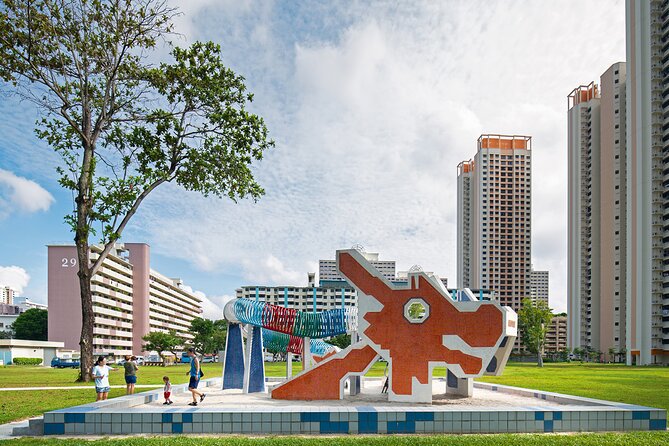
- Toa Payoh shows everyday Singapore: You visit a typical HDB town center where residents eat, shop, commute, and spend free time.
- Breakfast is part of the morning: A light local meal at a coffee stall is included.
- The HDB Gallery explains the system: You learn how Singapore’s public housing agency has provided homes for millions since before independence.
- Model apartments make the ideas practical: The My Nice Home Gallery shows how standard flats can be arranged and decorated.
- Jasmine brings personal insight: Her stories and willingness to answer questions add a human side to the planning and policy.
- The tour returns to Toa Payoh MRT: It begins at 9:00 a.m. at Toa Payoh Station and ends at the same meeting point.
Why Toa Payoh tells Singapore’s housing story so well
Toa Payoh is a useful place to study Singapore because it is not merely a collection of apartment blocks. It is a planned town with housing, shops, transport, communal spaces, and services arranged around daily needs.
That makes the tour more useful than a quick look at a typical residential building. You begin to see public housing as a complete system. The home is only one part. The bus interchange, mall, coffee stall, public exhibitions, and housing offices all help explain how the town functions.
I find this especially helpful if you have already seen Singapore’s central business district, Marina Bay, or the historic neighborhoods. Those places show Singapore’s public face. Toa Payoh shows the country’s ordinary rhythm, where residents commute, collect breakfast, compare housing options, and spend time close to home.
The experience also gives context to Singapore’s reputation for careful planning. You are not simply told that the city is organized. You see the systems and buildings that make that organization visible.
More of the Singapore most visitors miss:
- Private Singapore Tour with a Local, Highlights & Hidden Gems 100% Personalised
★ 5.0 · 475 reviews - Singapore PRIVATE TOUR: Highlights & Hidden Gems by CAR or Foot
★ 5.0 · 227 reviews - Private Singapore Walking Tour: City Highlights & Hidden Gems
★ 5.0 · 84 reviews
Starting at Toa Payoh MRT and the bus interchange
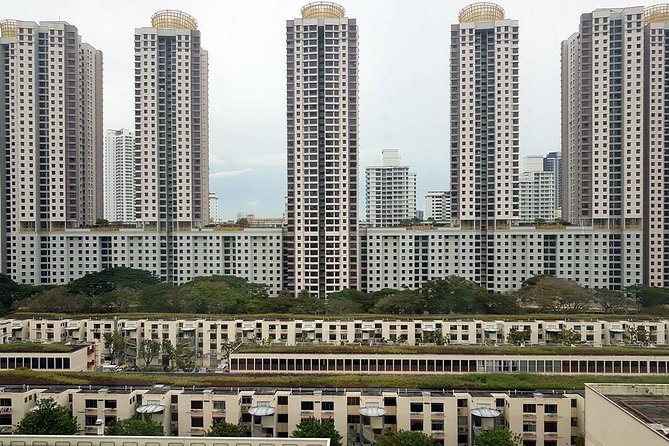
Meet your guide at Toa Payoh MRT Station at 9:00 a.m. The station is at 510 Lorong 6 Toa Payoh, and the tour begins with the nearby bus interchange.
This first stop is brief, about 10 minutes, but it sets up the rest of the morning. Toa Payoh is a key transport node, and the interchange is designed as part of a larger town center. You can see how public transport connects housing estates with shops and services.
That connection matters. A public housing town is more than a place to sleep, and the transport hub helps show why. Residents can move through the area without treating every errand as a major trip across the city.
Do not expect a long technical presentation at this point. The stop is short, so listen for the broad idea: transport, housing, and retail have been planned together. The details become clearer later at the galleries and mall.
A local breakfast at a Singapore coffee stall
The breakfast stop lasts about 30 minutes and includes a light local meal at a coffee stall. This is one of the most appealing parts of the tour because it changes the pace from looking at buildings to taking part in a normal morning habit.
A coffee stall, often called a kopitiam in Singapore, is a practical setting for learning about local life. You are not seated in a restaurant designed for sightseeing. You are in the kind of everyday food setting that helps connect the public housing story with real routines.
The meal is described as a typical breakfast, though the exact menu is not specified. If you have dietary concerns or food preferences, ask about them when booking or contact the operator before the tour. The supplied details confirm that breakfast is included, but they do not promise a particular dish.
This stop also gives you a chance to ask questions in a relaxed setting. Jasmine has been praised for answering questions and relating the HDB system to personal stories. That personal touch is useful because housing rules and planning terms can otherwise feel dry.
The HDB Gallery and the story of public housing
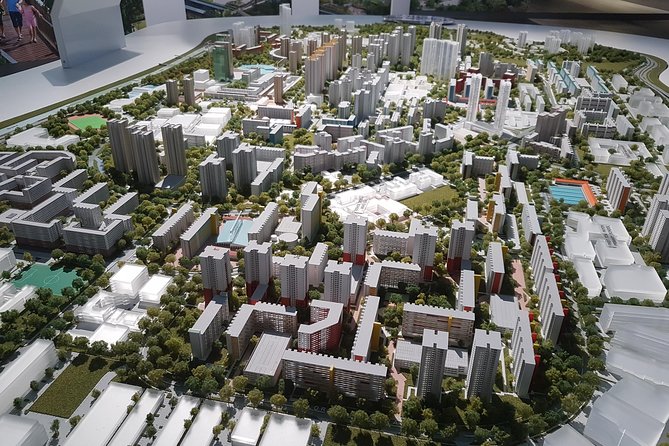
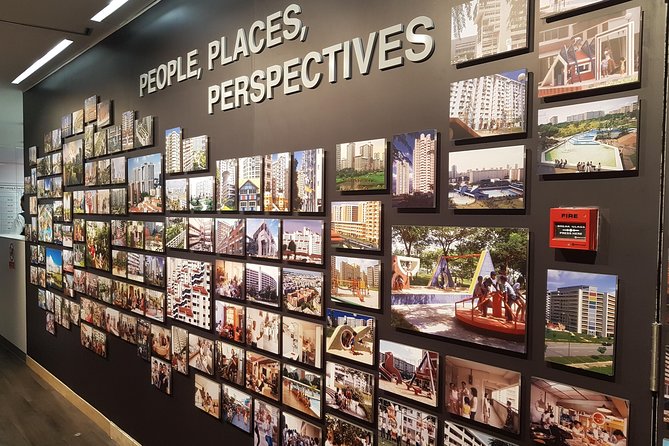
The HDB Gallery at HDB Hub receives about an hour, making it the main teaching stop. The gallery explains the work of Singapore’s Housing and Development Board, the government agency responsible for providing housing for millions since the pre-independence period.
This is where the tour moves from what you can see on the street to how the system developed. You get a better sense of the scale of the task and the role of government in shaping homes and towns.
If you are studying urban planning, architecture, public policy, or design, this section is likely to be the heart of the morning. The gallery offers a framework for understanding why HDB towns look and function as they do.
For everyone else, the value is more personal. You can connect the displays to the apartment blocks, bus interchange, and shopping areas you have just seen. Instead of treating the buildings as anonymous towers, you begin to read them as parts of a national housing program.
The pace is fairly steady, with around one hour devoted to the gallery. That is enough time to learn, but it may feel long if you prefer outdoor sightseeing. This is a serious educational stop, not a photo stop.
A different sort of day out, same city:
- Lion City Bike Tour of Singapore
★ 5.0 · 6,211 reviews - Singapore: Gardens by the Bay Bundle Entry Ticket
★ 4.3 · 3,726 reviews - Singapore: Big Bus Hop-On Hop-Off Tour by Open-Top Bus
★ 4.5 · 3,261 reviews - Singapore: Lion City Highlights Bike Tour
★ 4.9 · 2,010 reviews
Seeing typical flats at My Nice Home Gallery
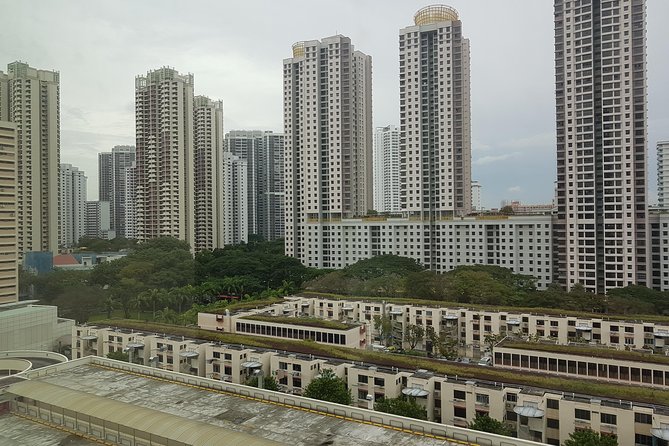
The My Nice Home Gallery provides a more tangible look at apartment living. It includes showrooms for typical HDB flats, giving you a sense of how residents might arrange and decorate their homes.
I like this stop because policy becomes easier to understand when you can see actual living spaces. Floor plans and statistics can tell you how housing works, but a model apartment helps you think about rooms, storage, furniture, and personal style.
The gallery also shows that standard housing does not have to produce identical homes. The idea is to offer creative interior design suggestions while showing the public what typical HDB flats can look like.
You should keep the word typical in mind. These are display apartments, not private homes, and the tour does not promise a visit inside an occupied flat. Still, the showrooms give you a practical picture of the housing units prospective residents consider.
This stop lasts about 30 minutes. It works well after the HDB Gallery because you first learn about the system, then see how that system translates into domestic space.
HDB Hub, where housing decisions become real
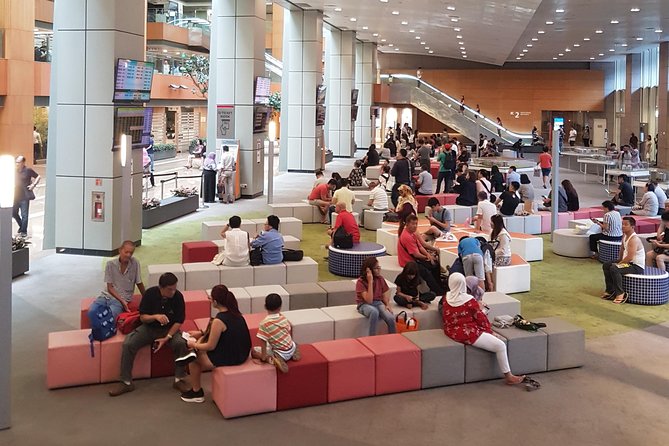
HDB Hub is essentially the central office for public housing matters. It is where prospective HDB flat owners choose units, and where resale transactions take place.
That makes it a valuable stop even though it may not look like a classic attraction. The building represents the practical side of the housing system. Housing is not just an idea discussed in a gallery. People come here to make major decisions about where they will live.
The visit lasts about 30 minutes. You will not be touring private offices or handling a housing transaction, but you can understand the role of this central facility in the process.
For visitors from countries where housing is handled through a very different mix of private companies, landlords, and local authorities, this can be one of the most thought-provoking parts of the tour. It offers a concrete place to consider how Singapore’s system operates in daily life.
Heartland Mall and the ordinary town center
The tour then moves into Heartland Mall for about 10 minutes. The goal is not a long shopping session. Instead, you see how residents use a typical HDB town center to eat, shop, play, and relax.
This short stop helps complete the picture. A town can have well-designed housing and transport, but residents also need places to buy groceries, meet friends, eat meals, and handle routine errands. The mall shows the commercial side of the heartlands.
Because the visit is brief, you should not expect time for browsing stores or making purchases. Think of it as an observation stop. Your guide can point out the way the mall fits into the surrounding community.
This is also a useful contrast with Singapore’s high-end retail districts. The point is not glamour. The point is convenience and regular use.
Community life at the HDB atrium
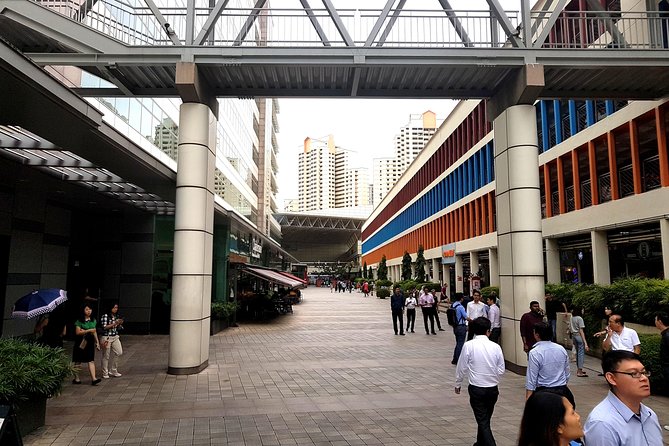
The final stop is the HDB atrium, where community activities and exhibitions are regularly held for residents in the area. The visit takes about 10 minutes.
This stop shows another part of public housing that is easy to miss if you only look at apartment blocks. Shared spaces help create opportunities for residents to gather, learn, and take part in local activities.
The exact exhibition or activity will depend on what is scheduled at the time of your visit. The information does not promise a particular event, so treat this as a look at the space and its community role rather than a guaranteed performance or special program.
After this, the activity returns to the original meeting point at Toa Payoh MRT Station.
What the three-hour format feels like
The schedule adds up to about three hours, beginning at 9:00 a.m. It combines short outdoor and public-space visits with longer indoor stops at the HDB Gallery and My Nice Home Gallery.
That mix keeps the subject from becoming too abstract. You move between transport infrastructure, food, exhibits, model homes, an administrative center, a mall, and a community atrium.
Still, this is a content-heavy morning. You should choose it because you want to understand Singapore, not simply because you have a spare half day. The galleries take up a large part of the tour, and the short stops are designed to support the larger housing story.
The maximum group size is eight. That is a real advantage for a subject that depends on questions and explanation. You are more likely to hear personal examples and ask about details than you would in a large bus group.
The activity is near public transport, begins and ends at Toa Payoh MRT Station, and most people can participate. A mobile ticket is provided, and booking confirmation is received at the time of booking.
The guide’s role in making the subject human
Public housing can sound like a topic for a classroom. The guide makes the difference between memorizing facts and understanding how the system affects people.
Jasmine has been singled out for personal stories, clear explanations, and her willingness to answer questions. That matters here because the tour deals with government agencies, housing arrangements, town design, and resale transactions. A good guide can connect those subjects to the choices people make in ordinary life.
The experience is not presented as a dry architecture lesson. You see model towns and display apartments, but you also walk through a working community and stop for breakfast. That combination gives you both the policy view and the human view.
If you are curious, come prepared with questions. The small group format should make it easier to ask about what you see, especially if you want to compare Singapore’s approach with housing in your own country.
Is $52.31 a fair price?
At $52.31 per person, the tour is not the cheapest way to spend a morning in Singapore. You could visit a neighborhood, eat breakfast, and walk around on your own for less.
The value comes from the access to structure and explanation. You receive a guided look at several connected parts of Toa Payoh, breakfast is included, and the group is limited to eight. The HDB Gallery, model apartments, HDB Hub, and heartland town center make more sense when someone explains how they fit together.
The price is easiest to justify if you have a serious interest in urban planning, public housing, architecture, or local life. It is also worthwhile if you have already seen Singapore’s famous sights and want a different kind of morning.
If you mainly want temples, skyline views, street food, or major attractions, spend your money elsewhere. This tour offers ideas and context rather than a long list of iconic photo stops.
The experience is booked about 16 days ahead on average, so plan early if the date matters to you. Free cancellation is available until 24 hours before the start time. Changes or cancellations within 24 hours are not accepted for a refund.
Who should book the Toa Payoh morning?
I would choose this for an independent-minded visitor who wants to understand how Singapore works. It suits people who enjoy seeing ordinary neighborhoods and asking why a city is arranged in a certain way.
It is especially well suited to:
- Students of urban planning, architecture, design, or public policy
- Visitors who want to learn about Singapore beyond the central attractions
- People interested in government housing and town planning
- Repeat visitors who have already seen the main sights
- Anyone who enjoys a small group and direct conversation with a local guide
I would be more cautious if you have only one short day in Singapore and want a greatest-hits tour. The subject is specific, the galleries take time, and the experience does not promise famous landmarks.
Should you book this HDB heartlands tour?
Book it if you want to see how everyday Singapore is built and managed. The combination of a local breakfast, Toa Payoh streets, HDB exhibits, model flats, transport planning, and community spaces gives you a clear look at life beyond the polished center.
The strongest reason to go is the chance to connect big housing policy with ordinary routines. You see where people live, how they commute, where they eat, and how they make housing choices. Jasmine’s personal approach adds warmth to a subject that could otherwise feel technical.
Skip it if your priority is scenery, shopping time, or major attractions. But if you want a thoughtful three hours and a better grasp of Singapore’s public housing system, $52.31 is a reasonable price for the guidance and breakfast included.
FAQ
Where does the tour begin?
It begins at Toa Payoh MRT Station, NS19, at 510 Lorong 6 Toa Payoh, Singapore 319398.
What time does the experience start?
The tour starts at 9:00 a.m.
Where does the tour end?
It ends back at the Toa Payoh MRT meeting point.
How long does the tour last?
The experience lasts approximately three hours.
Is breakfast included?
Yes. A light local breakfast at a coffee stall is included.
What kind of breakfast is provided?
The tour includes a typical local breakfast meal, but the specific dishes are not stated.
How large is the group?
The activity has a maximum of eight participants.
What places are visited?
The route includes Toa Payoh Bus Interchange, a local coffee stall, HDB Gallery at HDB Hub, My Nice Home Gallery, HDB Hub, Heartland Mall, and the HDB atrium.
Is the tour suitable for most people?
Most people can participate, and the activity is near public transportation.
Can I cancel for a full refund?
Yes, if you cancel at least 24 hours before the experience start time. Cancellations made less than 24 hours in advance are not refunded.
Just added around Singapore
- Skyline Luge and Sky Ride Ticket Sentosa Singapore★ 3.5 · 3 reviews
- Marina Bay Sands SkyPark Observation Deck ticket in Singapore★ 4.0 · 3 reviews
- Singapore Private Full-Day Sightseeing Tour★ 5.0 · 3 reviews
- Singapore: Food and Bike Tour – Downtown★ 4.6 · 3 reviews
- Singapore: Chinatown Street Food Tour★ 5.0 · 3 reviews
- Learn to cook authentic Peranakan food with local market tour★ 3.5 · 3 reviews
- Singapore Brompton Bike Tour from Rail Corridor, with food!★ 5.0 · 3 reviews
- Guided Walking Tour to the Historical Attractions in Farrer Park★ 5.0 · 3 reviews
Hidden Gems Walks, compared.

Private Singapore Tour with a Local, Highlights & Hidden Gems 100% Personalised
Read our review →
Singapore PRIVATE TOUR: Highlights & Hidden Gems by CAR or Foot
Read our review →
Private Singapore Walking Tour: City Highlights & Hidden Gems
Read our review →
Off the Beaten Track in Singapore: Private City Tour
Read our review →
Private Tour w/ Locals – Highlights & Hidden Gems
Read our review →
2.5-Hour Private City Tour Off the Beaten Track
Read our review →
Browse the lists this tour appears in