
Reviewed · HIDDEN GEMS WALKS
CityWalk With A Local
Singapore’s story unfolds clearly on foot here, from the old coffee shop meeting point in Chinatown to the Merlion at Marina Bay. Jimmy Loh, a Singapore-born licensed Tourist Guide, connects food culture, temples, trade, colonial rule, and modern city planning in one three-hour route.
I like the small maximum of 10 people, which gives you room to ask questions rather than trail behind a flag. I also like the way the route links lesser-seen details, such as early livelihoods, temple customs, greenery rules, and the river cleanup, to the big picture of Singapore today.
The main consideration is pace. Six stops in about three hours means this is a walking overview, not a slow visit with long indoor stays. You also need good weather, and private transportation is not included.
In This Review
- Key points to know before you book
- Why this walk works as a Singapore introduction
- Starting in Chinatown at Nanyang Old Coffee
- Thian Hock Keng Temple and the rules of a sacred place
- Reading the Downtown Core through its buildings
- Following the Singapore River from trade to cleanup
- The Civic District, from Temasek to independence
- Marina Bay and the making of new Singapore
- What makes Jimmy Loh a useful guide
- Timing, walking, and practical value
- Who should book this city walk
- Should you book CityWalk With A Local?
- FAQ
- How long is CityWalk With A Local?
- What time does the tour start?
- Where does the tour begin?
- Where does the tour end?
- Who leads the tour?
- How many people can join?
- What places are included in the walking route?
- Are admission tickets included?
- Is bottled water included?
- Is private transportation included?
- Can I cancel for a full refund?
- What happens if the weather is poor?
Key points to know before you book
- Singapore-born guide: Jimmy Loh shares local knowledge and answers questions in an unscripted, conversational way.
- Six-part city story: The route moves from Chinatown and Thian Hock Keng Temple to the CBD, Singapore River, Civic District, and Marina Bay.
- Small group setting: The maximum is 10 people, useful if you want to ask about food, religion, architecture, or getting around.
- Strong first-day option: The walk gives you practical ideas for what to see and where to go during the rest of your stay.
- No admission fees: Each listed stop has free admission, and bottled water is included.
- Easy end point: The tour begins at Nanyang Old Coffee at 268 South Bridge Road and ends beside the Merlion Sculpture at Merlion Park.
Why this walk works as a Singapore introduction
I see this experience as a city orientation with a human voice. Instead of treating Singapore as a collection of polished sights, Jimmy’s route asks how these places were used, who worked there, how different faiths shared space, and how the city changed over time.
That makes the walk useful during your first days in Singapore. You get a broad sense of the city’s past and present, then receive practical ideas for the rest of your stay. The route also gives you several different versions of Singapore in one morning: Chinese heritage, religious life, business towers, river commerce, colonial buildings, and reclaimed waterfront.
The price is $48.42 per person. That is fair value if you want a personal guide and a clear overview rather than simply following a map between free public sites. Since there are no admission charges to add, most of what you pay goes toward the guide’s time, route planning, and explanations.
The value is less clear if you prefer to wander alone, spend a long time eating at one place, or focus on entering major attractions. This is not a food tour, temple tour, or architecture tour by itself. It is a carefully packed introduction that touches all three.
More of the Singapore most visitors miss:
- Private Singapore Tour with a Local, Highlights & Hidden Gems 100% Personalised
★ 5.0 · 475 reviews - Singapore PRIVATE TOUR: Highlights & Hidden Gems by CAR or Foot
★ 5.0 · 227 reviews - Private Singapore Walking Tour: City Highlights & Hidden Gems
★ 5.0 · 84 reviews
Starting in Chinatown at Nanyang Old Coffee
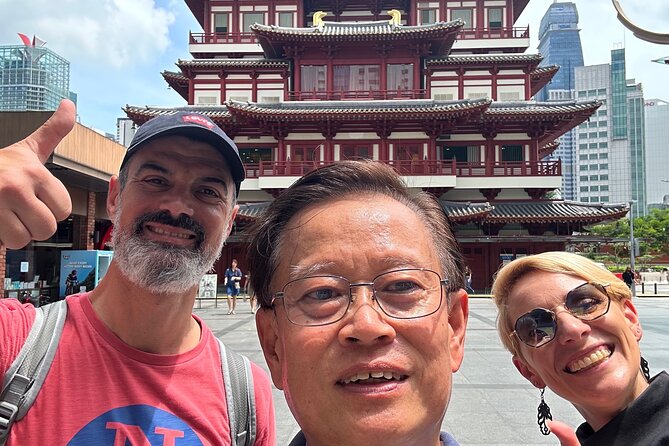
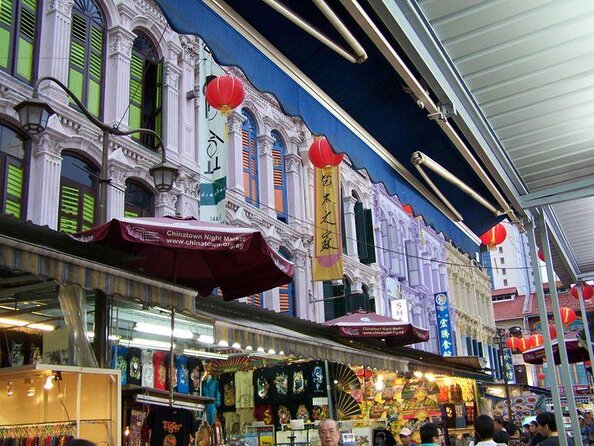
The meeting point is Nanyang Old Coffee at 268 South Bridge Road, with a 9:30 am start. Beginning at a coffee shop fits the subject well. Chinatown is not presented only as an old quarter preserved for visitors. The opening section looks at the market and food centre, how buildings were used in the past and today, cultural and religious customs, early livelihoods, wall murals, and street art.
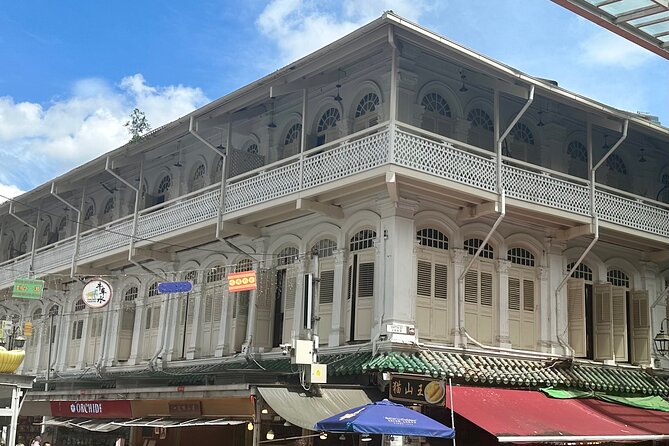
Allow about 40 minutes here. That is enough time for an explanation of how the area functioned without turning the first stop into a long food break. The focus on livelihoods is especially useful because it gives context to the shophouses and market activity. You learn to see the buildings as places where people worked and lived, not just as attractive façades.
The discussion of food culture is another strong point. Singapore’s eating traditions are tied to work, migration, family life, and shared public spaces. You may leave with a better sense of how to read a food centre, even though food purchases are not listed as part of the tour.
Wall murals and street art add a visual thread. They help connect older stories with the present-day character of Chinatown. If you want detailed time to shop, photograph every mural, or eat a full meal, the 40-minute stop may feel short. The benefit is that the tour does not stay in one neighborhood all morning.
Thian Hock Keng Temple and the rules of a sacred place
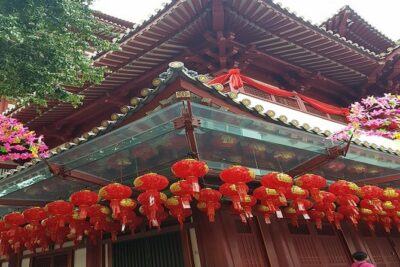
The next stop is the Thian Hock Keng Temple Mural, with about 20 minutes devoted to the temple area and its features. Here the emphasis shifts from street life to architecture, religious practice, and the way a site can carry more than one tradition.
You will learn about the building’s design, its special features, and its place as a multi-religious site. That last point matters. Singapore’s religious story is not presented as a series of isolated buildings. The route uses the temple to explain how different beliefs and communities have existed within the same city.
Jimmy also covers temple dos and don’ts. This is practical guidance, not decoration. You can look more carefully and behave respectfully when you understand what is appropriate inside a temple. The short temple walk helps you notice details that might otherwise pass by.
The 20-minute timing is both a strength and a limit. It keeps the morning moving and gives you a useful introduction, but it does not promise a long period for quiet observation. You should think of this as guided context around a sacred site, not a full religious study visit.
Reading the Downtown Core through its buildings
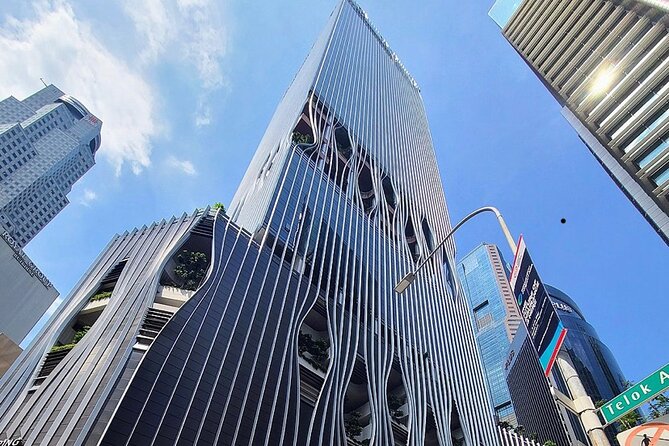
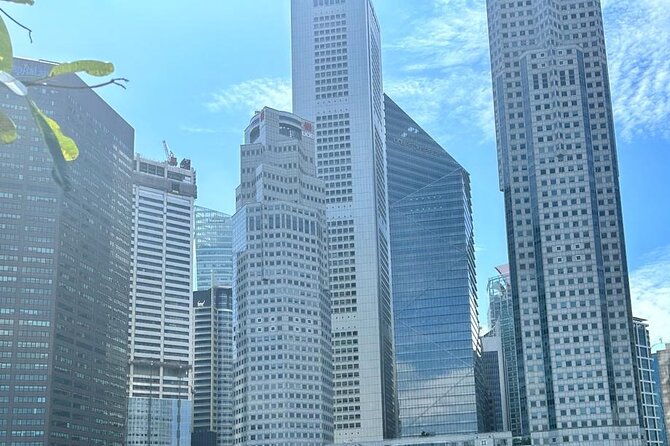
The Downtown Core section lasts about 30 minutes and explains Singapore’s Central Business District through architecture and planning. Rather than simply pointing at tall buildings, the route examines shapes, height limits, greenery requirements, types of business, and less obvious places within the modern centre.
This is one of the more useful parts for anyone who wonders why Singapore looks so carefully organized. Height restrictions and greenery requirements affect the way the city grows. Business types help you understand why one block feels different from another, even when the towers appear similar.
The focus on shapes and height also gives you a way to look up. You may start noticing how buildings frame open areas, how towers relate to older structures, and how planted spaces are built into the city. The tour treats modern Singapore as a planned place shaped by rules, not as a random collection of offices.
I would not choose this walk if your main goal is to enter skyscrapers or visit a particular company, museum, or observation deck. The value lies outside, in the explanation of how the district works. For a first visit, that wider view can be more useful than a list of building names.
A different sort of day out, same city:
- Lion City Bike Tour of Singapore
★ 5.0 · 6,211 reviews - Singapore: Gardens by the Bay Bundle Entry Ticket
★ 4.3 · 3,726 reviews - Singapore: Big Bus Hop-On Hop-Off Tour by Open-Top Bus
★ 4.5 · 3,261 reviews - Singapore: Lion City Highlights Bike Tour
★ 4.9 · 2,010 reviews
Following the Singapore River from trade to cleanup
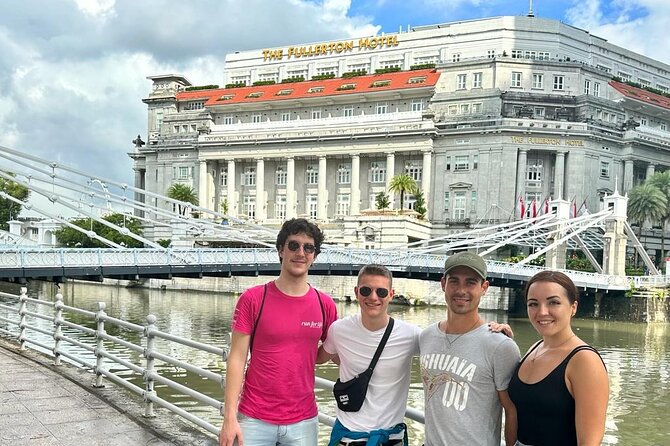
The Singapore River gets about 30 minutes. This section looks at the river’s importance, early working life, difficult conditions, the major cleanup, and the shift from river commerce to a more polished business and leisure area.
The river is a good place to understand Singapore’s practical side. Its story is about work, movement, trade, and public decisions. The cleanup also shows how a city can change the role of a central waterway. What once served one set of needs can later support a very different kind of urban life.
I like that this stop includes conditions in the early days rather than presenting the river only as a pleasant waterfront. You get a sense of the costs and problems that accompanied growth, followed by the decisions that changed the river and its surroundings.
The stop is not a boat ride, and no private transport is provided. You are walking beside the river and learning how business and the waterfront developed together. That makes comfortable shoes and sensible planning important, especially in Singapore’s heat or rain.
The Civic District, from Temasek to independence
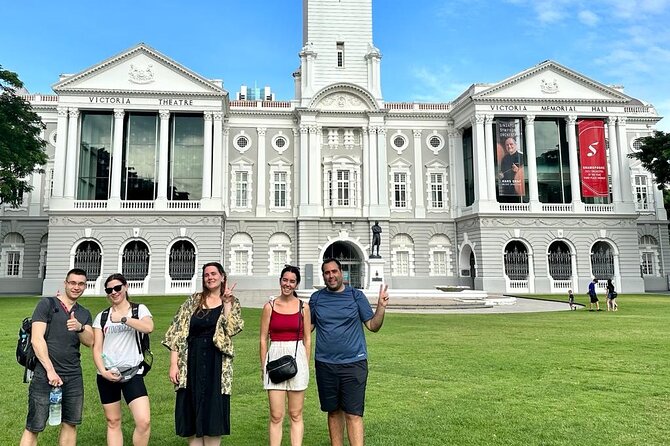
The Colonial District, also called the Civic District, receives about 30 minutes. This is where the tour sets out the larger national story: the existence of Temasek, the changes from Temasek to Singapura to Singapore, colonial buildings then and now, independence, and the country’s move toward first-world conditions.
This section helps prevent a common mistake: seeing colonial architecture as the whole story of Singapore. The buildings matter, but they sit within a much older and more complicated account of settlement, names, political change, and independence.
The then-and-now approach is useful because it connects the buildings you see with their earlier purposes. You are not just collecting photographs of grand façades. You are considering how the Civic District has changed as Singapore changed around it.
Jimmy’s style, based on the information available about his tours, suits this material well. He is described as pleasant, clear, and able to answer questions without sticking rigidly to a script. That matters in a section where you may want to ask about politics, architecture, or the meaning of independence.
The limitation is time. Thirty minutes gives you a framework, not a full tour of every civic building. If you want to go inside specific museums or study colonial architecture in detail, plan separate visits after the walk.
Marina Bay and the making of new Singapore
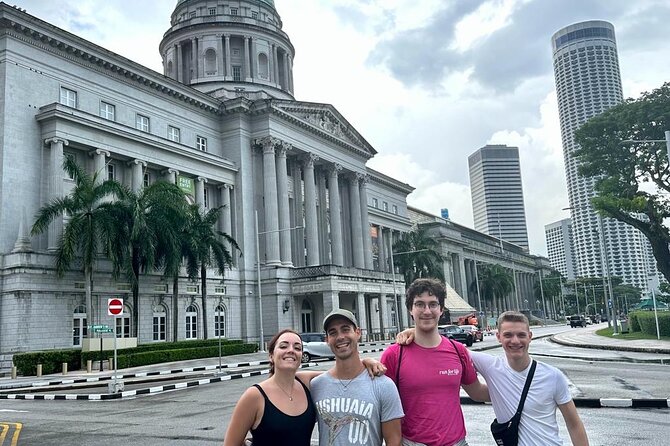
The final section takes about 30 minutes and ends at Merlion Park, beside the Merlion Sculpture at 1 Fullerton Road. Marina Bay is presented as a built environment shaped by land reclamation, the formation of the bay, several stages of growth, and notable features around the waterfront.
This is a fitting finish because it shows Singapore looking forward. The city here is not simply old buildings repaired for display. It is new land, new planning, and a changing waterfront placed beside older parts of the city.
Land reclamation can sound like a dry planning topic, but it explains why Marina Bay exists in its current form and why the area feels so different from Chinatown. The walk gives you a way to connect the bay’s shape and development with Singapore’s wider effort to manage limited space.
The Merlion provides the final landmark and a clear end point. You can finish with one of the city’s best-known symbols while understanding more about the setting around it. The tour itself does not list additional entry to attractions, so you should not expect an extended visit inside Marina Bay buildings.
Because this is the last stop, the guide can also help you place the earlier sections together: old trade areas, sacred places, business towers, the river, colonial buildings, and reclaimed land. It is a good ending for an overview, though you may want to remain in the area afterward for your own sightseeing.
What makes Jimmy Loh a useful guide
The strongest praise is directed at Jimmy’s manner and command of Singapore’s story. He is described as personable, pleasant, and able to answer many questions without sounding tied to a script. That is important for a small-group walk because your questions can shape the morning.
The comments also point to his ability to explain complicated subjects in simple, interesting terms. Religious tolerance, street food culture, architectural rules, and national development can become heavy topics. A good guide keeps them connected to places you can see.
Another useful feature is the advice for the rest of your stay. Jimmy provides suggestions about where to go, what to see, and how to get around. Since the walk ends in a central sightseeing area, you can use those tips right away.
I would still keep expectations realistic. A guide can offer local insight, but three hours cannot cover every neighborhood or answer every possible question in detail. The small group improves access to Jimmy, yet the route remains shared, so the pace and interests of the group will affect the experience.
Timing, walking, and practical value
The tour starts at 9:30 am and lasts about three hours. It moves through six areas, with stops of roughly 20 to 40 minutes. That gives you a solid morning introduction without taking an entire day away from your own plans.
The meeting point is near public transportation, and the end point is Merlion Park. There is no private transportation included, so you should plan to arrive at South Bridge Road on your own and arrange your next move from Merlion Park.
Bottled water is included. That is a small but welcome detail for a morning spent walking outdoors. The experience requires good weather, so a cancellation caused by poor conditions may lead to another date or a full refund.
Most people can participate, according to the supplied tour information. Still, this is a walking experience with several outdoor sections, so consider your own comfort with heat, rain, and city walking. The 10-person limit is a useful middle ground: more social than a private guide, but small enough for questions.
Confirmation is sent within 48 hours of booking, subject to availability. The experience is often booked about 50 days ahead, so early planning is sensible if your dates are fixed.
Free cancellation is available up to 24 hours before the start time for a full refund. Changes or cancellations inside that 24-hour window are not accepted for a refund, except where the provider cancels because of weather or because the minimum number of people is not met.
Who should book this city walk
I would choose this for a first or second visit when you want Singapore to make sense quickly. It suits people who enjoy asking questions, comparing old and new buildings, and learning how ordinary work and public policy shape a city.
It is also a good match if you want more than a standard photo stop. The route includes practical subjects such as temple etiquette, food-centre culture, transport tips, and the uses of buildings across time.
Families and mixed-age groups may appreciate the short sections and variety, provided everyone is comfortable with a three-hour walk. Solo visitors can benefit from the small group and the chance to ask direct questions without paying for a private tour.
I would choose something else if you want a slow food crawl, extensive temple time, private transportation, or entry into paid attractions. This is a city story told from streets and public places. Its success depends on your interest in listening while you walk.
Should you book CityWalk With A Local?
Book it if you want a clear, human introduction to Singapore and value a guide who can move between street food, religion, architecture, trade, colonial rule, and modern planning. Jimmy Loh’s local background, calm teaching style, and willingness to handle questions are central to the experience.
At $48.42, the price is reasonable for a three-hour guided route with no extra admission fees and a maximum of 10 people. You get the most value when you take notes on Jimmy’s suggestions and use the route as a map for the rest of your stay.
Skip it if you prefer to explore at your own speed or want one subject in depth. For everyone else, this is a practical way to connect Singapore’s famous waterfront with the less obvious stories behind its streets.
FAQ
How long is CityWalk With A Local?
The experience lasts approximately three hours.
What time does the tour start?
The tour starts at 9:30 am.
Where does the tour begin?
It begins at Nanyang Old Coffee, 268 South Bridge Road, Singapore 058817.
Where does the tour end?
It ends at the Merlion Sculpture in Merlion Park, 1 Fullerton Road, Singapore 049213.
Who leads the tour?
The experience provider is Jimmy Loh, a Singapore-born licensed Tourist Guide.
How many people can join?
The maximum group size is 10 people.
What places are included in the walking route?
The route includes Chinatown Street Market, the Thian Hock Keng Temple Mural, Downtown Core, the Singapore River, the Colonial or Civic District, and Marina Bay.
Are admission tickets included?
All listed stops have free admission. No paid attraction entry is listed as part of the experience.
Is bottled water included?
Yes. Bottled water is included.
Is private transportation included?
No. Private transportation is not included.
Can I cancel for a full refund?
Yes. You can cancel at least 24 hours before the start time for a full refund. Cancellations or changes made less than 24 hours before the start time are not refunded.
What happens if the weather is poor?
If poor weather causes the experience to be canceled, you will be offered a different date or a full refund.
Just added around Singapore
- Skyline Luge and Sky Ride Ticket Sentosa Singapore★ 3.5 · 3 reviews
- Marina Bay Sands SkyPark Observation Deck ticket in Singapore★ 4.0 · 3 reviews
- Singapore Private Full-Day Sightseeing Tour★ 5.0 · 3 reviews
- Singapore: Food and Bike Tour – Downtown★ 4.6 · 3 reviews
- Singapore: Chinatown Street Food Tour★ 5.0 · 3 reviews
- Learn to cook authentic Peranakan food with local market tour★ 3.5 · 3 reviews
- Singapore Brompton Bike Tour from Rail Corridor, with food!★ 5.0 · 3 reviews
- Guided Walking Tour to the Historical Attractions in Farrer Park★ 5.0 · 3 reviews
Hidden Gems Walks, compared.
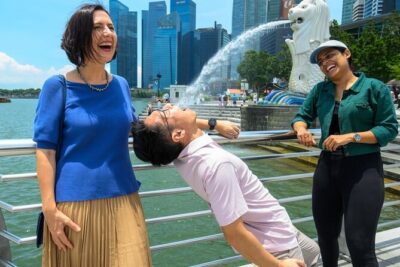
Private Singapore Tour with a Local, Highlights & Hidden Gems 100% Personalised
Read our review →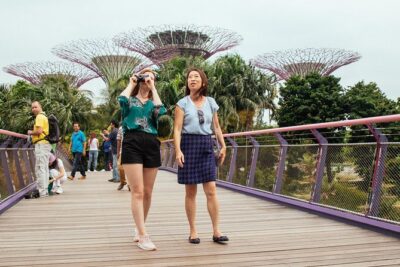
Singapore PRIVATE TOUR: Highlights & Hidden Gems by CAR or Foot
Read our review →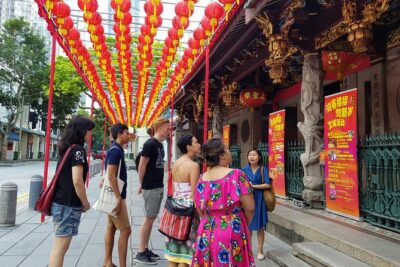
Private Singapore Walking Tour: City Highlights & Hidden Gems
Read our review →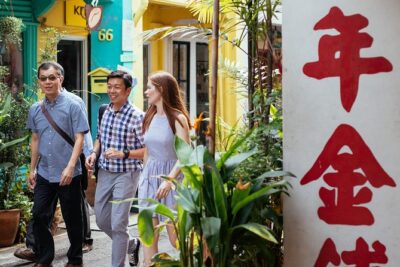
Off the Beaten Track in Singapore: Private City Tour
Read our review →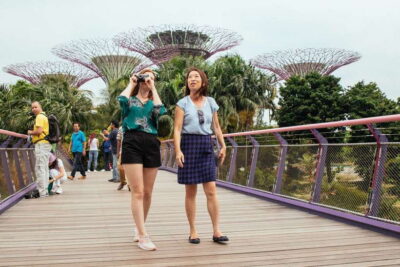
Private Tour w/ Locals – Highlights & Hidden Gems
Read our review →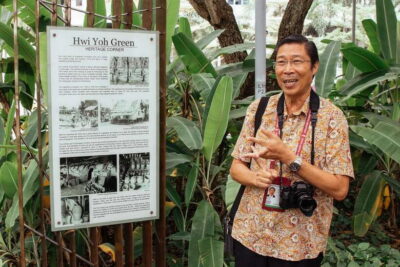
2.5-Hour Private City Tour Off the Beaten Track
Read our review →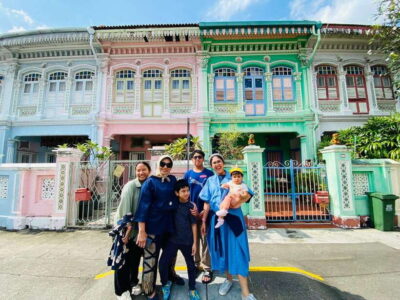
BEST Singapore Private City Tour by an Insider (1/2/3 x full-day)
Read our review →Browse the lists this tour appears in