
Reviewed · MUSEUMS
National Gallery Singapore Admission Ticket
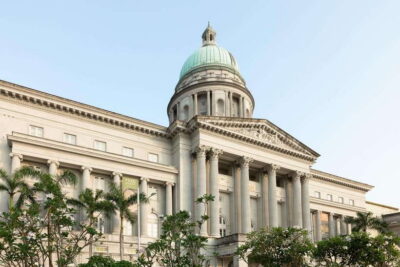
Singapore’s National Gallery is as much an architectural visit as an art outing. Two former government buildings, City Hall and the old Supreme Court, now form a 64,000-square-meter museum filled with more than 8,000 works from Singapore and Southeast Asia. The building itself is a major attraction, with a covered courtyard and linking walkways that make the old civic center feel newly useful.
I like the chance to see serious regional art without paying a large admission fee, and I like that free guided tours are available with the pass when schedules and space allow. The main caution is time: the gallery is big and its exhibition rooms can feel fragmented, so a rushed 20-minute visit will only scratch the surface.
In This Review
- Key points
- Entering Singapore’s Civic District
- City Hall and the former Supreme Court
- The DBS Singapore Gallery
- The UOB Southeast Asia Gallery
- Wu Guanzhong and the Level 4 galleries
- Free tours and the human side of the visit
- Special exhibitions and the price question
- Planning a three-hour route
- Who will get the most from this ticket
- Should you book the National Gallery Singapore ticket?
- FAQ
- Where is the National Gallery Singapore located?
- How much does admission cost?
- How long does the visit take?
- Which galleries are included?
- Are guided tours included?
- Does the ticket include special exhibitions?
- Can I avoid buying a ticket at the gallery?
- Is the ticket refundable or changeable?
Key points
- Two landmark buildings in one museum: Explore the former Supreme Court and City Hall, connected by modern gallery spaces.
- More than 8,000 works: The collection focuses on Singaporean and Southeast Asian art.
- About three hours works well: You can see the main galleries without treating the museum like a full-day assignment.
- Free expert-led tours: These are included with admission, but depend on the day’s schedule and available places.
- Special exhibitions may cost more: The standard ticket includes named permanent galleries, while changing shows can have separate pricing.
- Online advance booking: Booking ahead can help you avoid the ticket counter and pay in your chosen currency.
Entering Singapore’s Civic District
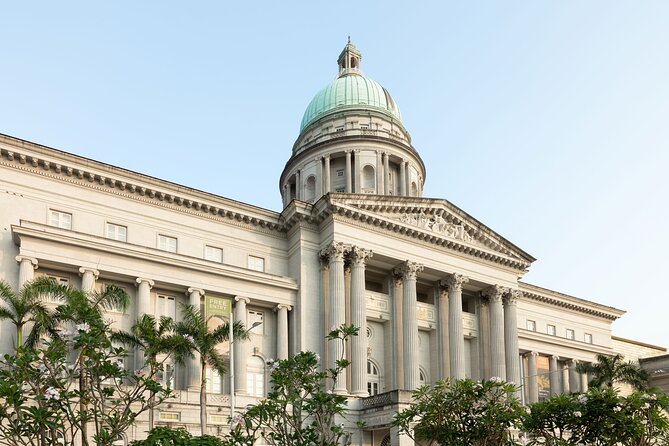
The National Gallery Singapore sits in the Civic District, at Singapore 178957. It occupies two of the city’s most recognizable public buildings, the former Supreme Court and City Hall, so you are not walking into a purpose-built white box with no sense of place.
That matters here. The museum’s art is tied to Singapore and Southeast Asia, and the setting gives the visit a useful civic frame. These buildings once represented government and law. Today, their former offices and formal halls hold paintings, installations, and changing exhibitions.
You can reach the gallery near public transportation, and most people can take part without special arrangements. The ticket redemption point is at the gallery itself. An advance online ticket is practical if you dislike standing at a counter, especially when your day already includes a meal reservation or another timed activity.
I would not plan this as a quick stop unless you only want the architecture. The complex is large, and the rooms are spread across connected areas. One short visit found that 20 minutes was enough for a few free displays, but not enough to make a paid special exhibition worthwhile. Give yourself closer to the suggested three hours if you want the visit to feel complete.
More museums and galleries to visit:
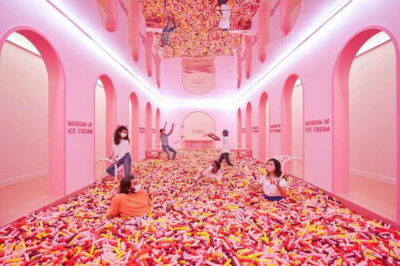
- Singapore: Museum of Ice Cream Entrance Ticket
★ 4.3 · 225 reviews - Singapore: National Gallery Singapore Admission Ticket
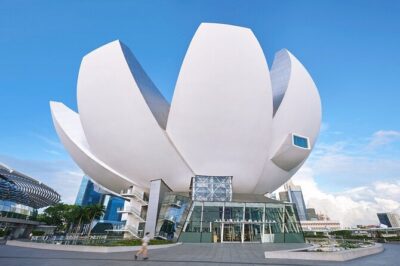
★ 4.3 · 159 reviews - Singapore ArtScience Museum Admission Ticket
★ 3.5 · 25 reviews
City Hall and the former Supreme Court
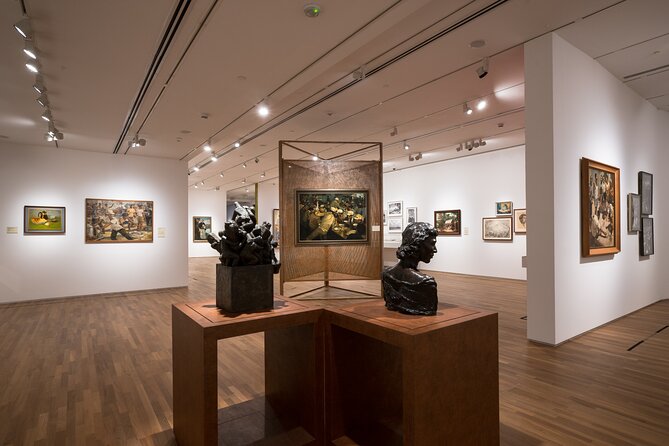
The first pleasure is simply looking around. The former City Hall and former Supreme Court are not identical buildings, and the gallery’s modern connections let you move between them while noticing their different proportions and details.
A covered courtyard provides a bright central space. Walkways link the old structures, but the layout can still take a little work. The exhibition rooms are not arranged as one straight route, so you may need to check signs and maps rather than assume every turn leads to the next major gallery.
That slightly broken-up plan has two sides. It preserves the character of the old buildings and gives the museum a sense of discovery. At the same time, you can lose track of where you are, especially if you are trying to fit the gallery between lunch and another booking.
I suggest starting with the main collection galleries rather than wandering without a plan. Once you know the building’s shape, you can return to spaces that catch your eye. If the weather is hot or wet, the indoor route also gives you a useful break from Singapore’s streets, though the museum should not be treated only as an air-conditioned escape.
The DBS Singapore Gallery
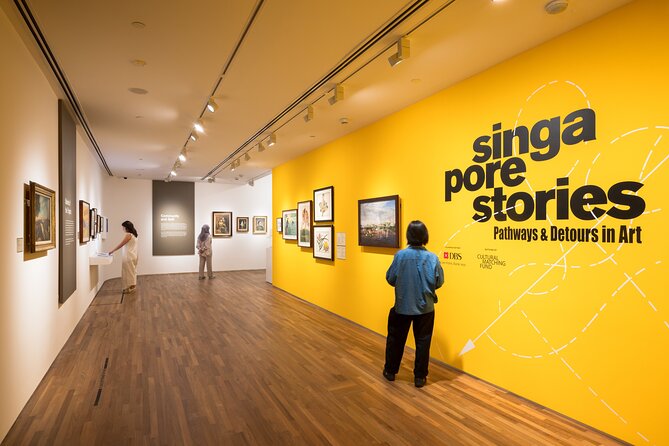
The DBS Singapore Gallery is one of the included areas. It introduces the country’s own art story and gives you a starting point for understanding how Singaporean artists have responded to place, society, and change.
The exact displays can shift, since museums refresh sections and bring in temporary shows. You should expect the gallery to provide a local focus rather than a broad survey of every Asian art tradition. That narrower purpose is helpful if you want context for Singapore itself.
I would spend time here even if your main goal is a famous visiting exhibition. The local collection is what makes this museum different from a general art museum with a few Southeast Asian works added at the edge. It gives your Singapore visit more than food, shopping, and grand colonial buildings.
The gallery also rewards a slower pace. Look at the labels, then give yourself room to consider how the works relate to the city and the region. You do not need an art background to get something from the room, but you will gain more if you resist the urge to photograph every work and hurry on.
The UOB Southeast Asia Gallery
The UOB Southeast Asia Gallery broadens the focus beyond Singapore. This is where the museum’s regional role becomes clearest, with art connected to countries and cultures across Southeast Asia.
For you, the value is comparison. Instead of seeing Singaporean art in isolation, you can place it beside work from neighboring parts of the region. That wider view helps explain shared concerns and different artistic responses without requiring a separate museum visit in every country.
The gallery is part of the admission included in this experience. Its displays may change, so I would check the current presentation if you have a particular artist or period in mind. The ticket promises access to the gallery, not a fixed list of every object on view at every date.
This is also a good place to use a free guided tour if one is running. A gallery expert can help connect works that might otherwise seem unrelated. Tour times are subject to the schedule and availability, so treat the guided walk as a useful bonus rather than the only way to understand the museum.
A few more Singapore days out worth weighing up
- Singapore: Gardens by the Bay Bundle Entry Ticket
★ 4.3 · 3,726 reviews - Singapore: Singapore Flyer Entry Ticket
★ 4.7 · 907 reviews - Singapore: Sentosa Wings of Time Fireworks Symphony Ticket
★ 4.3 · 321 reviews - Singapore: Skyline Luge Sentosa Entry Ticket
★ 4.6 · 190 reviews
Wu Guanzhong and the Level 4 galleries
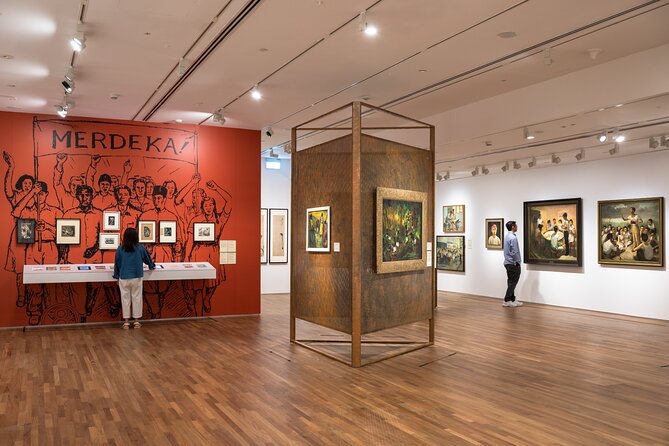
The Wu Guanzhong Gallery is another named included space. Its presence gives the museum a focused area for one of the important artistic figures represented in its program. If you already know his work, you will appreciate having a dedicated gallery. If you do not, it offers a clear introduction within the larger regional setting.
The Level 4 Gallery adds another stop to your route. Because the museum spreads its displays through several levels and linked sections, moving upstairs is part of the experience rather than a minor detail. Keep an eye on the opening rooms and current exhibitions as you go, since the contents of changing spaces may not match your expectations from a previous visit.
A viewing platform and interactive art have also been part of the gallery experience. These elements can give you a break from walls of paintings and provide a different way to consider the building and its surroundings. They are not a reason to skip the collection, but they help the visit feel varied.
The practical lesson is simple: wear comfortable shoes and allow time for orientation. The gallery is not hard to access for most people, but its fragmented layout can make it feel longer than the map suggests.
Free tours and the human side of the visit
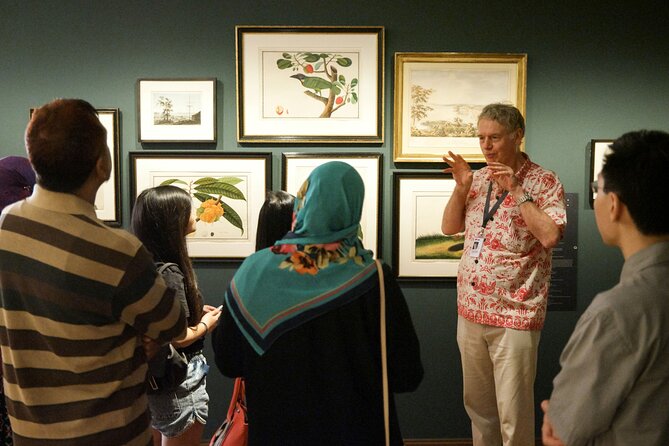
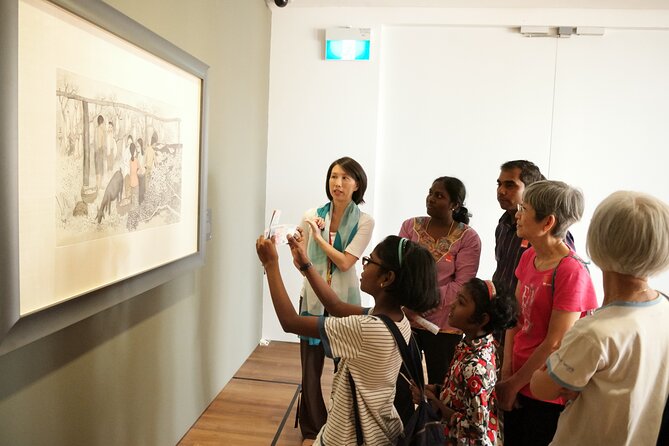
Admission includes access to free guided tours led by gallery experts. This is a useful benefit, especially if you want more than a quiet look at labels. A guided session can give shape to a large museum and help you decide which rooms deserve a second look.
The schedule is not guaranteed, and places depend on availability. Check the day’s options after arriving so you can build your route around an actual tour rather than assuming one will begin when you reach the entrance.
A guide identified as M. Hui has led a gallery tour mentioned in connection with this experience. The supplied information does not provide a fixed guide roster, so you should not book expecting a particular person. The quality of your visit will depend partly on the guide and partly on the subject of the scheduled tour.
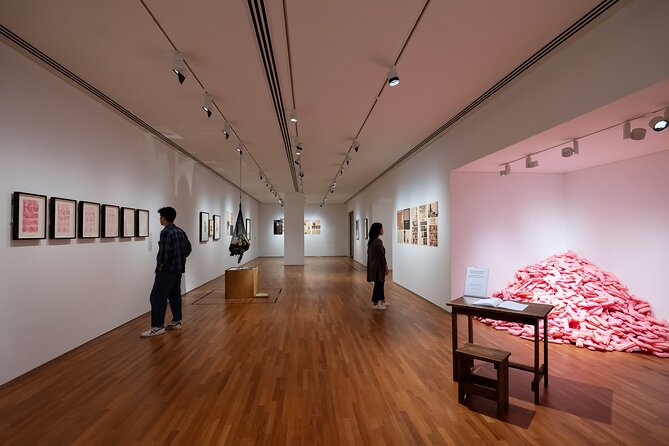
The museum has also hosted interactive exhibitions and large temporary shows. A recent biennale-style presentation included environmental themes, installations made with old toys and clothing, dancing elements, and stamp stations that were not always easy to spot. If you attend a changing event, ask about its route at the start. A hidden activity station is a small nuisance when you are in a hurry, but easy to solve if you know to look.
Special exhibitions and the price question
The admission price given for this experience is $12.91 per person. At that level, the ticket offers good value if you plan to spend a few hours in the included galleries and make use of the building itself.
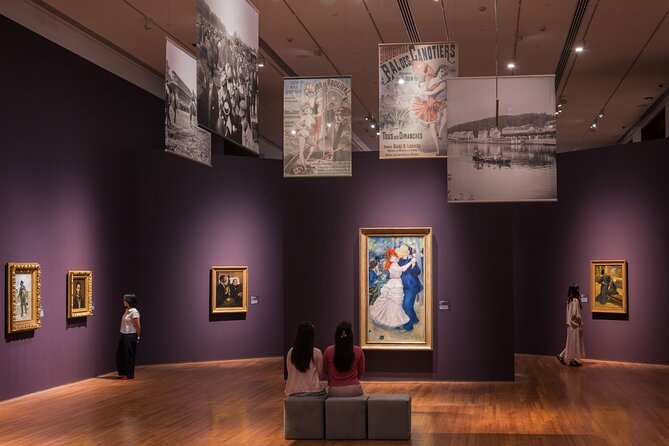
Do not assume that every temporary exhibition is covered. A special Impressionist exhibition was priced at $25 in one visit, separate from the value of a very short general admission stop. That exhibition included famous works loaned from the Boston Fine Arts Centre, and it was described as wonderful, but the extra cost made little sense for someone with only 15 minutes available.
This gives you a useful rule. If you want a special show, allow enough time to see it properly and confirm its price before committing. If your schedule is tight, use the included Singaporean and Southeast Asian galleries instead.
The value also depends on your interest in art. The museum is not only for dedicated art specialists, because the architecture, public spaces, and interactive displays offer other reasons to visit. Still, if you do not enjoy museums, a three-hour plan may be too ambitious. You can shorten the stop, but then the low admission price does not automatically make every special exhibition a good buy.
Planning a three-hour route
Three hours is a sensible target for a first visit. It gives you enough time to see the main included galleries, pause in the building’s public areas, and join a guided tour if the schedule fits.
I would use this rough approach:
- Begin with the building and central connecting spaces.
- Visit the DBS Singapore Gallery for a Singapore-focused introduction.
- Continue to the UOB Southeast Asia Gallery.
- Add the Wu Guanzhong Gallery and Level 4 Gallery.
- Finish with any current interactive or temporary display that interests you.
- Leave time for a guided tour only after checking its start time.
This is not a timed itinerary, and you should adapt it to the exhibitions on view. The museum’s rooms can be fragmented, so a strict minute-by-minute plan may create more stress than it saves.
If you are pairing the gallery with a restaurant reservation, keep a generous buffer. A 20-minute gap is enough for a quick look at the building or a free display, not for the full collection. The museum is large enough that you may spend several minutes simply finding the next section.
Who will get the most from this ticket
I would recommend this admission to anyone who wants a clear introduction to Singaporean and Southeast Asian art, especially if the Civic District is already part of your day. It suits people who like architecture as much as paintings, since the former government buildings are a central part of the experience.
It also works well for a flexible solo visit or a small group that can move at its own pace. The free tours add value for anyone who wants help with the collection, provided the timing works.
Families and mixed-interest groups may find the varied spaces useful. The art galleries provide the main reason to come, while the courtyard, views, and interactive works can keep the visit from feeling like one long sequence of labels.
I would be more cautious if you have only a few minutes, dislike finding your way through large museums, or mainly want one famous temporary exhibition. In those cases, confirm the current show, price, and opening details before booking.
The ticket is non-refundable and cannot be changed after purchase. That makes advance planning important. Book when your schedule is firm, not while you are still deciding how to fill an uncertain afternoon.
Should you book the National Gallery Singapore ticket?
Book it if you can spare about three hours and want Singaporean and Southeast Asian art in a memorable civic setting. The $12.91 admission is strong value for the included galleries, especially when you use the free tour option and take time to explore both historic buildings.
Skip it, or choose a shorter museum stop, if your schedule allows only 15 or 20 minutes. Do not pay extra for a special exhibition unless you have enough time to see it without rushing. For an art-curious visitor with a settled schedule, this is one of Singapore’s more useful indoor cultural stops. For everyone else, the building alone may be the reason to enter, but the full ticket earns its keep only when you slow down.
FAQ
Where is the National Gallery Singapore located?
The gallery is in Singapore’s Civic District at Singapore 178957. The ticket redemption point is at the National Gallery Singapore.
How much does admission cost?
The listed price is $12.91 per person. Special exhibitions may have separate pricing.
How long does the visit take?
The expected duration is approximately three hours. You can make a shorter visit, but 20 minutes is only enough for a quick look at a few areas.
Which galleries are included?
Admission includes the DBS Singapore Gallery, UOB Southeast Asia Gallery, Level 4 Gallery, and Wu Guanzhong Gallery.
Are guided tours included?
Yes. Free guided tours led by gallery experts are available with an admission pass, subject to the day’s schedule and available places.
Does the ticket include special exhibitions?
The included areas are the named permanent and gallery spaces. Special exhibitions may not be covered and can have an additional price.
Can I avoid buying a ticket at the gallery?
You can book online in advance, which is intended to help you avoid ticket purchase lines at the venue.
Is the ticket refundable or changeable?
No. This experience is non-refundable and cannot be changed for any reason.
Just added around Singapore
- Skyline Luge and Sky Ride Ticket Sentosa Singapore★ 3.5 · 3 reviews
- Marina Bay Sands SkyPark Observation Deck ticket in Singapore★ 4.0 · 3 reviews
- Singapore Private Full-Day Sightseeing Tour★ 5.0 · 3 reviews
- Singapore: Food and Bike Tour – Downtown★ 4.6 · 3 reviews
- Singapore: Chinatown Street Food Tour★ 5.0 · 3 reviews
- Learn to cook authentic Peranakan food with local market tour★ 3.5 · 3 reviews
- Guided Walking Tour to the Historical Attractions in Farrer Park★ 5.0 · 3 reviews
- Singapore Brompton Bike Tour from Rail Corridor, with food!★ 5.0 · 3 reviews
Museums, compared.
Red Dot Design Museum Admission Ticket – A Preview of the Future
Read our review →
Browse the lists this tour appears in