
Reviewed · SINGAPORE
Disappearing Trades
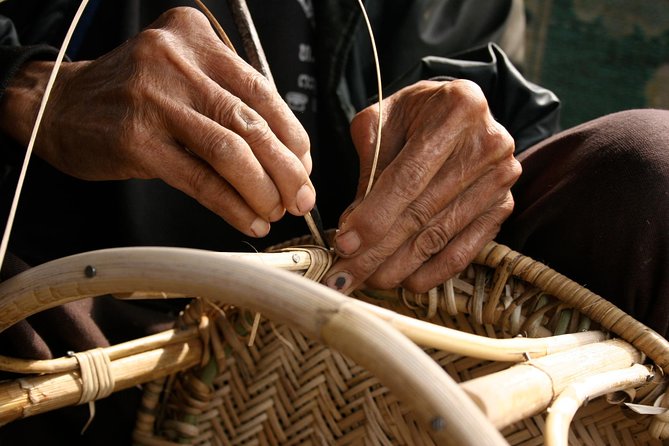
Singapore’s old trades are easiest to miss when you stick to the big sights. This private morning tour takes you behind working doors, from hand-shaped Sachima and fermented biscuits in Chinatown to coffee roasting in Bedok and paper offerings in Ang Mo Kio.
I like the small-group format, which gives your guide time to explain the work and answer questions. I also like the mix of tasting and watching: you sample kopi O, try freshly made bread, and see crafts tied to Chinese family customs.
The main consideration is the price, $112 per person, which is not a bargain if you only want sightseeing. You are paying for private transport, access to several working businesses, and a guide who connects four quite different stops.
In This Review
- Key points at a glance
- Why these old trades make a worthwhile morning
- Starting in Chinatown with Sachima and fermented biscuits
- Bedok coffee roasting and a cup of kopi O
- Ang Mo Kio and the paper house tradition
- Old-fashioned bread at Paya Lebar Road Park
- What the private van adds to the experience
- Is $112 per person fair value?
- Who will enjoy this Singapore experience most?
- Practical details before you book
- Should you book Disappearing Trades?
- FAQ
- How long does the Disappearing Trades tour last?
- What time does the tour begin?
- Where does the tour start and finish?
- Is this a private tour?
- What trades are included?
- Is transportation included?
- Can I cancel for a full refund?
Key points at a glance
- Three disappearing trades: See traditional snacks, coffee roasting, paper houses, and old-style bread making.
- Private attention: Only your group takes part, with guide Stefan among the guides who may lead the experience.
- Local tasting stops: Try black kopi and freshly made bread while learning how each product is made.
- Air-conditioned transport: A small van links Chinatown, Bedok, Ang Mo Kio, and Paya Lebar Road Park.
- A useful four-hour route: The morning schedule begins at 9:00 a.m. and ends back at 69 Pagoda Street.
- A cultural focus: The paper house visit explains Chinese offerings to ancestors, not simply a craft technique.
Why these old trades make a worthwhile morning
This is not a standard Singapore food tour or a quick walk through Chinatown. Its subject is work that still exists but is becoming harder to find, often because traditional methods take more time and effort than modern production.
That gives the morning a clear purpose. You are not just looking at finished products. You see how snacks, coffee, bread, and paper objects fit into everyday life, religious practice, and Singapore’s changing economy.
I especially like the range of the stops. The food visits are easy to enjoy, the coffee stop gives you a taste of local café culture, and the paper house adds a more serious cultural note. Together, they show several sides of Singapore that are not always obvious from its polished downtown streets.
The tour is private, so your group gets the guide’s full attention. That matters here because the subjects invite questions. You may want to ask about roasting temperatures, old recipes, the meaning of different paper objects, or why these trades are fading. A private format gives you room to do that.
The tour has a 98 percent recommendation rate and a 4.7 rating from 126 reviews. Those figures suggest a consistently strong experience, but they do not change the basic tradeoff: this is best for curious visitors who value access and explanation more than a low-cost morning.
Other Singapore bookings people compare with this one:
- Lion City Bike Tour of Singapore
★ 5.0 · 6,211 reviews - Singapore: Gardens by the Bay Bundle Entry Ticket
★ 4.3 · 3,726 reviews - Singapore: Big Bus Hop-On Hop-Off Tour by Open-Top Bus
★ 4.5 · 3,261 reviews
Starting in Chinatown with Sachima and fermented biscuits
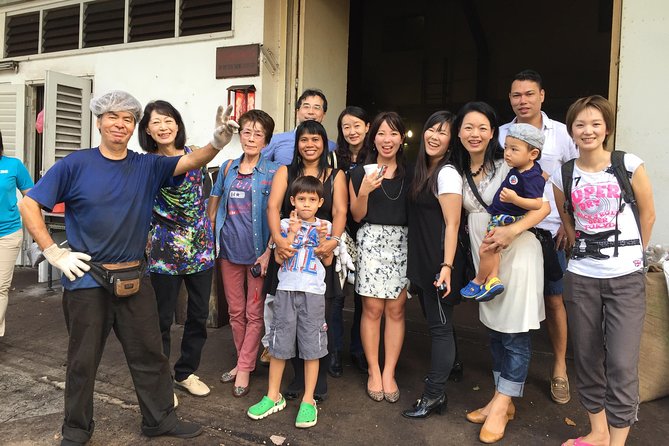
Meet at 9:00 a.m. at 69 Pagoda Street in Chinatown. This is a practical starting point because Chinatown is already a useful place to get your bearings, and the tour returns there at the end.
The first stop introduces two traditional and disappearing trades: Sachima and fermented biscuits. Sachima is a handmade Asian snack with the appearance of a compact granola bar. The name may be unfamiliar, but the appeal is simple: you see a snack made by hand rather than pulled from a factory shelf.
The fermented biscuits provide a second example of an older food tradition. The available details do not specify the exact recipe or fermentation process, so your guide will be the best source for questions about ingredients and preparation. That uncertainty is part of the point. These are working traditions, not staged museum displays with every step printed on a sign.
You spend about 45 minutes here. That is enough time for an introduction and close look, though not enough for a long workshop. If food production is your main interest, listen closely and ask questions early so you do not miss the useful details.
Bedok coffee roasting and a cup of kopi O
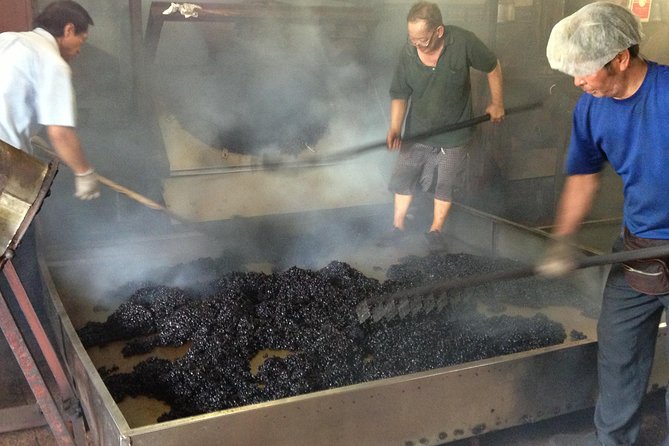
The route then heads to Bedok for a 30-minute visit to a traditional coffee roasting factory. This is a short stop, but it covers one of Singapore’s most familiar drinks: kopi.
You learn about the local kopi industry, roasting techniques, and the small tricks that shape the final cup. The visit ends with a sampling of kopi O, or black coffee. That tasting is valuable because it turns an explanation into something you can judge for yourself.
Kopi is not treated here as a generic caffeine stop. The focus is on how the drink is produced and why local roasting methods matter. You may already have seen kopi on a Singapore menu, but this visit gives you a better sense of what happens before the cup reaches a coffee shop.
Thirty minutes passes quickly. I would not book this tour expecting a long coffee class or an extended tasting session. Think of it as a compact look at a traditional industry, with one sample to make the lesson concrete.
The Bedok stop also shows why the private van matters. The four locations are spread across Singapore, and moving between them by public transport would take more planning and time. The small air-conditioned bus keeps the morning practical and gives you a comfortable break between visits.
Ang Mo Kio and the paper house tradition
The most distinctive stop is in Ang Mo Kio, where you hear from one of the masters who makes paper houses and other paper objects for ancestral offerings. You learn how Chinese families may burn paper items as a way of honoring and making offerings to ancestors in the afterlife.
This part gives the tour its strongest cultural focus. Paper houses can look unusual if you encounter them without context, but the explanation connects them to Chinese prayer, family duty, and respect for the dead.
The visit lasts about 45 minutes. You are not simply watching someone make decorative paper goods. You are learning why these objects are made and how they are used in religious and family customs.
This was the most highly praised part of the experience, and I can understand why. It offers something difficult to find on your own: direct access to a specialist who can explain both the craft and the belief behind it.
At the same time, this stop may not suit everyone. The subject involves death, ancestor worship, and burning offerings. If you want only light food and drink experiences, the paper house visit may feel more serious than the rest of the morning. For anyone interested in Singapore’s Chinese traditions, it is likely to be the part you remember longest.
A different sort of day out, same city:
- Singapore: Lion City Highlights Bike Tour
★ 4.9 · 2,010 reviews - Small Group: Michelin and Local Hawker Food Tour with 9 tastings
★ 5.0 · 1,890 reviews - Morning at the Zoo with 1-way Transfer (Free & Easy)
★ 4.0 · 1,882 reviews - Experience Singapore: Cultural Cooking Class
★ 5.0 · 1,514 reviews
Old-fashioned bread at Paya Lebar Road Park
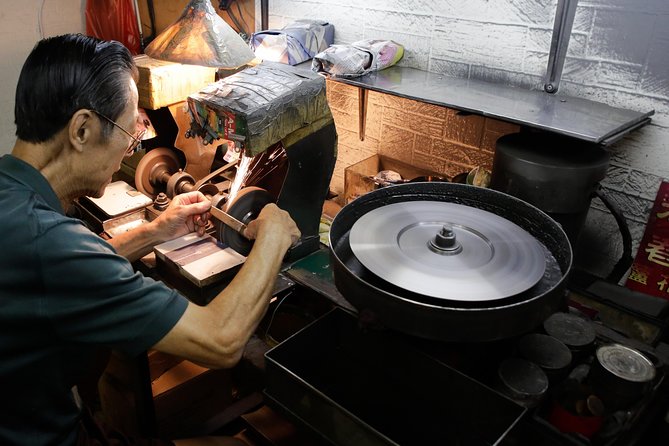
The final stop takes you to Paya Lebar Road Park to learn how bread was made in the old-fashioned way. You spend about 45 minutes here and receive admission to the bread-making visit.
The useful feature of this stop is its hands-on sense of process, even though the supplied details do not promise a workshop where you make a loaf yourself. You can expect an explanation of older bread-making methods and a chance to sample freshly made bread.
After the coffee and traditional snacks, bread gives the morning an easy finish. It also rounds out the main idea of the tour: familiar foods often depend on skills that are less common than they once were.
I would keep your expectations measured. This is not advertised as a full baking course, so you should not plan on learning every stage of professional bread production. It is a short demonstration and tasting within a wider cultural tour.
What the private van adds to the experience
The tour lasts about four hours and uses a combination of walking and driving. A small air-conditioned bus carries the group between stops, which is especially helpful in Singapore’s warm, humid weather.
The route covers Chinatown, Bedok, Ang Mo Kio, and Paya Lebar Road Park. These are not all close together, so the included transport saves you from piecing together several taxi or public transport rides.
You still need to be ready for some walking at each location. The activity states that most people can participate, but it does not provide detailed information about step-free access or specific mobility arrangements. If that matters for your group, ask the provider before booking.
Because the tour is private, the pace can feel more personal than a large coach excursion. Your guide can spend more time on the stop that interests you most, within the fixed four-hour schedule. Stefan is one guide named in the tour information, and he is described as able to handle a wide range of questions.
The tour begins and ends at 69 Pagoda Street. That makes the finish convenient if you plan to continue exploring Chinatown, eat lunch nearby, or use the area as your next base.
Is $112 per person fair value?
At $112 per person, this is a premium half-day activity. You are not paying for major entrance tickets, since several visits have no admission charge. The value comes from the private guide, transport, access to working trades, tastings, and the time saved organizing a scattered route.
For a solo visitor, the cost may be difficult to justify. For a couple or small private group, the calculation improves because you are paying for a more personal outing rather than joining a large public tour.
I would compare it with the cost of arranging the same morning independently. You would need to find the businesses, confirm that they welcome visitors, work out transport between four areas, and locate someone who can explain the crafts. The tour packages those pieces into one morning.
The strongest value lies in the access. A coffee shop or Chinatown market can introduce you to local food, but it will not necessarily show you how coffee is roasted, how old-fashioned bread is made, or why paper offerings are created for ancestors.
The weaker value lies in the limited time at each stop. If you want a long bakery class, an extended coffee tasting, or a full craft workshop, $112 may feel high. If you want a broad and guided introduction to several fading trades, the price is easier to defend.
Who will enjoy this Singapore experience most?
I would recommend this tour to first-time visitors who want more than the usual landmarks, especially if you like food, traditional work, and cultural customs. It also suits repeat visitors who have already seen the major attractions and want a morning with a different focus.
Families with older children may find the variety useful. Sachima, coffee, paper houses, and bread give the morning several changes of subject, although the ancestor offerings may need a thoughtful explanation for younger children.
It is also a good fit for people who prefer a private setting. You can ask direct questions, spend a little longer on the parts you care about, and avoid the fixed social rhythm of a large group.
I would be more cautious if your main goal is a relaxed food crawl. The tour includes samples, but food is only one part of the experience. The paper house stop and the discussion of disappearing trades are just as important.
You should also be comfortable with a morning that moves around Singapore. The van makes the route manageable, but the tour is not concentrated in one neighborhood.
Practical details before you book
The meeting time is 9:00 a.m., and the meeting point is 69 Pagoda Street in Singapore. The activity ends back at that same meeting point.
A mobile ticket is accepted, and confirmation is provided when you book. The tour is private, meaning only your group participates.
Free cancellation is available if you cancel at least 24 hours before the local start time. Changes or cancellations made less than 24 hours before the start are not accepted for a refund.
The experience requires good weather. If poor weather causes cancellation, you are offered another date or a full refund. A minimum number of participants is also required, and if that minimum is not met, you receive the choice of another date or experience, or a full refund.
The tour is booked an average of 63 days ahead. That advance booking pattern suggests you should reserve early if your Singapore dates are fixed, especially if you want a particular morning.
Should you book Disappearing Trades?
Book it if you want to see working traditions that are hard to locate without local help. The coffee factory, paper house, and old-style food visits offer a more personal picture of Singapore than a standard sightseeing loop, and the private van keeps a spread-out route comfortable.
The paper house visit is the deciding factor. If you are interested in Chinese customs and ancestor offerings, it may be the highlight. If that subject does not appeal to you, the food and coffee stops alone may not justify the $112 price.
For curious visitors who value explanation, small-group access, and a look behind ordinary products, I would book this half-day tour. For visitors seeking a cheap, leisurely breakfast outing or a full cooking lesson, I would choose something else.
FAQ
How long does the Disappearing Trades tour last?
The tour lasts approximately four hours.
What time does the tour begin?
It begins at 9:00 a.m.
Where does the tour start and finish?
The tour starts at 69 Pagoda Street, Singapore 059228, and ends back at the same meeting point.
Is this a private tour?
Yes. Only your group participates in the activity.
What trades are included?
The tour includes traditional Sachima and fermented biscuits in Chinatown, coffee roasting in Bedok, paper house making in Ang Mo Kio, and old-fashioned bread making at Paya Lebar Road Park.
Is transportation included?
The experience uses a small air-conditioned bus to travel between locations, with some walking at the stops.
Can I cancel for a full refund?
Yes, if you cancel at least 24 hours before the local start time. Cancellations made less than 24 hours before the start are not refunded.
Just added around Singapore
- Skyline Luge and Sky Ride Ticket Sentosa Singapore★ 3.5 · 3 reviews
- Marina Bay Sands SkyPark Observation Deck ticket in Singapore★ 4.0 · 3 reviews
- Singapore Private Full-Day Sightseeing Tour★ 5.0 · 3 reviews
- Singapore: Food and Bike Tour – Downtown★ 4.6 · 3 reviews
- Singapore: Chinatown Street Food Tour★ 5.0 · 3 reviews
- Learn to cook authentic Peranakan food with local market tour★ 3.5 · 3 reviews
- Singapore Brompton Bike Tour from Rail Corridor, with food!★ 5.0 · 3 reviews
- Guided Walking Tour to the Historical Attractions in Farrer Park★ 5.0 · 3 reviews