
Reviewed · CHINATOWN TOURS
Chinatown Hidden Treasures Local Guided Walking Tour
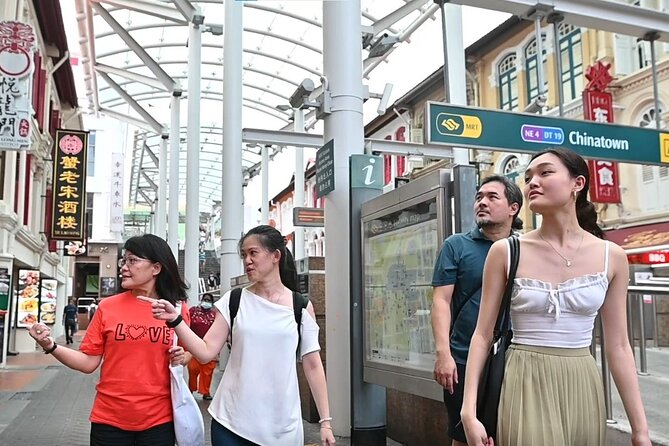
Singapore’s Chinatown is best understood on foot, where one street can shift from Chinese shophouses to a Hindu temple, a Buddhist museum, a hawker center, and a polished cocktail bar. This three-hour walk ties those contrasts together with local stories, food advice, and time to notice details you could easily miss alone.
I like the small maximum of 12 people, which should make questions and conversation easier, and I like the simple food break: kaya toast with coffee or milk tea. Guides including Edwin and Ronnie have been praised for clear history lessons and useful hawker-food tips. The main consideration is pace: six stops in three hours means you will see a lot, but not study every site at length.
In This Review
- Key points at a glance
- Why this Chinatown walk works
- Starting underground at the Chinatown Heritage Centre
- Reading Chinatown through its street market
- Buddha Tooth Relic Temple in a short visit
- Finding the food story in Chinatown
- Sri Mariamman Temple and Chinatown’s wider story
- Finishing among Ann Siang Hill’s old shophouses
- What the three-hour timing really means
- Is the $64.57 price fair?
- Who will get the most from this walk?
- Should you book the Chinatown Hidden Treasures walk?
- FAQ
- How long is the Chinatown Hidden Treasures tour?
- How much does the tour cost?
- Where does the tour start?
- Where does the tour finish?
- What food and drink are included?
- Is admission to the Chinatown Heritage Centre included?
- Are the other listed attractions free to enter?
- How many people can join the tour?
- Is the tour suitable for someone using a baby stroller?
- Can I cancel for a full refund?
Key points at a glance
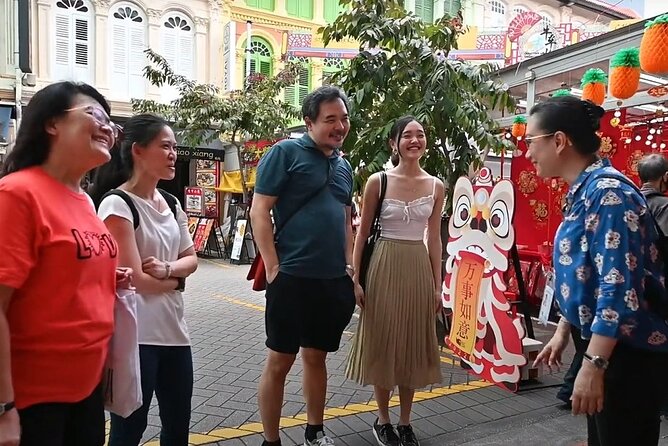
- Six Chinatown stops in three hours: Cover the Heritage Centre, street market, two major temples, Chinatown’s shophouse streets, and Ann Siang Hill.
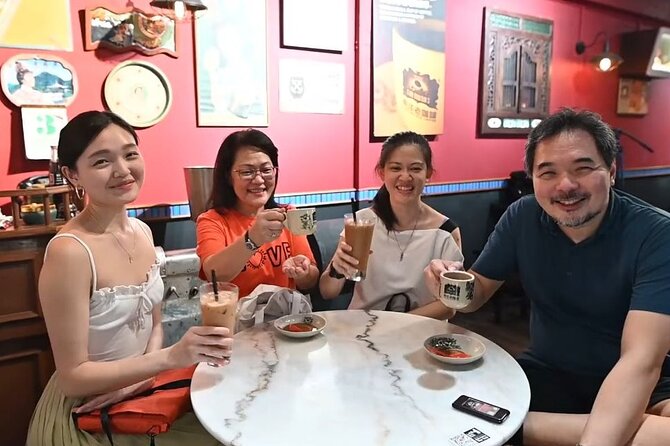
- A useful local snack break: Share kaya toast with one cup of coffee or milk tea while learning about local food.
- A maximum of 12 participants: This is a more personal format than a large coach tour.
- Food advice you can use later: Expect recommendations for hawker dishes and local places beyond the walk itself.
- A cross-cultural route: Chinese immigrant stories sit alongside Buddhist, Hindu, Malay, and modern Singaporean influences.
- An easy MRT finish: The walk ends at Maxwell MRT Station, close to Maxwell MRT exit 1.
Why this Chinatown walk works
The best feature here is its connection between food and migration. Chinatown is not just a collection of old buildings and souvenir stalls. It reflects the work, faith, cooking, and daily life of communities that helped shape Singapore.
Your guide provides the thread. Rather than stopping only for photographs, you hear how early Chinese immigrants lived and how food became one way different communities met and influenced one another. That focus matters because Chinatown can otherwise feel like a busy sightseeing district with little context.
I also like the route’s range. You move from a museum-style introduction to open-air market streets, then into religious buildings and heritage areas now filled with restaurants, boutiques, bars, and street art. The route gives you several versions of Chinatown in one outing.
The tour is private in the sense of a small walking experience, but the supplied details describe a maximum of 12 people rather than a guaranteed one-party booking. If you want a completely private guide for only your own group, confirm that point before paying.
More walks through Chinatown:
- Chinatown, Little India, Kampong Gelam City Highlights Tour
★ 5.0 · 224 reviews - Singapore: Chinatown Hawker Market Food Tour with 7 Food Tastings
★ 5.0 · 213 reviews - Singapore: Chinatown, Little India, Arab Street Walking Tour
★ 4.9 · 207 reviews
Starting underground at the Chinatown Heritage Centre
The meeting point is at Chinatown MRT Exit A, at New Bridge Road, #B1-03. This is a practical start because you can reach it by public transport, and the tour begins near the heart of the district rather than at a distant hotel pickup point.
The first stop, the Chinatown Heritage Centre, sets the scene through the lives of early Chinese immigrants. The planned visit lasts about 35 minutes. That is enough time for an introduction to working and living conditions, but it is not a full museum afternoon.
Admission to the Heritage Centre is not included. This is the main cost detail to watch. The other listed stops are free, but you may need to pay separately if the guide takes you inside this attraction as planned. Ask the operator how the current admission is handled before the walk begins, since the supplied details do not give the ticket price.
I value this opening because it gives the rest of the route a human scale. After learning about the people who lived and worked here, the market stalls and shophouses feel less like scenery and more like parts of an ongoing neighborhood story.
Reading Chinatown through its street market
The Chinatown Street Market receives about 35 minutes. You can browse stalls selling trinkets, souvenirs, and traditional Chinese handicrafts. This is a good place to get your bearings and see how the area serves both daily life and sightseeing.
The market is also where a guide’s judgment can save you time. You can ask what is worth buying, what is mainly decorative, and where to find local food later in the day. The tour includes tailored recommendations, so use this portion to ask direct questions rather than simply following the group from stall to stall.
Keep your expectations sensible. A market visit does not mean a dedicated shopping session, and 35 minutes passes quickly if you are comparing souvenirs. The value is the context and orientation, not a long buying stop.
Buddha Tooth Relic Temple in a short visit
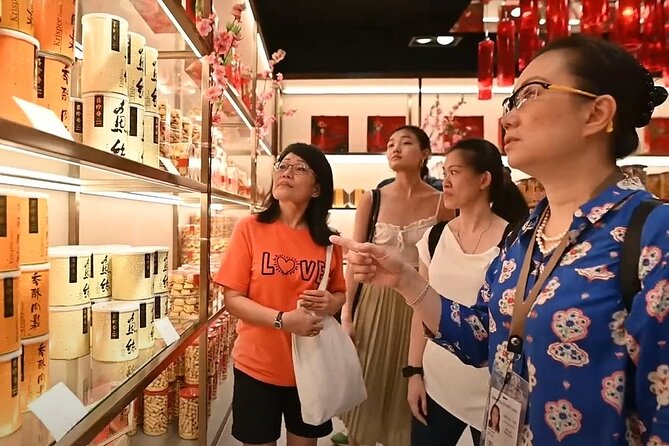
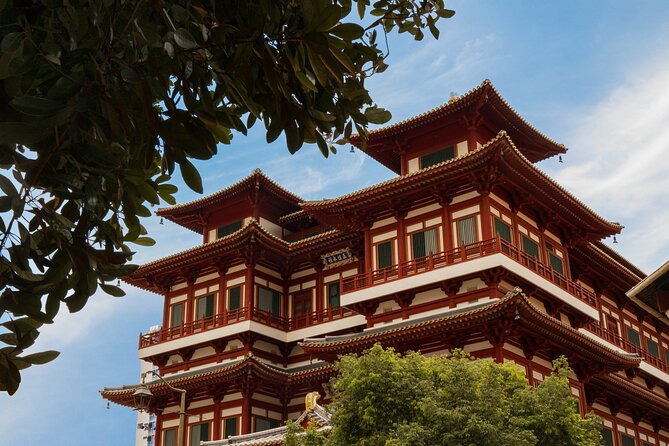
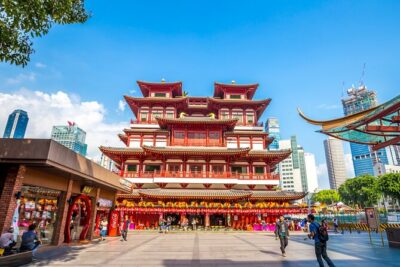
The Buddha Tooth Relic Temple and Museum is scheduled for about 20 minutes, with free admission. The building is known for elaborate decoration and for housing a sacred Buddhist relic. Its museum presents Buddhist art and culture.
Twenty minutes is a brisk visit. You can see the main character of the temple and hear why it matters, but you should not expect to examine every display or spend long periods in quiet reflection. Dress and behavior should respect the religious setting, and your guide can help explain what you are seeing.
This stop adds an important layer to the route. The walk is not limited to Chinese food and shopping. It also shows how religious practice remains part of Chinatown’s public identity.
More walking tours around Singapore:
- Singapore: Private Walking Tour with a Local
★ 4.7 · 410 reviews - Private Customised Singapore Walking Tour
★ 5.0 · 370 reviews - Singapore: Chinatown and Little India Guided Walking Tour
★ 4.8 · 190 reviews - Singapore: Customized Private Tours (Car/Bus/Walking)
★ 5.0 · 181 reviews
Finding the food story in Chinatown
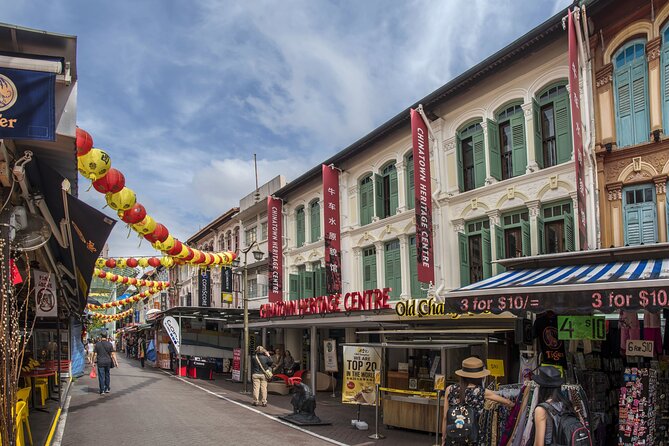
The general Chinatown portion lasts around 35 minutes and takes place among shophouses, dining spots, shops, murals, and street art. This is where the tour’s food focus becomes most useful.
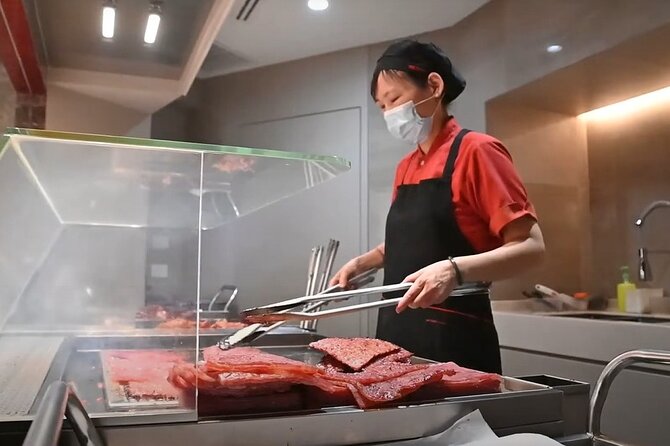
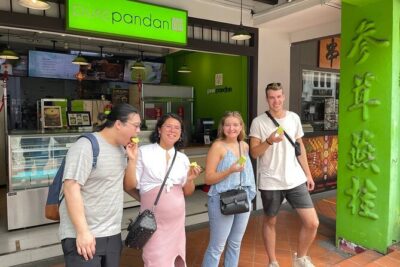
You receive a sharing set of kaya toast and one cup of coffee or milk tea. Kaya is a sweet coconut and egg spread commonly served with toast, and the snack gives you a direct taste of a familiar local combination. It is not a full meal, so plan lunch or dinner separately.
The food conversation appears to be one of the strongest reasons to choose this walk. One guide’s advice about hawker food was especially useful, and another participant valued the way the tour explained how food brings cultures together. You can turn those tips into a meal after the tour, rather than relying on a generic restaurant list.
The guide can also point you toward local delicacies and help with your own priorities, such as finding something quick, trying a dish you have never ordered, or choosing a good photo stop. Recommendations are tailored, so arrive with questions.
Sri Mariamman Temple and Chinatown’s wider story
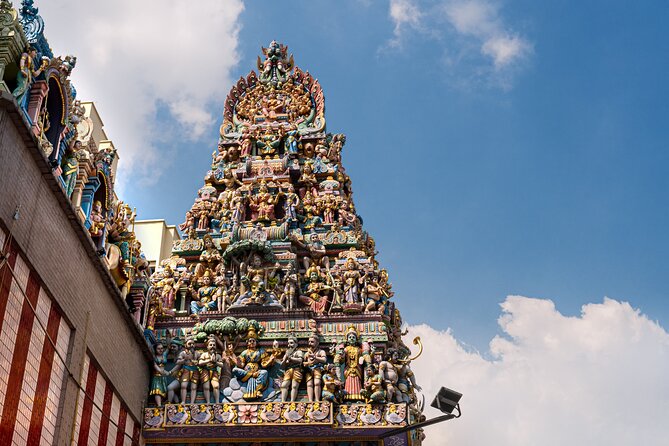
Sri Mariamman Temple is Singapore’s oldest Hindu temple and is recognized by its colorful gopuram, or entrance tower. The scheduled stop lasts about 20 minutes, and admission is free.
This is one of the route’s most useful contrasts. A tour called Chinatown could easily focus only on Chinese heritage, yet this temple shows the district’s broader cultural mix. Its presence helps explain why Singapore’s historic neighborhoods cannot be understood through one community alone.
Again, the time is short. You will have a chance to admire the architecture and hear its place in the area, but this is not structured as a long religious or art-history visit. If you want a detailed look inside, you may need to return independently.
Finishing among Ann Siang Hill’s old shophouses
The route ends at Ann Siang Hill, a historic area with heritage shophouses, boutiques, restaurants, bars, and street art. The scheduled time is about 35 minutes, making it one of the longer stops.
This ending works well because it shows how old buildings have been reused. The area connects Chinatown’s past with present-day shopping and dining. It also gives you a chance to gather practical ideas for the rest of your Singapore stay.
The tour finishes at Maxwell MRT Station, 321 South Bridge Road, near Maxwell MRT exit 1. That is convenient if you want to continue exploring or find a meal nearby. The end point is not the same as the start, so plan to collect anything you left at your hotel or starting area before meeting the group.
What the three-hour timing really means
The six listed stops total roughly three hours, including walking, explanations, a snack, and transitions. That makes this a compact introduction rather than a slow architectural study.
I would choose it early in a Singapore visit. The route can help you decide where to return, what food to try, and which temples or museums deserve more time. It also gives you a better sense of how Chinatown connects with surrounding districts.
Wear comfortable shoes and expect to walk outdoors between stops. The operator does not recommend the activity for someone using a stroller with a baby. Most people can participate, but the route’s walking format and short stop times may not suit anyone who needs frequent pauses.
Weather is another practical point. If bad weather closes a paid attraction, LC Travel Planners may replace it with another attraction of similar value. The decision is at the operator’s discretion, and the stated terms do not provide a refund or compensation for a closure or substitution.
Is the $64.57 price fair?
At $64.57 per person, this is not the cheapest way to stroll through Chinatown. You can walk the streets and visit free public areas on your own. The price makes more sense if you want interpretation, a planned route, a local snack, and food recommendations that help shape the rest of your trip.
The Heritage Centre admission is not included, and personal expenses and gratuities are also extra. Factor those costs into your budget. The free admission at the Buddha Tooth Relic Temple and Sri Mariamman Temple helps, but the main value is the guide rather than a bundle of expensive tickets.
Group discounts are available, which may improve the price for families or larger bookings. The child policy is specific: one adult may buy a maximum of one child ticket, two adults may buy up to two child tickets, and so on. Any additional child must pay the full adult price.
The tour is often reserved about 46 days ahead, so early booking is sensible if your dates are fixed. Confirmation arrives at booking, and free cancellation is available up to 24 hours before the start time. Cancellation within 24 hours is nonrefundable, and changes in that final 24-hour period are not accepted.
Who will get the most from this walk?
I would recommend this experience if you want a clear introduction to Chinatown without spending a whole day in museums. It suits first-time visitors, food-focused visitors, and anyone who prefers stories and local direction over a checklist of photo stops.
It is also a good fit if you enjoy cultural contrasts. The route moves through Chinese, Buddhist, Hindu, and modern commercial settings, giving you a more complete view of Singapore than a single-temple visit would.
You may want something else if you prefer deep museum visits, extensive shopping time, or a very relaxed pace. The Heritage Centre and both temples receive limited time, and the snack is only a light tasting. Independent explorers who already know Chinatown may find the price harder to justify.
The small group helps. With no more than 12 people, you should have a better chance to ask about dishes, photographs, history, and practical transport than you would on a large group outing. Guides such as Edwin and Ronnie have been singled out for strong explanations and helpful advice, while Edwin was also thanked for showing how food links cultures.
Should you book the Chinatown Hidden Treasures walk?
Book it if you want Chinatown explained through food, faith, migration, and changing city life. The strongest reasons are the compact route, small group size, kaya toast break, and practical hawker recommendations from guides such as Edwin and Ronnie.
Before booking, check the separate Heritage Centre admission, prepare for three hours of walking, and remember that the temples and museum receive short visits. If those limits suit you, the $64.57 cost buys more than sightseeing: it gives you a useful map of what to eat, where to return, and how to read Chinatown with sharper eyes.
FAQ
How long is the Chinatown Hidden Treasures tour?
The walking experience lasts approximately three hours.
How much does the tour cost?
The listed price is $64.57 per person.
Where does the tour start?
It starts at Chinatown MRT Exit A, New Bridge Road, #B1-03, Singapore 059443.
Where does the tour finish?
It ends at Maxwell MRT Station, 321 South Bridge Road, Singapore 058841, near Maxwell MRT exit 1.
What food and drink are included?
You receive one cup of coffee or milk tea and a sharing set of kaya toast.
Is admission to the Chinatown Heritage Centre included?
No. Admission to the Chinatown Heritage Centre is not included.
Are the other listed attractions free to enter?
The Chinatown Street Market, Buddha Tooth Relic Temple and Museum, Chinatown streets, Sri Mariamman Temple, and Ann Siang Hill are listed with free admission.
How many people can join the tour?
The activity has a maximum of 12 participants.
Is the tour suitable for someone using a baby stroller?
The tour is not recommended for travelers with a baby using a stroller.
Can I cancel for a full refund?
Yes. You can cancel at least 24 hours before the experience start time for a full refund. Cancellations or changes made less than 24 hours in advance are not accepted for a refund.
Just added around Singapore
- Skyline Luge and Sky Ride Ticket Sentosa Singapore★ 3.5 · 3 reviews
- Marina Bay Sands SkyPark Observation Deck ticket in Singapore★ 4.0 · 3 reviews
- Singapore Private Full-Day Sightseeing Tour★ 5.0 · 3 reviews
- Singapore: Food and Bike Tour – Downtown★ 4.6 · 3 reviews
- Singapore: Chinatown Street Food Tour★ 5.0 · 3 reviews
- Learn to cook authentic Peranakan food with local market tour★ 3.5 · 3 reviews
- Singapore Brompton Bike Tour from Rail Corridor, with food!★ 5.0 · 3 reviews
- Guided Walking Tour to the Historical Attractions in Farrer Park★ 5.0 · 3 reviews
Chinatown Tours, compared.
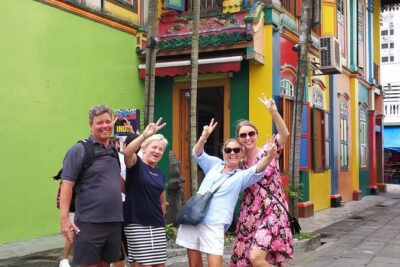
Chinatown, Little India, Kampong Gelam City Highlights Tour
Read our review →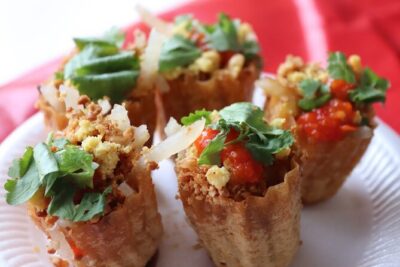
Chinatown Hawker Market Food Tour with 7 Food Tastings
Read our review →Chinatown, Little India, Arab Street Walking Tour
Read our review →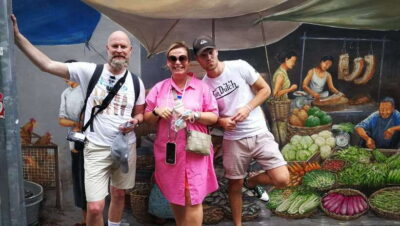
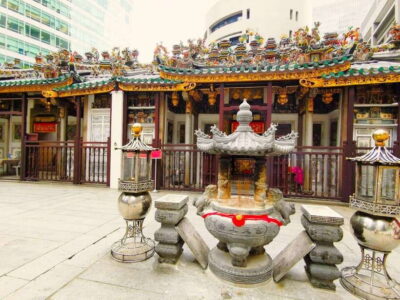
Kampong Glam, Little India & Chinatown with Local Street Food Tastings
Read our review →
Browse the lists this tour appears in