
Reviewed · CHINATOWN TOURS
Chinatown Heritage Walk & Street Food Tasting (Small Group)
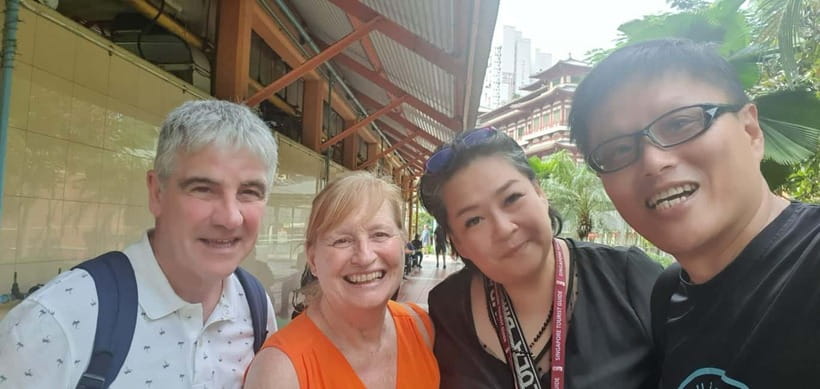
Singapore’s food culture makes the best first impression in Chinatown, where a short walk can take you from old streets to a crowded food centre and a plate of Hainanese chicken rice. I like this tour because it links what you eat with why it matters, and because a group capped at 10 keeps the experience personal. Guides Jason and James also make room for questions, photos, and dietary requests.
I also like the efficient format: 150 minutes gives you a useful introduction without taking half your day. The main caution is that this is a walking-and-tasting tour, not a sit-down meal, so arrive hungry, wear comfortable shoes, and expect Singapore’s heat and humidity. Wheelchair users will need to choose another activity.
In This Review
- Key points at a glance
- Why Chinatown is the right place for a food tour
- Starting at Maxwell MRT Station near Exit 2
- The first 90 minutes: Chinatown through food and history
- The food centre and local market tastings
- What the small group changes
- Guides Jason and James
- Is $51 a fair price?
- Heat, walking, and practical comfort
- Who should book this Chinatown food walk?
- Should you book it?
- FAQ
- Where does the Chinatown food tour start?
- Where does the tour finish?
- How long does the experience last?
- How many food and drink samples are included?
- What foods might I taste?
- What language is the tour conducted in?
- Can I cancel for a refund?
Key points at a glance
- Seven to eight tastings: Expect a spread of local food and drinks, with examples including chicken rice, laksa, spring rolls, traditional snacks, and durian.
- A small group of up to 10: This makes it easier to hear the guide, ask questions, and request help with unfamiliar foods.
- Chinatown beyond the postcard sights: The route combines cultural stops, alleyways, a local market or food centre, and stories about daily life.
- Guides who add personal care: Jason is especially noted for taking photos, answering questions, and helping vegetarian and vegan participants.
- A useful short tour: The 150-minute schedule suits a brief Singapore visit or your first afternoon in Chinatown.
- Simple meeting point: Start and finish near the Cheers convenience store inside Maxwell MRT station, close to Exit 2.
Why Chinatown is the right place for a food tour
I like Chinatown as a starting point because Singapore’s food traditions are not kept behind museum glass. They are served at ordinary tables, passed across hawker counters, and shaped by Chinese, Malay, Indian, and Peranakan influences.
That mix is the point of the experience. You are not simply ticking off famous dishes. You are learning how food reflects migration, family habits, religion, trade, and Singapore’s modern city life. The guide helps connect those ideas, so the plate in front of you feels less random.
The tour also gives you a useful orientation to the area. If you have only two days in Singapore, you can spend the first visit seeing the main sights and tasting a range of local dishes. Afterward, you will have a better sense of which corners and food stalls deserve a return visit.
More walks through Chinatown:
- Chinatown, Little India, Kampong Gelam City Highlights Tour
★ 5.0 · 224 reviews - Singapore: Chinatown Hawker Market Food Tour with 7 Food Tastings
★ 5.0 · 213 reviews - Singapore: Chinatown, Little India, Arab Street Walking Tour
★ 4.9 · 207 reviews
Starting at Maxwell MRT Station near Exit 2
The meeting point is inside Maxwell MRT station, near the Cheers convenience store and close to Exit 2. This is practical because you do not need to search for a street address in the heat, and the tour returns to the same station at the end.
Give yourself enough time to find the station entrance and the store. Singapore’s MRT is easy to use, but a rushed start is no fun when you are trying to locate a guide and a small group.
The meeting point also hints at the shape of the tour. You begin with transportation already handled by you, then walk with the guide through Chinatown. Transport is not included, so factor in your own MRT fare or taxi cost when comparing the $51 price.
The first 90 minutes: Chinatown through food and history
The guided Chinatown portion lasts about 90 minutes. This is where the food stops gain context. Instead of hearing a list of dates and buildings, you can ask how particular dishes fit into Singaporean life and how different cultural traditions meet in local cooking.
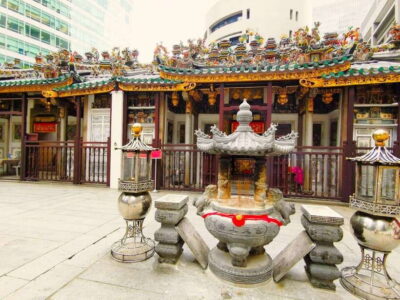
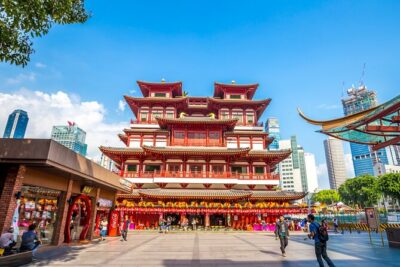
The guide leads you through Chinatown’s streets, food areas, and less obvious local spots. Exact stops can vary, but the focus is clear: see the neighborhood, understand its past, and notice where people actually eat.
I would pay attention to the guide’s stories about food customs and the way Singaporeans think about daily meals. The experience is not only about ingredients. It also explores the habits and attitudes around eating, which can be harder to pick up on your own.
Jason has received particular praise for making this section relaxed and useful. He is described as friendly and easy to talk with, and he takes questions about Singaporean history and lifestyle. One useful touch is his offer to take photos at the main sights, which saves you from having to choose between a good picture and keeping up with the group.
The walk is a good balance for someone who does not want a formal lecture. You get cultural information while moving through the neighborhood, then pause to taste something connected to the place. Still, the format means you should not expect a long stop at every sight. The attraction is the combination of many small discoveries.
The food centre and local market tastings
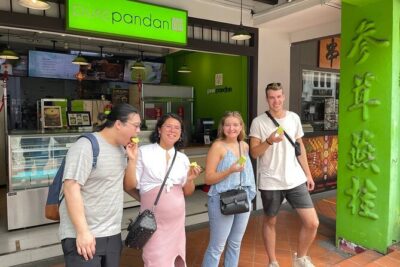
The tasting portion lasts about an hour, though food may appear at different points during the walk. The supplied experience promises 7 to 8 local food and drink samples, which is enough variety to give you a broad first look at Singaporean cuisine.
Possible tastings include:
- Hainanese chicken rice
- Laksa
- Spring rolls
- Traditional local snacks
- Other local food and drinks
- Durian, if you choose to try it
Do not read that list as a fixed menu. Food availability can change, and the exact order is not specified. That is normal for a food walk, especially one built around local stalls and market stops.
Hainanese chicken rice is a useful introduction because it looks simple but represents the kind of everyday dish Singapore does well. Laksa brings a stronger hit of spice and coconut flavor. Spring rolls and colorful local treats add texture and variety, so the tasting does not become a sequence of similar bowls.
Durian is the more adventurous moment. The fruit has a powerful smell and a creamy texture, and it is not for everyone. You are not required to enjoy every sample. I would treat it as a chance to learn what local food culture includes, then decide how far your curiosity goes.
The best advice is to skip breakfast or eat lightly before meeting the guide. One participant specifically advised arriving hungry, and that is sound guidance. Seven or eight samples can add up quickly, even when each serving is modest.
You should also pace yourself. The tour is designed for tasting, not for rushing from one bite to the next. Ask the guide what you are eating and how it is normally served. That conversation is part of the value.
More hawker centres and street food walks:
- Small Group: Michelin and Local Hawker Food Tour with 9 tastings
★ 5.0 · 1,890 reviews - Small Group: Singapore Street Food & Night Tour with 9 tastings
★ 5.0 · 1,240 reviews - The Award-Winning PRIVATE Food Tour: 10 Tastings of 3 Cultures
★ 4.5 · 1,017 reviews - Singapore: Chinese, Indian & Arabic Quarters, Culture & Food Tour
★ 5.0 · 789 reviews
What the small group changes
The group limit is 10 people. That is small enough for the guide to keep track of everyone at food stops, but large enough to provide some social energy without forcing you into a private tour price.
A small group matters most in food centres, where noise and movement can make a large tour hard to follow. You have a better chance of hearing why a dish matters, getting help with an unfamiliar ingredient, and asking for a recommendation later in your trip.
It also helps with personal needs. Jason has accommodated vegetarian and vegan participants, so you should tell the provider about your diet when booking or at the start. The supplied information does not promise a specific allergy-free menu, so people with serious allergies should ask for confirmation before paying.
The personal style extends beyond food. Jason has been praised for being patient, answering questions, and stopping for photos. That makes the tour feel less like a timed conveyor belt. Still, the group must keep moving, and the 150-minute schedule leaves limited room for long detours.
Guides Jason and James
The strongest part of this experience is the guide. Jason is the guide named most often in the available feedback, while James is also specifically praised. Both are described as friendly and good at explaining the food, culture, and local way of life.
Jason’s strengths are practical as well as informative. He can help you understand what you are tasting, accommodate vegetarian and vegan diners, answer questions about Singapore, and take photos at major sights. That is useful if you are visiting for only a short time and want both background and memories from the walk.
James is praised for his stories about food and Singaporean thinking, including a sense of humor. Stories can sometimes be simplified, so I would enjoy them as conversation rather than treat every amusing explanation as an academic fact. The point is to make the neighborhood easier to understand and more enjoyable to explore.
Because this is a live English-language tour, you should be comfortable following spoken English in a busy setting. The group is small, but Chinatown food areas can still be noisy.
Is $51 a fair price?
The price is $51 per person. That is not the cheapest way to eat in Singapore, since you could order individual hawker dishes for much less. But a fair comparison is not simply the cost of the food.
You are paying for a local guide, seven to eight samples, route planning, cultural explanation, and the convenience of seeing several parts of Chinatown in one organized outing. For a first-time visit, that can be good value, especially if you have little time or feel unsure about ordering at a hawker centre.
The value is strongest when you use the tour as an orientation. Learn the names and flavors, note places you want to revisit, and then return on your own for a cheaper second meal. One participant did exactly that after using the tour to understand Chinatown better.
The value is weaker if you already know Singapore’s hawker food well, speak comfortably with stall owners, and prefer choosing every dish yourself. In that case, the fixed route and tasting format may feel less flexible than exploring alone.
Reserve now and pay later is available, which helps if your schedule is still changing. You can also cancel up to 24 hours before the activity for a full refund. Those terms reduce the risk of booking early, but check the current start times before you commit.
Heat, walking, and practical comfort
Bring a sun hat, sunscreen, and an umbrella. Singapore can be hot, and the tour moves between outdoor streets and food areas. The umbrella is useful for rain as well as sun.
Wear comfortable shoes. The tour lasts two and a half hours and includes a 90-minute guided walk followed by about an hour of tasting. You are not hiking, but standing and walking through busy streets is part of the experience.
The tour is not suitable for wheelchair users. The provider also lists it as unsuitable for people over 95. No other age restriction is stated, so families should judge the walking, heat, and food style for themselves.
Transport is not included. You meet at Maxwell MRT and return there, so plan your route to the station before the tour begins. Keeping the start and finish in one place makes the activity easier to fit around other Chinatown plans.
Who should book this Chinatown food walk?
I would choose this tour if you are visiting Singapore for the first time, have only a short stay, or want a friendly introduction before eating on your own. It suits curious eaters who want both food and explanation, rather than a simple list of tastings.
It is also a good fit for couples, solo visitors, and small families who like talking with a guide. The group size allows questions, and the guide’s willingness to take photos adds a little extra care.
Vegetarians and vegans may find the tour workable because Jason has accommodated both, but you should state your needs clearly. People with serious food allergies should confirm the menu and cross-contact arrangements in advance.
I would skip it if you want a long, leisurely meal, dislike group schedules, or cannot manage outdoor walking in Singapore’s heat. It is also not the right choice for wheelchair users.
Should you book it?
Book it if you want a compact, guided introduction to Chinatown with plenty of tasting and a guide who can explain the setting. The best reasons are the 7 to 8 samples, the group of no more than 10, and the chance to ask Jason or James about food, culture, and local life.
Arrive hungry, bring sun protection, and keep your expectations realistic. You are getting a varied food walk rather than a full restaurant meal. For $51, it makes the most sense as a first-day orientation that helps you return to Chinatown with more confidence and a better idea of what to order.
FAQ
Where does the Chinatown food tour start?
It starts near the Cheers convenience store inside Maxwell MRT station, close to Exit 2.
Where does the tour finish?
The tour returns to Maxwell MRT station.
How long does the experience last?
The full experience lasts 150 minutes, or two and a half hours.
How many food and drink samples are included?
Seven to eight local food and drink tastings are included.
What foods might I taste?
Examples include Hainanese chicken rice, laksa, spring rolls, traditional local treats, and possibly durian. The exact menu is not fixed in the supplied information.
What language is the tour conducted in?
The live guide conducts the tour in English.
Can I cancel for a refund?
Yes. You can cancel up to 24 hours in advance for a full refund.
More History and Heritage in Singapore
- Historical Singapore Bike Tour on Full-Sized Bicycles
★ 5.0 · 1,421 reviews - Singapore: Historical Half-Day Bike Tour
★ 4.8 · 399 reviews - Singapore Group History & Culture Walking Tour
★ 5.0 · 160 reviews - Singapore: Chinatown Historic Walking Tour with Lunch
★ 5.0 · 134 reviews
More Food Tasting Experiences
- Singapore Market to Table Culinary Experience (Wet Market Tour included)
★ 5.0 · 479 reviews - Singapore Private Food, Culture and Heritage Tour with 9 tastings
★ 5.0 · 394 reviews - Singapore: Foodie Experience Guided Tour with 5 Tastings
★ 4.7 · 291 reviews - Singapore: Private Food Tour – 10 Tastings with Locals
★ 4.7 · 194 reviews
Just added around Singapore
- Skyline Luge and Sky Ride Ticket Sentosa Singapore★ 3.5 · 3 reviews
- Marina Bay Sands SkyPark Observation Deck ticket in Singapore★ 4.0 · 3 reviews
- Singapore Private Full-Day Sightseeing Tour★ 5.0 · 3 reviews
- Singapore: Food and Bike Tour – Downtown★ 4.6 · 3 reviews
- Singapore: Chinatown Street Food Tour★ 5.0 · 3 reviews
- Learn to cook authentic Peranakan food with local market tour★ 3.5 · 3 reviews
- Singapore Brompton Bike Tour from Rail Corridor, with food!★ 5.0 · 3 reviews
- Guided Walking Tour to the Historical Attractions in Farrer Park★ 5.0 · 3 reviews
Chinatown Tours, compared.
Chinatown, Little India, Kampong Gelam City Highlights Tour
Read our review →
Chinatown Hawker Market Food Tour with 7 Food Tastings
Read our review →Chinatown, Little India, Arab Street Walking Tour
Read our review →
Kampong Glam, Little India & Chinatown with Local Street Food Tastings
Read our review →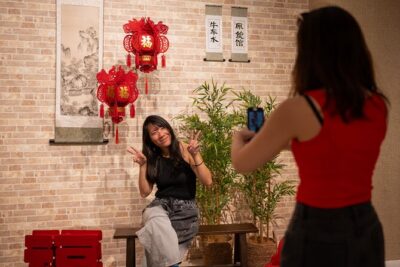
Browse the lists this tour appears in