
Reviewed · CHINATOWN TOURS
Chinatown Heritage Centre Tour Experience
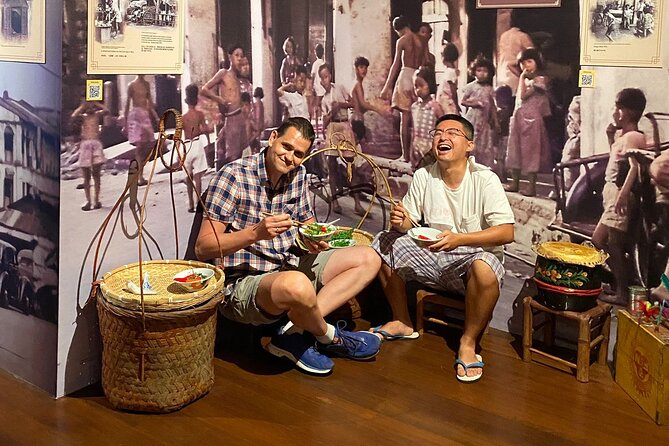
Chinatown Heritage Centre tells Singapore’s past from the ground level, through cramped living quarters, household objects, and the voices of people who built their lives here. You’ll meet the coolie, the samsui woman, and the hawker as human beings, not just names in a history book. The most affecting part is walking through the recreated spaces where families once lived under one roof.
I like the personal storytelling, which gives the exhibition a human pulse, and the authentic household items that make daily life easier to picture. Guides such as Ah Choo, also called TC, Swee Lin, and Karen, known as Mah Jie, have been praised for bringing warmth, humor, and useful context to the visit.
The main drawback is its fixed start at 5:30 pm and strict arrival rule. You must arrive 15 minutes early, because late arrivals are not admitted. At $36.40 per person, this is not a quick, low-cost museum stop, so it works best if you want a guided experience rather than a fast look around.
In This Review
- Key points to know before you go
- Entering Chinatown through its old homes
- Three lives behind one neighborhood
- What the recreated interiors add
- Why the guide matters
- A 90-minute visit with a firm schedule
- Is $36.40 good value?
- What this tour does better than a casual Chinatown walk
- Who should book this experience?
- Practical details that affect your visit
- Should you book the Chinatown Heritage Centre Tour?
- FAQ
- Where does the Chinatown Heritage Centre Tour take place?
- How long does the tour last?
- What time does the tour start?
- Is the tour conducted in English?
- What does the ticket include?
- Does the tour use recreated historical spaces?
- Are children allowed to join?
- Can I take photographs inside?
- Can I cancel or change my booking?
Key points to know before you go
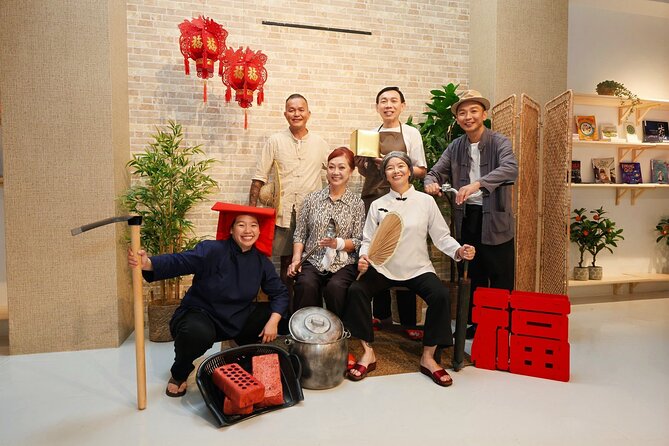
- 1950s living spaces: Walk through recreated rooms that show how Chinatown residents lived, worked, and shared limited space.
- Three human stories: The programme focuses on coolies, samsui women, and hawkers, linking their different lives to one neighborhood.
- English guided programme: The guide provides historical explanation and personal context rather than leaving you to read the displays alone.
- About 90 minutes: The length gives the stories room to develop without taking up a full afternoon.
- 5:30 pm start: Plan your Chinatown visit around the scheduled evening tour and arrive by 5:15 pm.
- All ages can take part: Children need tickets, and anyone under 12 must be accompanied by an adult.
Entering Chinatown through its old homes
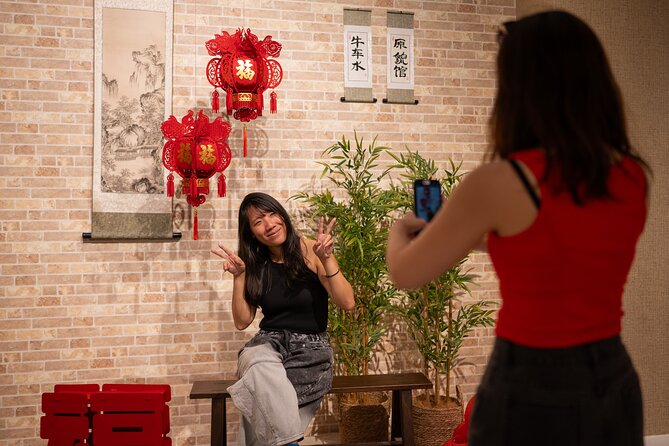
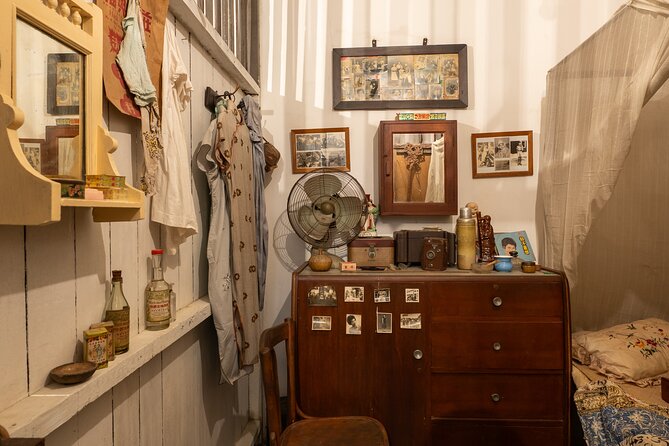
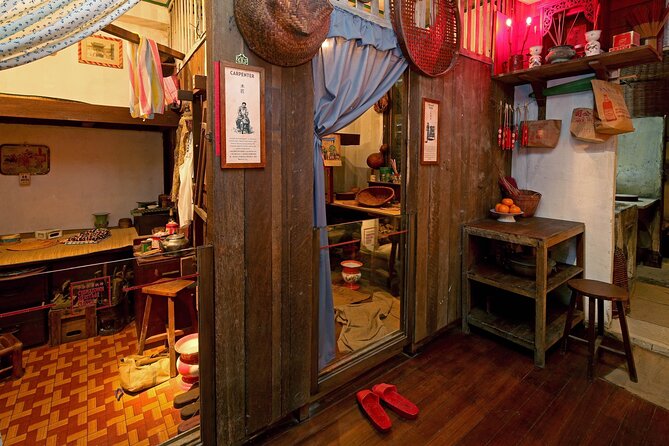
The Chinatown Heritage Centre is not simply a room of photographs and labels. Its central idea is to let you move through spaces shaped around the lives of early Chinatown residents. Recreated interiors and preserved shophouse areas show how people lived close together, often with their work and family life occupying the same building.
That setting matters. A written description can tell you that housing was crowded, but a narrow room, a shared household object, or a modest sleeping area gives the idea physical weight. You begin to understand that Chinatown was not only a commercial district. It was also a place where people cooked, rested, raised families, earned money, and formed strong local ties.
The exhibition focuses on 1950s Chinatown, a period close enough to modern Singapore to feel recognizable, but far enough away to reveal major changes in work, housing, and daily routines. The centre uses its rooms and objects to connect those changes with real people.
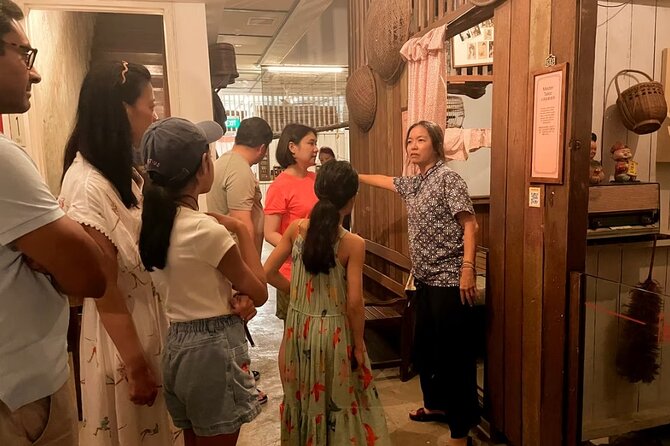
Your English-speaking guide leads the programme through the exhibition area. That is important because the visit is built around explanation. You are not left to guess why a tool, room, or object mattered.
More walks through Chinatown:
- Chinatown, Little India, Kampong Gelam City Highlights Tour
★ 5.0 · 224 reviews - Singapore: Chinatown Hawker Market Food Tour with 7 Food Tastings
★ 5.0 · 213 reviews - Singapore: Chinatown, Little India, Arab Street Walking Tour
★ 4.9 · 207 reviews
Three lives behind one neighborhood
The programme follows the stories of the coolie, the samsui woman, and the hawker. Each represents a different kind of work and a different path through Chinatown.
The coolie story points to the hard physical labor that supported the growth of Singapore. The samsui woman represents women who worked, saved, and helped shape the city while keeping close ties to their own communities. The hawker reflects the food trade and the everyday service that fed local residents.
These stories are strongest when considered together. Chinatown did not grow through one group alone. It was formed by people with different jobs, backgrounds, and pressures who shared streets, buildings, and social networks.
I appreciate that the programme treats hardship alongside resilience. The tone is not just nostalgic. You’ll hear about difficult work and limited living conditions, but also about resourcefulness, pride, and the support people found in their community.
The title Under One Roof captures the idea well. Different lives meet in the same shophouse environment, and the tour shows how work and home often overlapped. That gives the visit more meaning than a simple collection of old objects.
What the recreated interiors add
The recreated rooms are the centre’s most useful feature for anyone who wants to understand how people lived. You can view original household items and see them in a setting that suggests their practical purpose.
I find this kind of display more helpful than an isolated object behind glass. A bowl, piece of furniture, or domestic tool tells you more when the guide explains who used it and how it fitted into ordinary routines. The centre’s objects help turn broad subjects such as migration, labor, and family life into something you can picture.
The interiors also help explain the phrase under one roof. The exhibition shows how a building could serve as home, workplace, and meeting point. The result is an intimate look at Chinatown, not just a timeline of major events.
Do not expect a large museum complex with many separate galleries. The experience is focused and contained. That is part of its strength, since the guide can keep the story moving and maintain a clear theme. It also means you should not book this expecting hours of independent browsing.
Why the guide matters
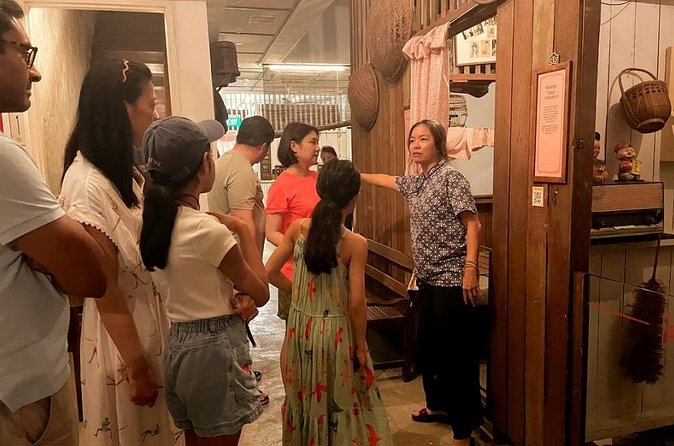
The guide is not an optional extra here. The exhibition was designed to work through storytelling, and the quality of that narration shapes the whole visit.
A good guide can explain the difference between seeing an old object and understanding its place in a household. The best moments come when a personal story connects a room to a wider issue, such as work, migration, family responsibility, or neighborhood life.
Several guides have received particular praise. Ah Choo, also known as TC, is described as entertaining while narrating old Chinatown. Swee Lin has been praised for clear storytelling and new insights into Chinese settlement in Singapore. Karen, known as Mah Jie, has also been singled out for her friendly manner and strong command of the tour.
Guide assignments can change, so you should not book on the assumption that one named guide will lead your session. Still, these names give you a useful sense of the style to expect: conversational, personal, and grounded in the lives behind the displays.
The guide-led format also suits families and visitors who do not normally spend much time in museums. You can ask questions during the programme, follow a clear sequence, and leave with a better sense of how the objects connect.
More history and heritage around Singapore:
- Historical Singapore Bike Tour on Full-Sized Bicycles
★ 5.0 · 1,421 reviews - Singapore: Historical Half-Day Bike Tour
★ 4.8 · 399 reviews - Singapore Private Food, Culture and Heritage Tour with 9 tastings
★ 5.0 · 394 reviews - Singapore Group History & Culture Walking Tour
★ 5.0 · 160 reviews
A 90-minute visit with a firm schedule
The programme lasts about one hour and 30 minutes. That is long enough for a guided story with several stops, but short enough to fit into an evening in Chinatown.
The start time is 5:30 pm. I would arrive at 5:15 pm, not 5:29 pm. Late arrivals are not accommodated, and the ticket terms do not allow changes or refunds if you miss the start.
The mobile ticket makes entry simple, but it does not make the timing flexible. Treat this as a scheduled programme, not a museum where you can arrive at any point during the afternoon.
The centre is near public transportation, making it practical to combine with time in Chinatown. You can plan a meal or a walk in the area before or after the tour, but allow enough time to reach the meeting point early.
Once inside, re-entry is not allowed. Food and drinks are not permitted in the centre, and flash photography is prohibited. These rules are easy to follow, but they are worth knowing before you arrive.
Is $36.40 good value?
At $36.40 per person, the tour costs more than a short self-guided visit to a small exhibit. The price includes admission to the exhibition area and an English guided programme, so you are paying for the interpretation as well as entry.
The value depends on how you like to visit museums. If you prefer to walk quickly, read a few labels, and move on, the price may feel high for a 90-minute experience. If you want the background explained and the displays connected to real lives, the guided format makes the cost easier to justify.
The programme is also a useful choice if your time in Singapore is limited. Instead of trying to assemble the story from separate displays, you get a focused account of Chinatown’s people, homes, and work in one sitting.
I would especially consider it good value for families, first-time visitors to Singapore, and anyone interested in social history. The centre does not only present famous buildings or major political events. It concentrates on ordinary residents, which is often where a city’s past becomes most understandable.
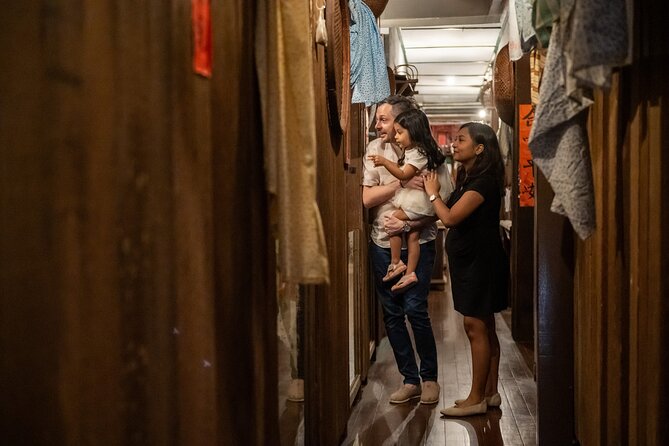
All children need paid tickets, and those under 12 must attend with an adult. Since the programme is suitable for all ages, it can work as a shared family activity, though adults should decide if younger children will enjoy a guided historical presentation lasting 90 minutes.
What this tour does better than a casual Chinatown walk
A walk through modern Chinatown can show you temples, shops, restaurants, and preserved architecture. It cannot always explain what happened inside the old shophouses or how different workers used the same neighborhood.
The Heritage Centre fills in that missing layer. You see household details, hear personal accounts, and learn how Chinese settlers contributed to Singapore’s development. The result adds context to anything you see outside afterward.
I like taking this kind of visit before exploring the surrounding streets, since the exhibition gives old buildings and local traditions more meaning. You may also prefer to walk first and visit the centre afterward, using the displays to make sense of what you have just seen. Either order works.
The important point is that this is not a replacement for Chinatown itself. It is a companion to the neighborhood. The centre offers an indoor, guided account of the past, while the streets show how the area has changed and what remains.
Who should book this experience?
I would recommend the tour if you want:
- A clear introduction to Chinese settlement in Singapore
- Personal stories instead of only dates and formal displays
- Recreated homes and original household objects
- A guided visit with room for historical explanation
- A family-friendly activity in Chinatown
- A compact programme that fits into an evening
It is less suitable if you need a flexible arrival time, dislike guided programmes, or want a large museum with many hours of independent exploration. The strict 5:30 pm start and no-refund policy mean you need to plan carefully.
Bring your attention rather than a camera-first mindset. Flash photography, food, and drinks are not allowed, and the centre’s strongest feature is the way the objects and spaces work with the narration.
Practical details that affect your visit
Confirmation is provided when you book, and the mobile ticket is included as part of the experience. The tour begins at the Chinatown Heritage Centre, with admission to the galleries and guided programme included.
You should arrive 15 minutes before the scheduled start. All participants, including children, require a paid ticket. Anyone under 12 must be with an adult.
Tickets are non-refundable, non-transferable, and cannot be amended. The centre may also adjust operating hours or limit access because of weather, events, or capacity restrictions. Photos or videos taken on site may be used for promotional purposes.
These terms are strict, so check your schedule before booking. The centre is not responsible for personal loss, damage, or injury, and normal care with belongings is sensible.
Should you book the Chinatown Heritage Centre Tour?
Book it if you want Chinatown explained through people and daily life rather than viewed only as a sightseeing district. The recreated 1950s interiors, original objects, and stories of coolies, samsui women, and hawkers give you a grounded sense of the neighborhood’s past.
At $36.40, it is best viewed as a guided heritage programme, not a quick museum ticket. The fixed 5:30 pm start and non-refundable terms require care, but the focused 90-minute format is practical and the personal narration gives the visit its value.
If you arrive early and enjoy history told through ordinary lives, this is a worthwhile addition to a Singapore itinerary. If you prefer total freedom and a low-cost walk, explore Chinatown independently instead.
FAQ
Where does the Chinatown Heritage Centre Tour take place?
The tour takes place at the Chinatown Heritage Centre in Singapore. Admission to the exhibition area is included.
How long does the tour last?
The guided programme lasts approximately one hour and 30 minutes.
What time does the tour start?
The scheduled start time is 5:30 pm. You should arrive 15 minutes early.
Is the tour conducted in English?
Yes. The package includes an English guided programme.
What does the ticket include?
Your ticket includes the guided programme and admission to the exhibition area and galleries.
Does the tour use recreated historical spaces?
Yes. You will see recreated living spaces and preserved shophouse areas connected with 1950s Chinatown.
Are children allowed to join?
Yes. The experience is suitable for all ages, but every child needs a paid ticket. Children under 12 must be accompanied by an adult.
Can I take photographs inside?
Flash photography is not allowed. Food and drinks are also prohibited inside the centre.
Can I cancel or change my booking?
No. Tickets are non-refundable, non-transferable, and cannot be changed. Late arrivals are not accommodated.
Just added around Singapore
- Skyline Luge and Sky Ride Ticket Sentosa Singapore★ 3.5 · 3 reviews
- Marina Bay Sands SkyPark Observation Deck ticket in Singapore★ 4.0 · 3 reviews
- Singapore Private Full-Day Sightseeing Tour★ 5.0 · 3 reviews
- Singapore: Food and Bike Tour – Downtown★ 4.6 · 3 reviews
- Singapore: Chinatown Street Food Tour★ 5.0 · 3 reviews
- Learn to cook authentic Peranakan food with local market tour★ 3.5 · 3 reviews
- Singapore Brompton Bike Tour from Rail Corridor, with food!★ 5.0 · 3 reviews
- Guided Walking Tour to the Historical Attractions in Farrer Park★ 5.0 · 3 reviews
Chinatown Tours, compared.
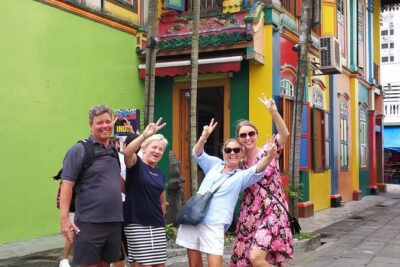
Chinatown, Little India, Kampong Gelam City Highlights Tour
Read our review →
Chinatown Hawker Market Food Tour with 7 Food Tastings
Read our review →Chinatown, Little India, Arab Street Walking Tour
Read our review →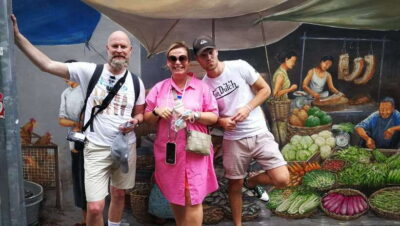
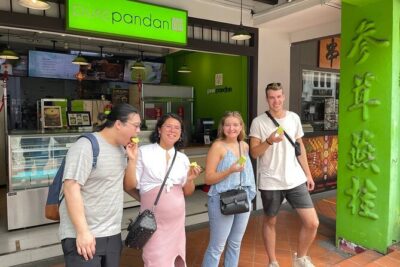
Kampong Glam, Little India & Chinatown with Local Street Food Tastings
Read our review →
Browse the lists this tour appears in