
Reviewed · SINGAPORE
About Mr Lee
Lee Kuan Yew’s story is best understood through places tied to his daily life, not just through dates and speeches. This four-hour tour links his childhood surroundings, Oxley residence, long-serving constituency, wartime memories, and the National Gallery area into one clear account of Singapore’s first Prime Minister.
I like the way the tour combines two former residences with public places that shaped his work. I also like the comfortable air-conditioned vehicle, which matters in Singapore’s heat and keeps a half-day of sightseeing from becoming a sweaty slog.
The main consideration is that some stops are brief, especially the Civilian War Memorial and Oxley, where you view the exterior rather than enter the house. At $116.03 per person, this suits visitors who want guided political and social history more than a general city tour.
In This Review
- Key points at a glance
- Why Lee Kuan Yew’s personal places matter
- Civilian War Memorial and the forces that shaped his policies
- Joo Chiat and the world of Lee Kuan Yew’s childhood
- Oxley Road and the private family side
- Tanjong Pagar, the political home base
- National Gallery Singapore and the former Parliament connection
- How the four-hour format works for your day
- Is $116.03 a fair price?
- Who will get the most from this tour
- Weather, cancellation, and practical planning
- Should you book About Mr Lee?
- FAQ
- Where does the tour start?
- Where does the tour end?
- What time does the tour begin?
- How long does the experience last?
- How many stops are included?
- Is transportation provided?
- Are snacks included?
- Can I cancel for a full refund?
Key points at a glance
- Five stops across central Singapore and Joo Chiat: The route connects personal, political, and national chapters of Lee Kuan Yew’s life.
- Childhood and family context: Joo Chiat and Oxley help explain him as a son, husband, father, and grandfather.
- Tanjong Pagar gets the most time: You spend about an hour in the constituency he represented from 1955 for nearly six decades.
- A possible Old Parliament Chamber visit: The former chamber at the Arts House may be included when it is not booked for rehearsals or events.
- A small-group format: The maximum group size is 20, enough for a personal guide without promising a private tour.
- Comfortable four-hour timing: The 9:30 am start leaves much of the afternoon free for museums, food, or more sightseeing.
Why Lee Kuan Yew’s personal places matter
Singapore’s founding story can feel abstract when you only see skyscrapers, government buildings, and polished public spaces. This tour gives that story a human scale. You move from the homes and neighborhoods connected to Lee Kuan Yew to the public places where his political life took shape.
That approach is useful because it covers more than his time as Prime Minister. You hear about his childhood, marriage, family life, political work, wartime experiences, and habits. The focus is not simply on what he achieved, but on the experiences that affected his thinking and later policies.
I would choose this tour if you already know the basic outline of Singapore’s rise and want more context. It is less suitable if you want a broad introduction to food, temples, colonial architecture, or shopping. The subject remains firmly centered on one person and his influence on the country.
The guide matters here. Iris received specific praise for explaining Lee Kuan Yew’s journey, his relationship with his wife, and important family details in an engaging way. Since much of the value comes through spoken explanation at places that may look ordinary on their own, an active guide can make a major difference.
Other Singapore bookings people compare with this one:
- Lion City Bike Tour of Singapore
★ 5.0 · 6,211 reviews - Singapore: Gardens by the Bay Bundle Entry Ticket
★ 4.3 · 3,726 reviews - Singapore: Big Bus Hop-On Hop-Off Tour by Open-Top Bus
★ 4.5 · 3,261 reviews
Civilian War Memorial and the forces that shaped his policies
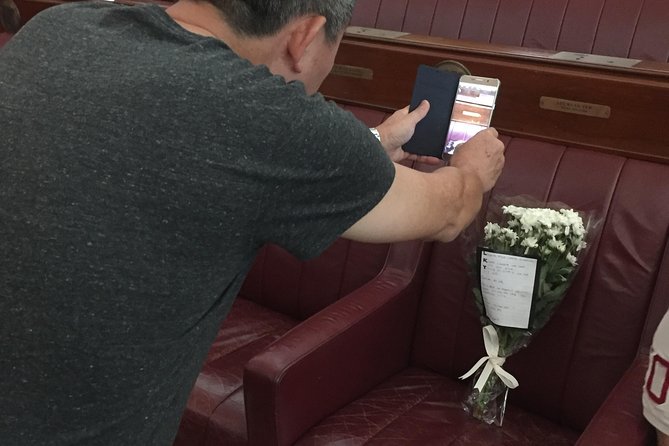
The first stop is the Civilian War Memorial, with about 10 minutes set aside for it. Admission is free, and the stop introduces the wartime experiences that left a lasting mark on Lee Kuan Yew’s thinking.
Ten minutes is not long enough for a full visit, but that is not really the purpose. You are using the memorial as a starting point for the larger story. The guide connects Singapore’s wartime suffering to later decisions and policies, giving you a lens for understanding why security, order, and national survival mattered so much in Lee’s political outlook.
This stop may feel more like an outdoor briefing than a full sightseeing visit. If you want time to study the memorial at length, you may need to return on your own. Still, as an opening chapter, it gives the rest of the morning a useful frame.
I like that the tour begins with public memory rather than a house. It places personal biography inside Singapore’s wider experience and helps prevent the story from becoming a simple success tale about one political leader.
Joo Chiat and the world of Lee Kuan Yew’s childhood
The Joo Chiat stop lasts about 30 minutes and focuses on the beautiful shophouses connected with Lee Kuan Yew’s childhood. This is one of the more visually appealing parts of the route, since the setting offers a sense of the built environment around his early life.
You are not just looking at architecture. The guide uses the area to explain where he grew up and to add detail to the young man behind the public image. Shophouses can make a better backdrop for this kind of story than a modern office tower because they help you picture a Singapore from an earlier period.
The 30-minute timing should give you enough space to listen, look around, and take photographs without turning the stop into a long neighborhood walk. The tour is sometimes described as a walking tour, but you should not expect hours on foot. One useful point from the experience is that most of the route involves limited walking, with transport between locations.
That makes Joo Chiat easier for people who want local context without committing to a strenuous walking excursion. The tradeoff is that you may not have much free time to explore the area beyond the tour’s specific focus. If you are interested in Joo Chiat’s shophouses for their own sake, plan a separate visit.
Oxley Road and the private family side
At Oxley, you spend about 10 minutes catching a glimpse of Lee Kuan Yew’s house. The emphasis is personal: what he was like as a husband, father, and grandfather.
This is a short stop, and the house is viewed rather than presented as an interior museum. That distinction matters. You are not entering a preserved home with rooms full of objects. Instead, you receive context about the private life behind the public office while seeing the place associated with it.
I find this kind of stop valuable because political biographies can become overly formal. Details about marriage and family give the account more balance. They also help you understand the demands of a long public career from a personal angle, even though the tour cannot offer a full portrait of everyday family life in ten minutes.
Oxley may be less satisfying if you expect a major attraction or an extended visit. It works best as one piece of the route, not as a destination that justifies the tour by itself. Listen closely here, since the spoken explanation carries more weight than the physical view.
A different sort of day out, same city:
- Singapore: Lion City Highlights Bike Tour
★ 4.9 · 2,010 reviews - Small Group: Michelin and Local Hawker Food Tour with 9 tastings
★ 5.0 · 1,890 reviews - Morning at the Zoo with 1-way Transfer (Free & Easy)
★ 4.0 · 1,882 reviews - Experience Singapore: Cultural Cooking Class
★ 5.0 · 1,514 reviews
Tanjong Pagar, the political home base
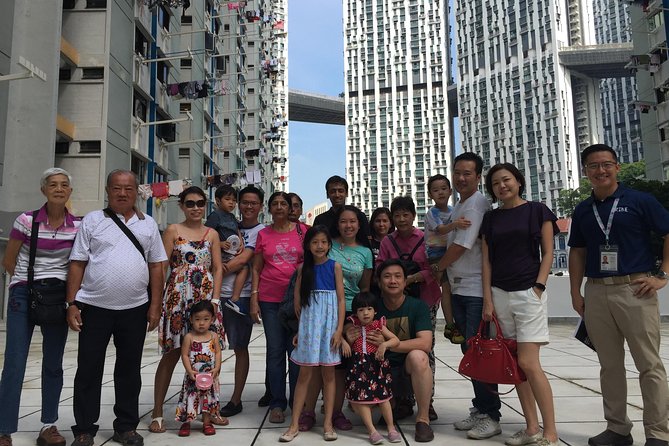
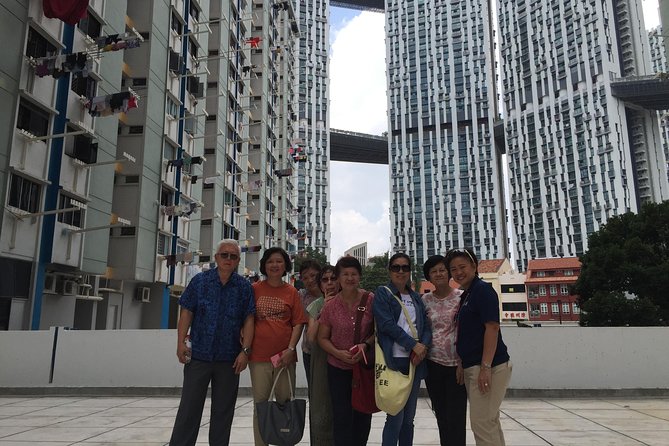
Tanjong Pagar receives about an hour, making it the longest stop and the clearest public expression of Lee Kuan Yew’s political life. He chose the constituency as his home base in 1955 and continued to serve its residents for nearly 60 years.
This is where the tour moves from family biography to practical politics. You learn about the constituency he represented over decades and the relationship between a political leader and the people in his local district. That long connection gives Tanjong Pagar more meaning than a quick photo stop at a government building.
The stop also includes personal details about his healthy ways and his love of food. That combination is useful. It keeps the discussion from becoming a list of policies and positions, and it gives you a more rounded picture of his routines and preferences.
Because an hour is devoted to Tanjong Pagar, this is likely the place where the guide can answer more questions and add local detail. If you want to understand how Lee Kuan Yew’s national role connected with constituency work, pay close attention here.
The limitation is that the tour’s description does not promise a specific meal or a full food tasting. Snacks are included during the half-day experience, but you should not book this as a food tour. The food references are part of the personal story, while the supplied snacks are a practical extra.
National Gallery Singapore and the former Parliament connection
The final scheduled stop is the National Gallery Singapore, where you spend about 20 minutes at the steps of the restored building. The guide uses this setting to explain memorable moments in Lee Kuan Yew’s life.
The building is important to the route because it connects the personal story to Singapore’s national institutions. Even with only 20 minutes, the setting gives the closing section a sense of place and helps bring the story back to the country he helped lead.
There may also be an unexpected bonus at the end: a visit to the Old Parliament Chamber Room at the Arts House. This is not guaranteed, since the room can be booked for rehearsals or events. If it is open, it adds real value because you get a direct connection to Singapore’s parliamentary past rather than only hearing about it from outside.
The tour ends at The Arts House, 1 Old Parliament Lane. That endpoint is convenient for continuing your day around the civic district, though the tour does not promise entry every time. Think of the chamber as a welcome possibility, not a feature to count on when comparing prices.
How the four-hour format works for your day
The tour starts at 9:30 am at Fairmont Singapore, 80 Bras Basah Road. It ends at The Arts House, so you finish in a different part of the city. That change is useful if you plan to continue sightseeing around the former Parliament area after lunch.
The route includes five stops, but only some involve extended time outside the vehicle. The air-conditioned transport is more than a comfort feature. Singapore’s heat and humidity can make even a short series of outdoor stops tiring, and vehicle transfers give you time to cool down between explanations.
The advertised duration is approximately four hours. The listed stop times add up to about two hours and 10 minutes, leaving the rest for driving, transitions, and commentary. That sounds about right for a route spread across several parts of Singapore. You should keep the afternoon flexible rather than booking a tightly timed attraction immediately afterward.
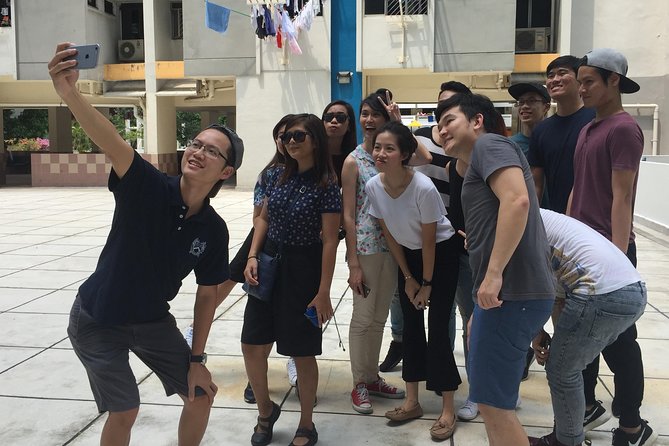
The group can include up to 20 people. That is small enough for a guide to keep the group together and answer some questions, but it is not a private experience. If you prefer a completely personal pace, this format may feel structured. For most people, the small-group setting should offer a good balance between social energy and manageable logistics.
Mobile tickets make arrival simple. Confirmation is provided at booking, and the tour is near public transportation. Service animals are allowed, and most people can take part. The listing does not provide a detailed mobility assessment, so contact the provider if you need specific information about vehicle access or the walking surfaces at each stop.
Is $116.03 a fair price?
At $116.03 per person, this is not a cheap way to spend a morning in Singapore. You are paying for a focused guide-led route, transport, snacks, and access to a carefully connected story rather than for major admission tickets. The listed stops have free admission, so the price is mainly for the guide, vehicle, planning, and interpretation.
That can be good value if you would otherwise struggle to connect these places on your own. Lee Kuan Yew’s former homes and constituency are not one compact attraction, and the meaning of each stop depends heavily on explanation. The air-conditioned vehicle also saves you from arranging several separate taxi or transit journeys.
The value is weaker if you want lots of independent time at museums or monuments. The tour spends only 10 minutes at both the Civilian War Memorial and Oxley, and 20 minutes at the National Gallery steps. You will not get a full gallery visit from this experience, nor should you expect a long look inside every location.
I would compare the price with your interests, not with a standard sightseeing bus. If you care about Singapore’s political development, Lee Kuan Yew’s family story, and the link between private life and public service, the focused format may justify the cost. If you mainly want scenic streets, local food, or general orientation, cheaper options will likely suit you better.
Who will get the most from this tour
I would recommend it most to visitors who:
- Already know a little about Singapore and want a more personal account of its founding leader.
- Enjoy political history, biographies, and guided interpretation.
- Prefer vehicle-supported sightseeing to a long walking tour.
- Want a half-day activity that leaves the afternoon free.
- Are curious about the relationship between family life, wartime experience, and public policy.
- Appreciate a small group without needing a private guide.
Families may find the family material more approachable than a policy-heavy lecture, though the tour’s subject is still serious. The guide’s use of personal stories, including Lee Kuan Yew’s marriage and role as a father and grandfather, helps create variety.
I would hesitate to recommend it to someone visiting Singapore for the first time who has not yet seen the city’s main landmarks. This is a focused add-on, not a complete city introduction. It also may not suit anyone who expects to enter both residences or spend substantial time inside the National Gallery.
Weather, cancellation, and practical planning
The experience requires good weather. If poor weather causes cancellation, you are offered another date or a full refund. A minimum number of participants is also required, and a cancellation for that reason brings the same choice of another date, another experience, or a full refund.
You can cancel for a full refund up to 24 hours before the 9:30 am start. Changes or cancellations made less than 24 hours before the start are not accepted for a refund, so check your plans before the deadline.
Wear comfortable shoes, even though this is not a demanding walking tour. You will still get in and out of the vehicle and spend time at outdoor sites. Bring water and sun protection, while remembering that the vehicle provides welcome relief between stops.
Should you book About Mr Lee?
Book this tour if you want Singapore explained through one influential life and five connected places. The strongest elements are the personal details at Joo Chiat and Oxley, the long political connection to Tanjong Pagar, and the possibility of seeing the Old Parliament Chamber Room.
The price is easier to justify for history-minded visitors than for casual sightseers. You will not receive long visits at every stop, and entry to the private residences is not part of the plan. But the route gives you a clear, human account of Lee Kuan Yew’s childhood, family, political service, and national role, all without spending a full day on the road.
I would book it early in a Singapore trip if you want context for the city’s institutions and development. If that subject does not interest you, spend the same morning on a broader neighborhood, food, or museum experience instead.
FAQ
Where does the tour start?
The tour starts at Fairmont Singapore, 80 Bras Basah Road, Singapore 189560.
Where does the tour end?
The tour ends at The Arts House, 1 Old Parliament Lane, Singapore 179429.
What time does the tour begin?
The scheduled start time is 9:30 am.
How long does the experience last?
The tour lasts approximately four hours.
How many stops are included?
The route includes five stops: the Civilian War Memorial, Joo Chiat, Oxley, Tanjong Pagar, and National Gallery Singapore.
Is transportation provided?
Yes. You travel between locations in an air-conditioned vehicle.
Are snacks included?
Yes. Snacks are included during the half-day tour.
Can I cancel for a full refund?
Yes. You can cancel at least 24 hours before the experience start time for a full refund. Cancellations made less than 24 hours before the start are not refunded.
Just added around Singapore
- Skyline Luge and Sky Ride Ticket Sentosa Singapore★ 3.5 · 3 reviews
- Marina Bay Sands SkyPark Observation Deck ticket in Singapore★ 4.0 · 3 reviews
- Singapore Private Full-Day Sightseeing Tour★ 5.0 · 3 reviews
- Singapore: Food and Bike Tour – Downtown★ 4.6 · 3 reviews
- Singapore: Chinatown Street Food Tour★ 5.0 · 3 reviews
- Learn to cook authentic Peranakan food with local market tour★ 3.5 · 3 reviews
- Singapore Brompton Bike Tour from Rail Corridor, with food!★ 5.0 · 3 reviews
- Guided Walking Tour to the Historical Attractions in Farrer Park★ 5.0 · 3 reviews